
《2018年炎症性肠病在加拿大的影响:流行病学》
The Impact of Inflammatory Bowel Disease in Canada 2018: Epidemiology.
作者信息
Kaplan Gilaad G, Bernstein Charles N, Coward Stephanie, Bitton Alain, Murthy Sanjay K, Nguyen Geoffrey C, Lee Kate, Cooke-Lauder Jane, Benchimol Eric I
机构信息
Canadian Gastro-Intestinal Epidemiology Consortium, Ottawa, Ontario, Canada.
Department of Medicine and Community Health Sciences, University of Calgary, Calgary, Alberta, Canada.
出版信息
J Can Assoc Gastroenterol. 2019 Feb;2(Suppl 1):S6-S16. doi: 10.1093/jcag/gwy054. Epub 2018 Nov 2.
UNLABELLED
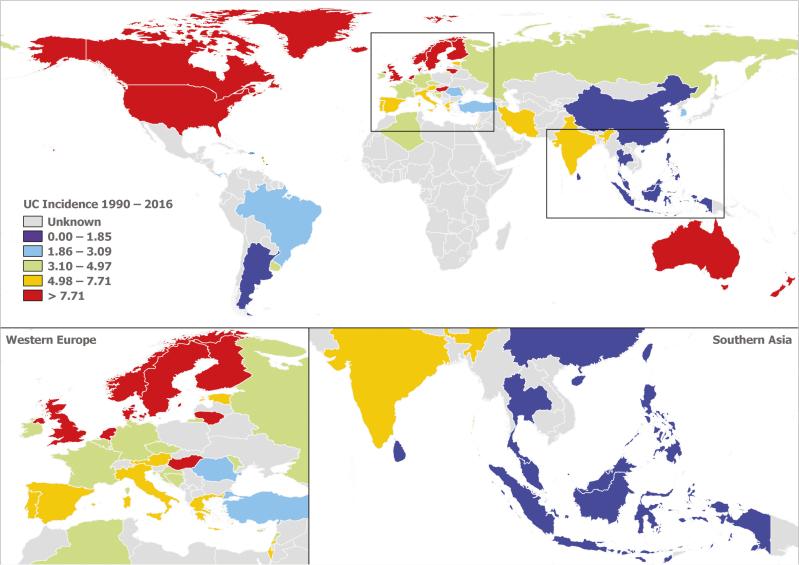
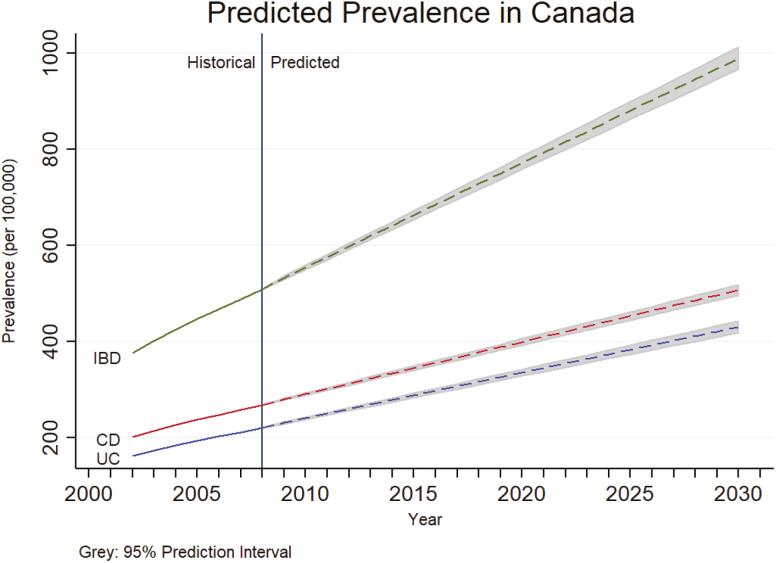
Canada has among the highest incidence and prevalence of inflammatory bowel disease (IBD) in the world. After decades of rising incidence of IBD in Canada during the 20th Century, the prevalence of IBD in 2018 is 0.7% of the Canadian population. Forecasting models predict that prevalence of IBD will continue to rise to 1.0% of the population by 2030. In 2018, the number of Canadians living with IBD is approximately 270,000 and is predicted to rise to 403,000 Canadians in 2030. Inflammatory bowel disease affects all age groups with adolescents and young adults at highest risk of diagnosis. Canadians of all ethnicities are being diagnosed with IBD including known high-risk groups such as Ashkenazi Jews and offspring of South Asian immigrants who were previously thought to be low risk. Moreover, IBD has evolved into a global disease with rising incidence in newly industrialized countries in Asia and South America. The causes of IBD remain unsolved; however, the high rates of disease in Western countries and its emergence in newly industrialized countries suggest that environmental factors associated with urbanization, modernization, or Western diets may be pertinent to understanding the pathogenesis of the disease.
HIGHLIGHTS
- Canada continues to have among the highest prevalence of IBD in the world.2. Today, approximately 270,000 Canadians live with IBD. By 2030 it is estimated that nearly 403,000 Canadians will have a diagnosis of IBD.3. Inflammatory bowel disease has become a worldwide disease with increasing rates in Asia, Africa, and South America-continents where IBD was rarely diagnosed prior to 1990.4. The causes of IBD are unknown, but the high rates of disease over the past 60 years in Western countries and the emergence of disease in developing countries suggest that factors associated with urbanization, modernization, or Western diets may be pertinent to understanding the pathogenesis of the disease.5. Many of the leading hypotheses as to the causes of IBD tie in with alteration of the gut microbiome, the suite of organisms that reside in the bowel and maintain bowel health throughout life.
KEY SUMMARY POINTS
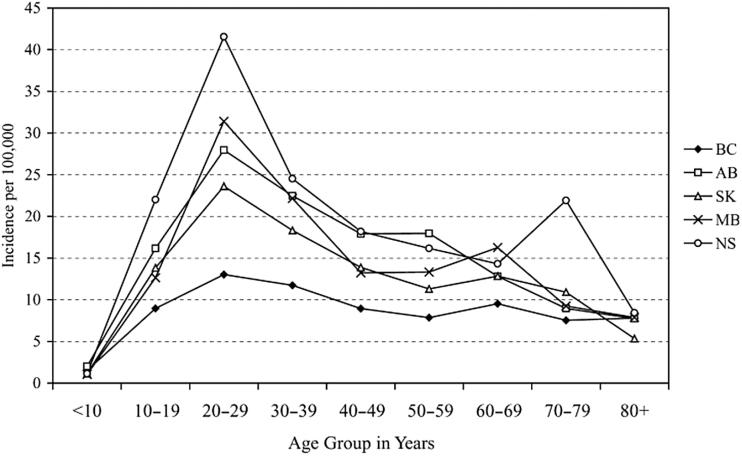
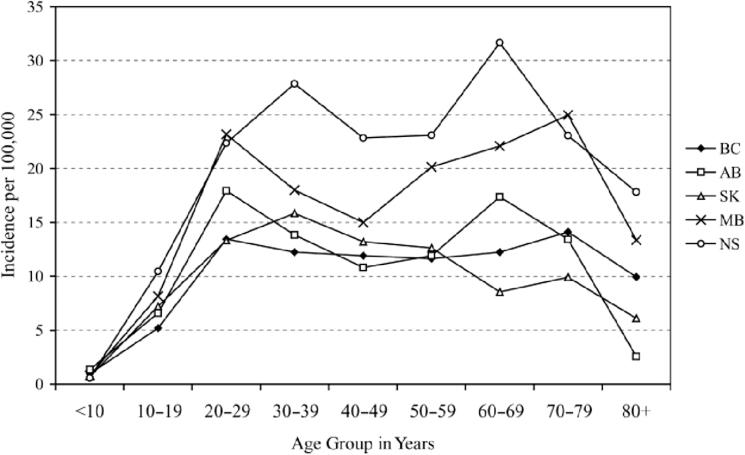
- The incidence (the number of new diagnoses annually) of IBD rose throughout the 20th century in Canada and then stabilized at the turn of the 21st century.2. The prevalence (the total number of diagnosed persons in the population) of IBD in Canada is among the highest in the world.3. Today, 270,000 (0.7%, or 7 in 1000) Canadians are estimated to live with IBD. By 2030, that number is expected to rise to 403,000 Canadians (1% or 1 in 100).4. Inflammatory bowel disease can be diagnosed at any age. However, the age groups that are most likely to be diagnosed are adolescents and young adults from 20 to 30 years of age.5. Inflammatory bowel disease in Canada affects the lives of Canadians of all ethnicities, including known high-risk groups such as Ashkenazi Jews, and those thought previously to be at low risk, such as first-generation offspring of South Asian immigrants.6. Canadian health policy makers will need to prepare the Canadian health care system for the rising burden of IBD.7. As newly industrialized countries in Asia, Africa, and South America are transitioning to a Westernized society, IBD has emerged and its incidence in these countries is rising rapidly.8. The gut microbiome includes microorganisms that maintain digestive health. Thus, changes in the microbiome, which may change the immune system's response to triggers, may be important in initiating and perpetuating IBD.9. A number of factors can alter the gut microbiome and early childhood may be a particularly important time such that breastfeeding, early life diet, use of antibiotics, infections, and other environmental exposures may impact the gut microbiome in such a way that facilitates developing IBD.10. Smoking is associated with an increased risk and worsening disease course of Crohn's disease. Quitting smoking is associated with an increased risk of developing ulcerative colitis. Therefore, never initiating smoking can mitigate the risk for IBD. Educational programs aimed at those at-risk for IBD should emphasize the risk of starting to smoke tobacco.11. Modifying exposure to environmental risk factors associated with the Westernization of society (e.g., Western diet and lifestyles) may provide an avenue for reducing the risk of IBD in Canada and worldwide.
GAPS IN KNOWLEDGE AND FUTURE DIRECTIONS
- While the incidence of IBD appears to be stabilizing in some regions in Canada, IBD may be occurring more frequently in certain populations such as in children, South Asians, Ashkenazi Jews, and immigrants. Future research should focus on the changing demographics of IBD in Canada.2. The prevalence of IBD will rise steadily over the next decade. To enable better health care system planning and to respond adequately to the increasing burden of IBD, ongoing surveillance of the epidemiology and health services utilization of IBD in Canada is necessary.3. Most studies have focused on the mortality associated with IBD. Future research is necessary to assess health-adjusted life expectancy and overall life expectancy for those living with IBD.4. Analyses of resources, infrastructure, and personnel need to be modeled into the future in order to prepare our health care system for the rising burden of IBD.5. Research on the interaction between genes, microbes, and our environment will inform our understanding of the pathogenesis of IBD, information necessary to prevent IBD in the future.
未标注
加拿大是全球炎症性肠病(IBD)发病率和患病率最高的国家之一。在20世纪加拿大IBD发病率数十年持续上升后,2018年IBD患病率占加拿大人口的0.7%。预测模型显示,到2030年IBD患病率将继续升至占人口的1.0%。2018年,加拿大IBD患者人数约为27万,预计到2030年将增至40.3万加拿大人。炎症性肠病影响所有年龄组,青少年和年轻成年人诊断风险最高。所有种族的加拿大人都被诊断患有IBD,包括已知的高风险群体,如阿什肯纳兹犹太人以及此前被认为是低风险的南亚移民后代。此外,IBD已演变成一种全球性疾病,在亚洲和南美洲的新兴工业化国家发病率不断上升。IBD的病因仍未解决;然而,西方国家的高发病率以及在新兴工业化国家的出现表明,与城市化、现代化或西方饮食相关的环境因素可能与理解该疾病的发病机制有关。
重点
- 加拿大仍然是全球IBD患病率最高的国家之一。2. 如今,约27万加拿大人患有IBD。到2030年,估计将有近40.3万加拿大人被诊断患有IBD。3. 炎症性肠病已成为一种全球性疾病,在亚洲、非洲和南美洲发病率不断上升,而在1990年之前这些大陆很少诊断出IBD。4. IBD的病因尚不清楚,但过去60年西方国家的高发病率以及发展中国家疾病的出现表明,与城市化、现代化或西方饮食相关的因素可能与理解该疾病的发病机制有关。5. 关于IBD病因的许多主要假说都与肠道微生物群的改变有关,肠道微生物群是指生活在肠道内并终生维持肠道健康的一组生物体。
关键总结要点
- 20世纪加拿大IBD的发病率(每年新诊断的人数)持续上升,然后在21世纪之交趋于稳定。2. 加拿大IBD的患病率(人群中确诊患者的总数)位居世界前列。3. 如今,估计有27万(0.7%,即千分之七)加拿大人患有IBD。到2030年,这一数字预计将增至40.3万加拿大人(1%,即百分之一)。4. 炎症性肠病可在任何年龄诊断。然而,最有可能被诊断的年龄组是20至30岁的青少年和年轻成年人。5. 加拿大的炎症性肠病影响所有种族加拿大人的生活,包括已知的高风险群体,如阿什肯纳兹犹太人,以及此前被认为风险较低的群体,如南亚移民的第一代后代。6. 加拿大卫生政策制定者需要为加拿大医疗保健系统应对IBD不断增加的负担做好准备。7. 随着亚洲、非洲和南美洲的新兴工业化国家向西方化社会转型,IBD已经出现,且在这些国家的发病率正在迅速上升。8. 肠道微生物群包括维持消化健康的微生物。因此,微生物群的变化可能会改变免疫系统对触发因素的反应,这可能在IBD的引发和持续发展中起重要作用。9. 许多因素可改变肠道微生物群,幼儿期可能是特别重要的时期,母乳喂养、早期饮食、抗生素使用、感染和其他环境暴露可能会以促进IBD发展的方式影响肠道微生物群。10. 吸烟与克罗恩病风险增加和疾病进程恶化有关。戒烟与患溃疡性结肠炎的风险增加有关。因此,从不吸烟可降低IBD风险。针对IBD高危人群的教育项目应强调开始吸烟的风险。11. 改变与社会西方化相关的环境风险因素暴露(如西方饮食和生活方式)可能为降低加拿大和全球IBD风险提供途径。
知识差距与未来方向
- 虽然加拿大某些地区IBD的发病率似乎趋于稳定,但在某些人群中IBD可能更频繁发生,如儿童、南亚人、阿什肯纳兹犹太人和移民。未来研究应关注加拿大IBD不断变化的人口统计学特征。2. 未来十年IBD患病率将稳步上升。为了更好地规划医疗保健系统并充分应对IBD不断增加的负担,有必要对加拿大IBD的流行病学和卫生服务利用情况进行持续监测。3. 大多数研究都集中在与IBD相关的死亡率上。未来有必要开展研究以评估IBD患者的健康调整预期寿命和总体预期寿命。4. 需要对未来的资源、基础设施和人员进行分析建模,以便为我们的医疗保健系统应对IBD不断增加的负担做好准备。5. 对基因、微生物和我们环境之间相互作用的研究将有助于我们理解IBD的发病机制,这是未来预防IBD所需的信息。

 Zotero 插件