
2015-2016 年美国和加拿大与包装叶状绿色沙拉相关的李斯特菌病多州暴发疫情。
Multistate Outbreak of Listeriosis Associated with Packaged Leafy Green Salads, United States and Canada, 2015-2016.
出版信息
Emerg Infect Dis. 2019 Aug;25(8):1461-1468. doi: 10.3201/eid2508.180761.
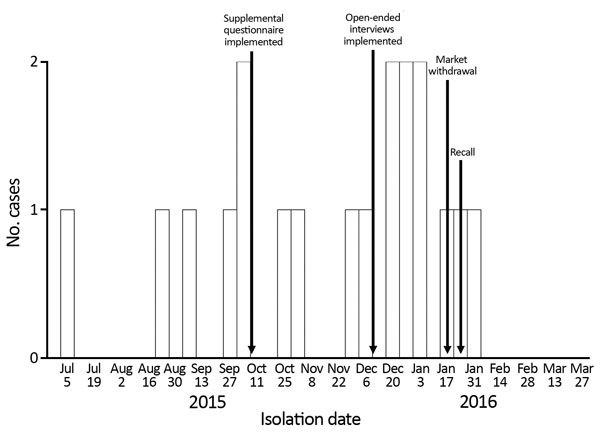
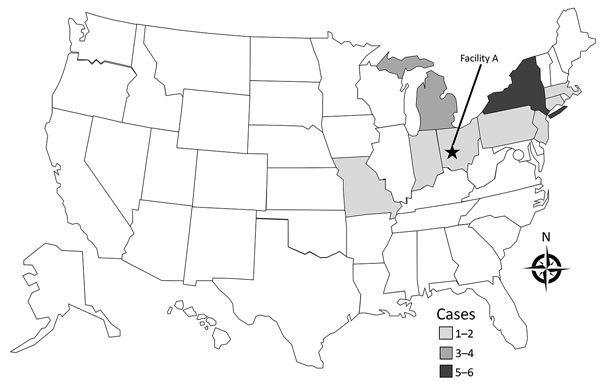
We investigated an outbreak of listeriosis detected by whole-genome multilocus sequence typing and associated with packaged leafy green salads. Nineteen cases were identified in the United States during July 5, 2015-January 31, 2016; isolates from case-patients were closely related (median difference 3 alleles, range 0-16 alleles). Of 16 case-patients interviewed, all reported salad consumption. Of 9 case-patients who recalled brand information, all reported brands processed at a common US facility. The Public Health Agency of Canada simultaneously investigated 14 cases of listeriosis associated with this outbreak. Isolates from the processing facility, packaged leafy green salads, and 9 case-patients from Canada were closely related to US clinical isolates (median difference 3 alleles, range 0-16 alleles). This investigation led to a recall of packaged leafy green salads made at the processing facility. Additional research is needed to identify best practices and effective policies to reduce the likelihood of Listeria monocytogenes contamination of fresh produce.
我们通过全基因组多位点序列分型调查了一起与包装叶状绿色沙拉相关的李斯特菌病暴发。2015 年 7 月 5 日至 2016 年 1 月 31 日期间,在美国发现了 19 例病例;来自病例患者的分离株密切相关(中位数差异 3 个等位基因,范围 0-16 个等位基因)。在接受采访的 16 名病例患者中,所有人都报告了沙拉的食用情况。在 9 名回忆起品牌信息的病例患者中,所有人都报告了在一个共同的美国工厂加工的品牌。加拿大公共卫生署同时调查了 14 例与此次暴发相关的李斯特菌病。来自加工厂、包装叶状绿色沙拉和来自加拿大的 9 名病例患者的分离株与美国临床分离株密切相关(中位数差异 3 个等位基因,范围 0-16 个等位基因)。该调查导致了对该加工厂生产的包装叶状绿色沙拉的召回。需要进一步研究以确定最佳做法和有效的政策,以降低李斯特菌污染新鲜农产品的可能性。
 Zotero 插件