
T 细胞功能障碍在癌症免疫和免疫治疗中的作用。
T Cell Dysfunction in Cancer Immunity and Immunotherapy.
机构信息
Department of General Surgery, Liver Transplantation Center, The First Affiliated Hospital of Nanjing Medical University, Nanjing, China.
Department of Clinical Laboratory, Renmin Hospital of Wuhan University, Wuhan, China.
出版信息
Front Immunol. 2019 Jul 19;10:1719. doi: 10.3389/fimmu.2019.01719. eCollection 2019.
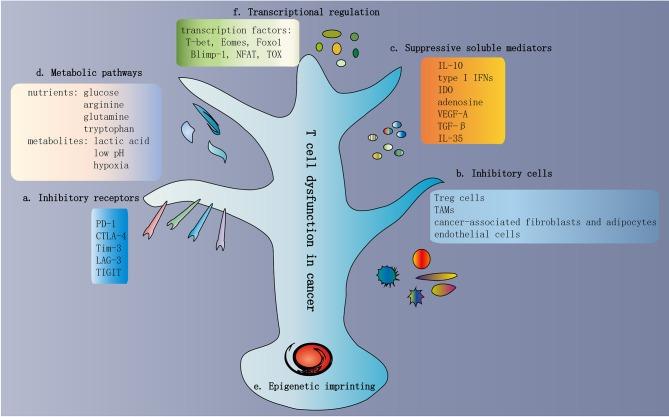
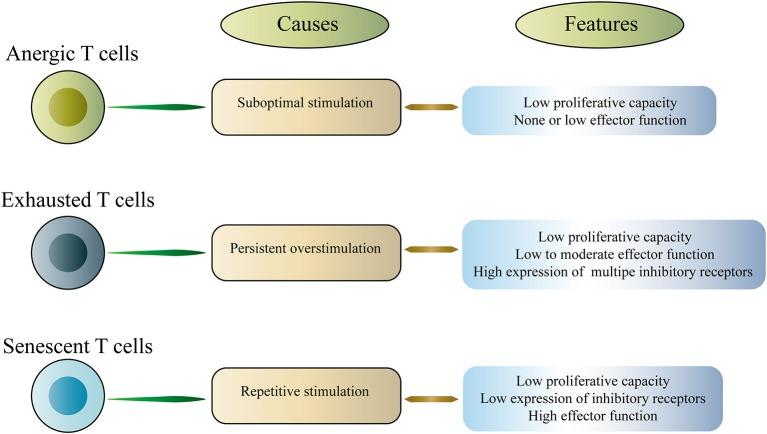
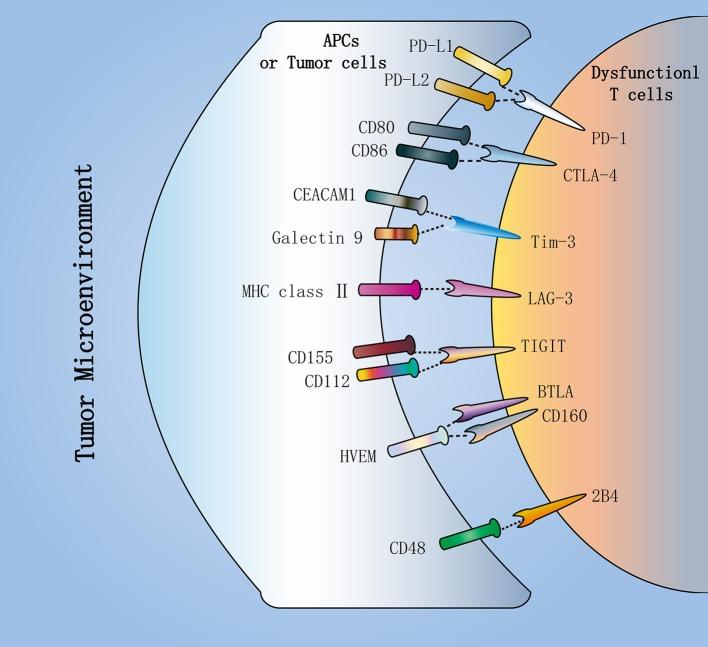
In cancer, T cells become dysfunctional owing to persistent antigen exposure. Dysfunctional T cells are characterized by reduced proliferative capacity, decreased effector function, and overexpression of multiple inhibitory receptors. Due to the presence of various inhibitory signals in the complex tumor microenvironment, tumor-specific T cells have distinct dysfunction states. Therapeutic reactivation of tumor-specific T cells has yielded good results in cancer patients. Here, we review the hallmarks of T cell dysfunction in cancer. Also, we discuss the relationship between T cell dysfunction and cancer immunotherapy.
在癌症中,由于持续的抗原暴露,T 细胞会变得功能失调。功能失调的 T 细胞的特征是增殖能力降低、效应功能降低和多种抑制性受体的过度表达。由于复杂的肿瘤微环境中存在各种抑制信号,肿瘤特异性 T 细胞具有不同的功能失调状态。肿瘤特异性 T 细胞的治疗性再激活在癌症患者中取得了良好的效果。在这里,我们回顾了癌症中 T 细胞功能失调的特征。此外,我们还讨论了 T 细胞功能失调与癌症免疫治疗的关系。
 Zotero 插件