
脂质和脂质筏在衰老和神经退行性疾病中的改变:开发新生物标志物的窗口。
Lipid and Lipid Raft Alteration in Aging and Neurodegenerative Diseases: A Window for the Development of New Biomarkers.
机构信息
Laboratory of Membrane Physiology and Biophysics, Department of Animal Biology, Edaphology and Geology.
Laboratory of Cellular Neurobiology, Department of Basic Medical Sciences, Section of Medicine, Faculty of Health Sciences, University of La Laguna, Sta. Cruz de Tenerife 38200, Spain.
出版信息
Int J Mol Sci. 2019 Aug 4;20(15):3810. doi: 10.3390/ijms20153810.
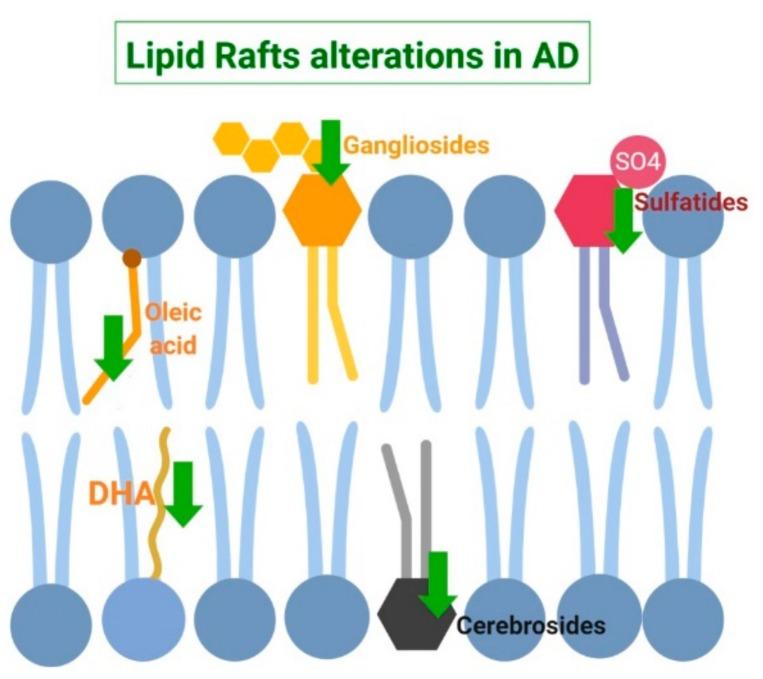
Lipids in the brain are major components playing structural functions as well as physiological roles in nerve cells, such as neural communication, neurogenesis, synaptic transmission, signal transduction, membrane compartmentalization, and regulation of gene expression. Determination of brain lipid composition may provide not only essential information about normal brain functioning, but also about changes with aging and diseases. Indeed, deregulations of specific lipid classes and lipid homeostasis have been demonstrated in neurodegenerative disorders such as Alzheimer's disease (AD) and Parkinson's disease (PD). Furthermore, recent studies have shown that membrane microdomains, named lipid rafts, may change their composition in correlation with neuronal impairment. Lipid rafts are key factors for signaling processes for cellular responses. Lipid alteration in these signaling platforms may correlate with abnormal protein distribution and aggregation, toxic cell signaling, and other neuropathological events related with these diseases. This review highlights the manner lipid changes in lipid rafts may participate in the modulation of neuropathological events related to AD and PD. Understanding and characterizing these changes may contribute to the development of novel and specific diagnostic and prognostic biomarkers in routinely clinical practice.
大脑中的脂质是主要成分,在神经细胞中发挥结构功能和生理作用,例如神经通讯、神经发生、突触传递、信号转导、膜区室化和基因表达的调节。脑脂质组成的测定不仅可以提供有关正常大脑功能的基本信息,还可以提供与衰老和疾病相关的变化的信息。事实上,在神经退行性疾病如阿尔茨海默病(AD)和帕金森病(PD)中,已经证明了特定脂质类别的失调和脂质动态平衡的失调。此外,最近的研究表明,称为脂筏的膜微区可能会随着神经元损伤而改变其组成。脂筏是细胞反应信号过程的关键因素。这些信号平台中的脂质改变可能与异常蛋白质分布和聚集、毒性细胞信号以及与这些疾病相关的其他神经病理学事件相关。这篇综述强调了脂质在脂筏中的变化可能参与调节与 AD 和 PD 相关的神经病理学事件的方式。了解和描述这些变化可能有助于在常规临床实践中开发新的、特定的诊断和预后生物标志物。


 Zotero 插件