
流感病毒的环境持久性取决于病毒类型和宿主来源。
Environmental Persistence of Influenza Viruses Is Dependent upon Virus Type and Host Origin.
机构信息
Department of Microbiology & Molecular Genetics, University of Pittsburgh School of Medicine, Pittsburgh, Pennsylvania, USA.
Department of Biology, Bethany College, Bethany, West Virginia, USA.
出版信息
mSphere. 2019 Aug 21;4(4):e00552-19. doi: 10.1128/mSphere.00552-19.
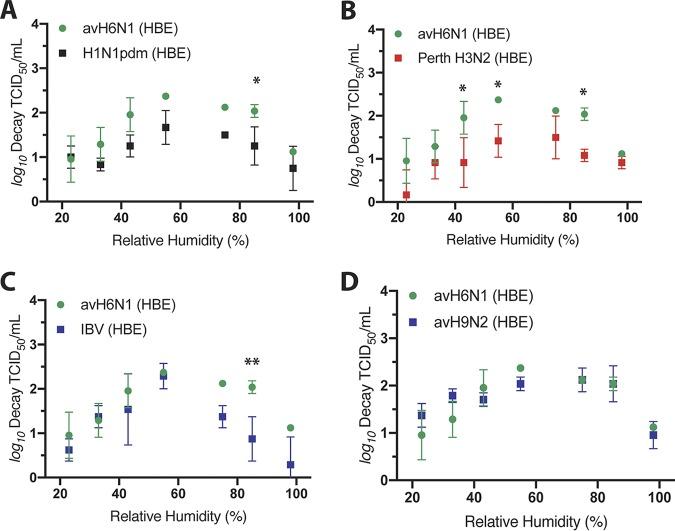
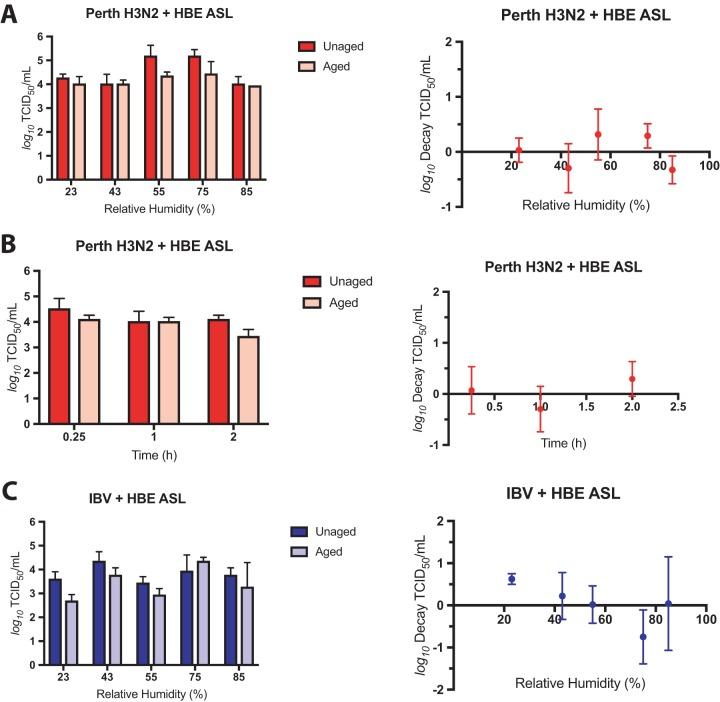
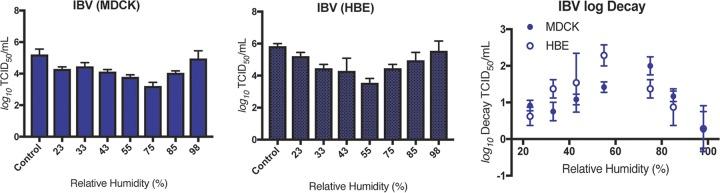
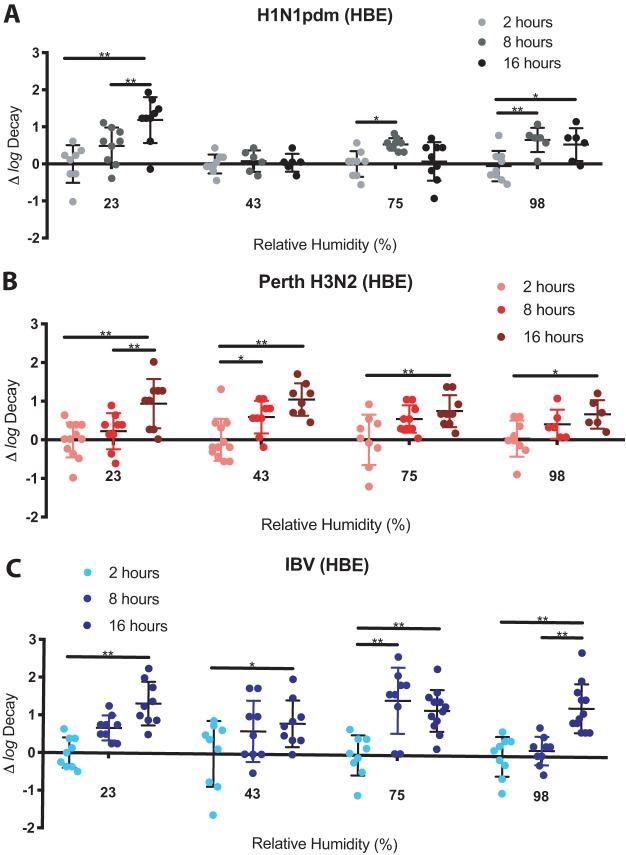
Highly transmissible influenza viruses (IV) must remain stable and infectious under a wide range of environmental conditions following release from the respiratory tract into the air. Understanding how expelled IV persist in the environment is critical to limiting the spread of these viruses. Little is known about how the stability of different IV in expelled aerosols is impacted by exposure to environmental stressors, such as relative humidity (RH). Given that not all IV are equally capable of efficient airborne transmission in people, we anticipated that not all IV would respond uniformly to ambient RH. Therefore, we have examined the stability of human-pathogenic seasonal and avian IV in suspended aerosols and stationary droplets under a range of RH conditions. H3N2 and influenza B virus (IBV) isolates are resistant to RH-dependent decay in aerosols in the presence of human airway surface liquid, but we observed strain-dependent variations in the longevities of H1N1, H3N2, and IBV in droplets. Surprisingly, low-pathogenicity avian influenza H6N1 and H9N2 viruses, which cause sporadic infections in humans but are unable to transmit person to person, demonstrated a trend toward increased sensitivity at midrange to high-range RH. Taken together, our observations suggest that the levels of vulnerability to decay at midrange RH differ with virus type and host origin. The rapid spread of influenza viruses (IV) from person to person during seasonal epidemics causes acute respiratory infections that can lead to hospitalizations and life-threatening illness. Atmospheric conditions such as relative humidity (RH) can impact the viability of IV released into the air. To understand how different IV are affected by their environment, we compared the levels of stability of human-pathogenic seasonal and avian IV under a range of RH conditions and found that highly transmissible seasonal IV were less sensitive to decay under midrange RH conditions in droplets. We observed that certain RH conditions can support the persistence of infectious viruses on surfaces and in the air for extended periods of time. Together, our findings will facilitate understanding of factors affecting the persistence and spread of IV in our environment.
高传染性流感病毒(IV)从呼吸道释放到空气中后,必须在广泛的环境条件下保持稳定和感染性。了解排出的 IV 如何在环境中持续存在对于限制这些病毒的传播至关重要。对于不同的 IV 在排出的气溶胶中暴露于环境胁迫(如相对湿度(RH))时的稳定性知之甚少。鉴于并非所有 IV 在人群中都具有同样高效的空气传播能力,我们预计并非所有 IV 都会对环境 RH 做出一致的反应。因此,我们研究了悬浮气溶胶中和固定液滴中人类致病性季节性和禽源 IV 在一系列 RH 条件下的稳定性。在存在人呼吸道表面液体的情况下,H3N2 和流感 B 病毒(IBV)分离株能够抵抗 RH 依赖性衰减,但我们观察到 H1N1、H3N2 和 IBV 在液滴中的存活时间存在菌株依赖性变化。令人惊讶的是,低致病性禽源流感 H6N1 和 H9N2 病毒在人类中引起散发性感染但无法在人与人之间传播,它们在中等到高 RH 范围内显示出敏感性增加的趋势。总的来说,我们的观察结果表明,在中 RH 范围内对衰减的脆弱性水平因病毒类型和宿主起源而异。流感病毒(IV)在季节性流行期间在人与人之间的快速传播会导致急性呼吸道感染,从而导致住院和危及生命的疾病。大气条件如相对湿度(RH)会影响释放到空气中的 IV 的存活能力。为了了解不同的 IV 如何受到环境的影响,我们比较了人类致病性季节性和禽源 IV 在一系列 RH 条件下的稳定性水平,发现高传染性季节性 IV 在液滴中的中 RH 条件下对衰减的敏感性较低。我们观察到某些 RH 条件可以支持传染性病毒在表面和空气中长时间持续存在。总之,我们的研究结果将有助于理解影响 IV 在我们环境中持久性和传播的因素。

 Zotero 插件