
麦卢卡蜂蜜通过选择性拮抗 IL-6 受体抑制人乳腺癌和肺癌细胞中酪氨酸磷酸化 STAT3。
Inhibition of Tyrosine-Phosphorylated STAT3 in Human Breast and Lung Cancer Cells by Manuka Honey is Mediated by Selective Antagonism of the IL-6 Receptor.
机构信息
Department of Medical Microbiology & Immunology, College of Medicine and Health Sciences, United Arab Emirates University, Al Ain, United Arab Emirates.
Department of Biochemistry, College of Medicine and Health Sciences, United Arab Emirates University, Al Ain, United Arab Emirates.
出版信息
Int J Mol Sci. 2019 Sep 5;20(18):4340. doi: 10.3390/ijms20184340.
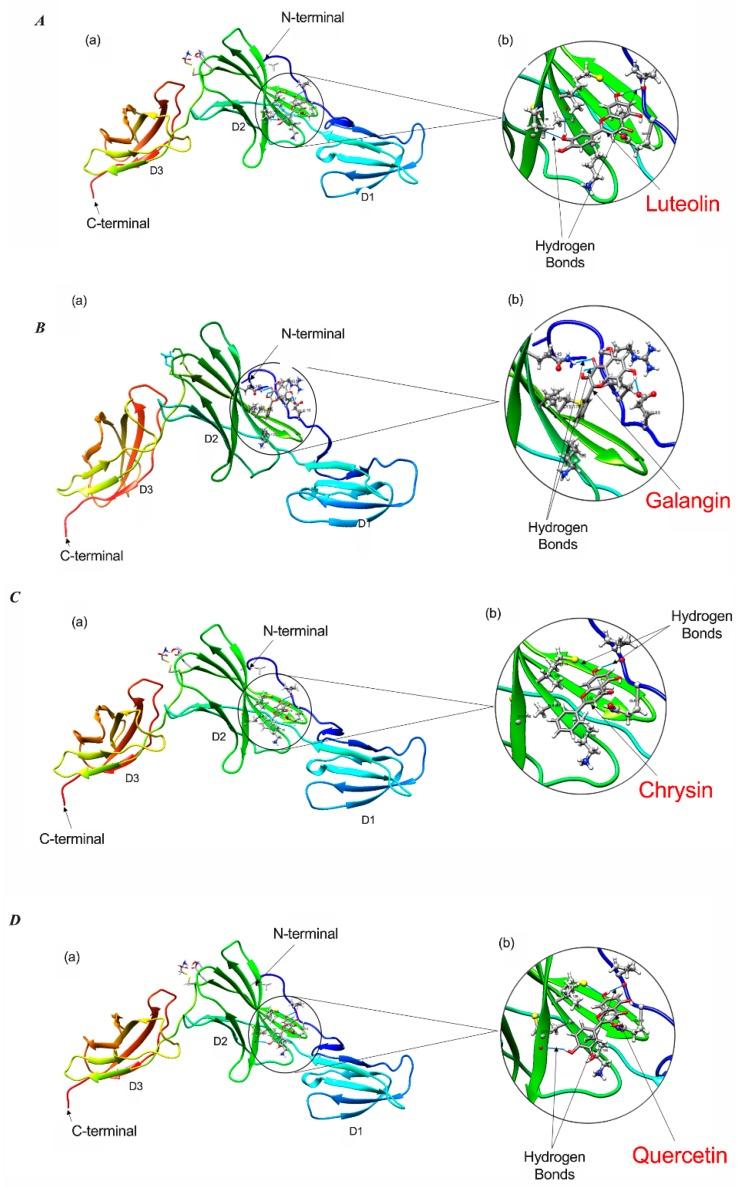
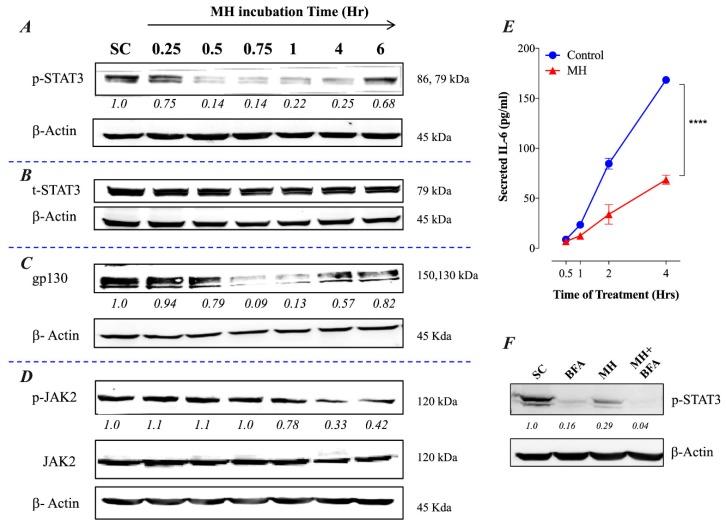
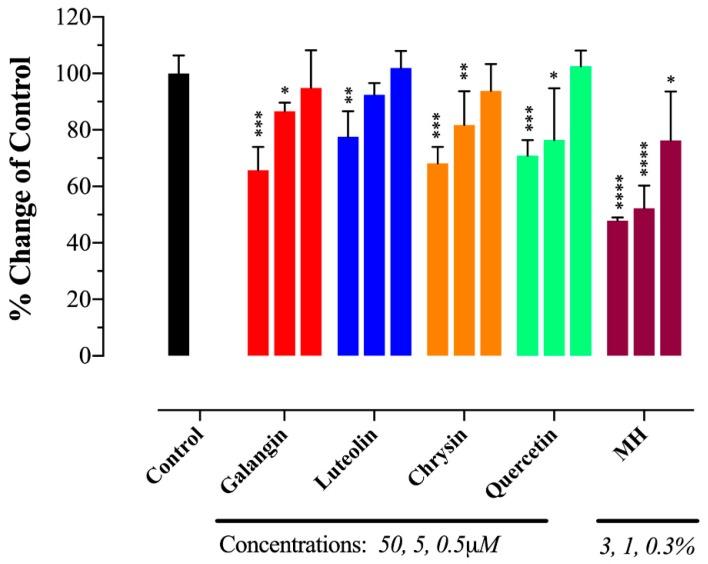
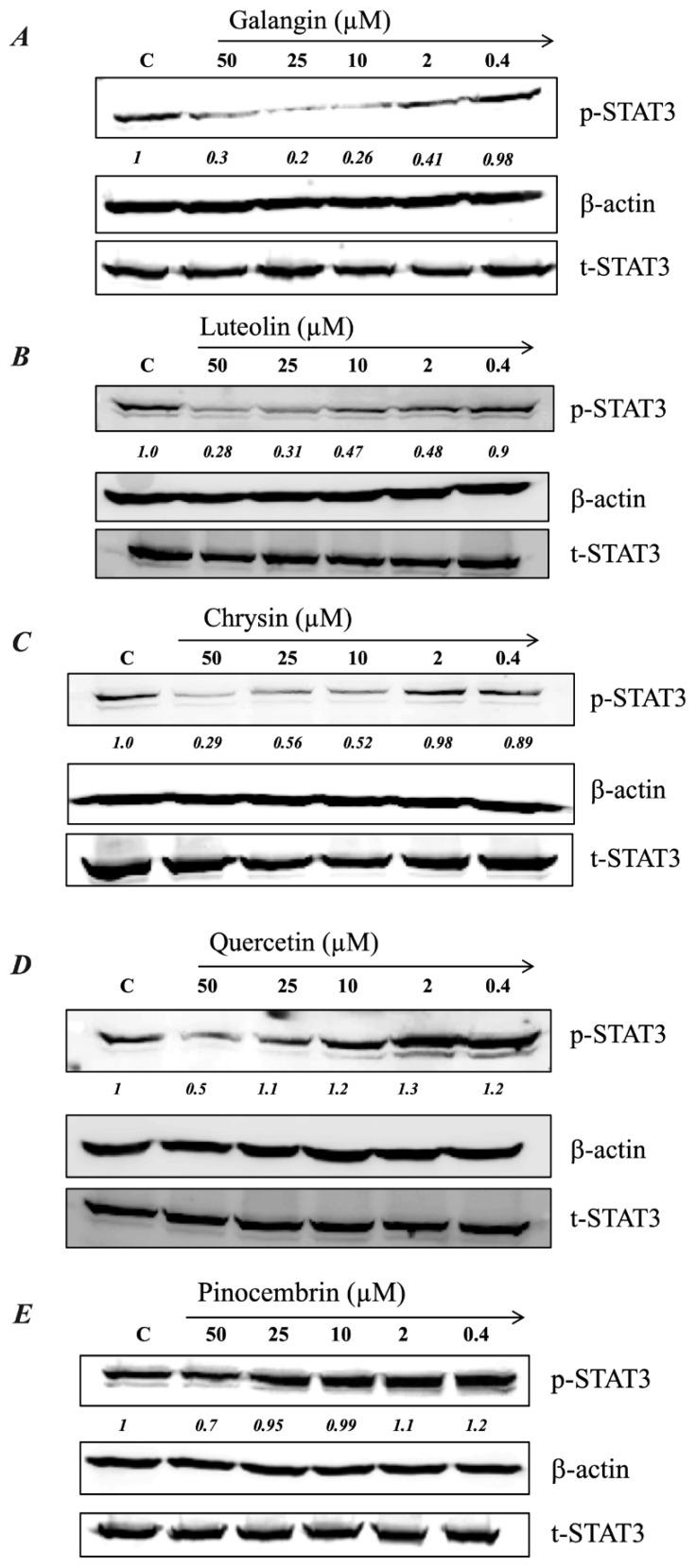
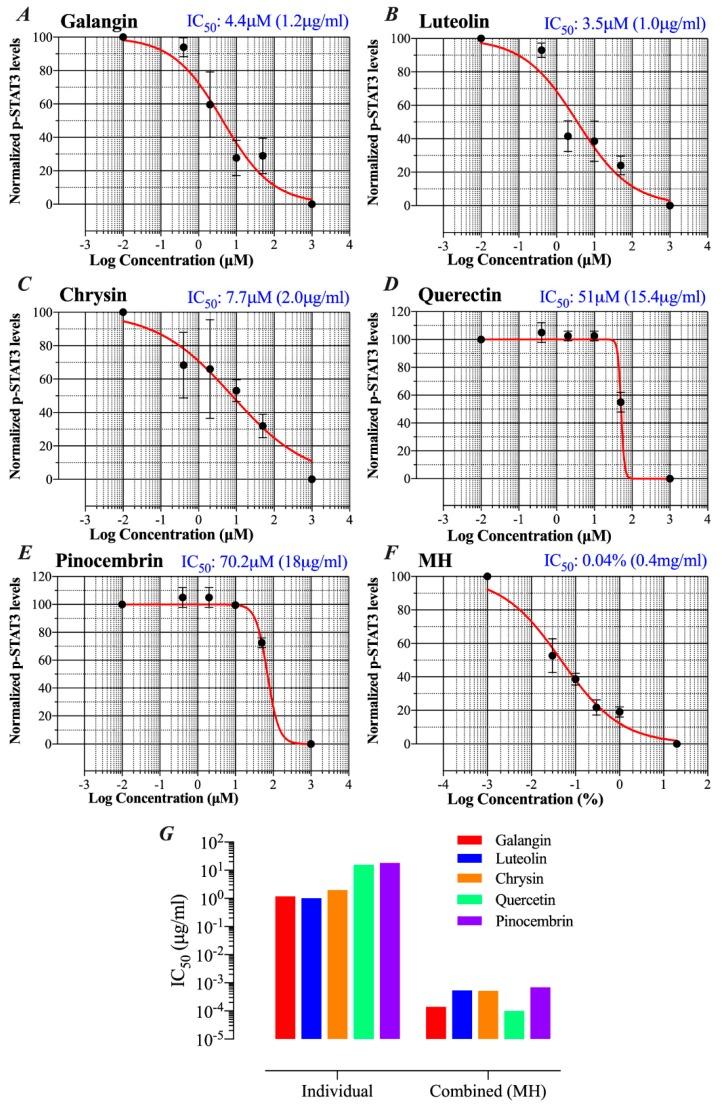
Aberrantly high levels of tyrosine-phosphorylated signal transducer and activator of transcription 3 (p-STAT3) are found constitutively in 50% of human lung and breast cancers, acting as an oncogenic transcription factor. We previously demonstrated that Manuka honey (MH) inhibits p-STAT3 in breast cancer cells, but the exact mechanism remained unknown. Herein, we show that MH-mediated inhibition of p-STAT3 in breast (MDA-MB-231) and lung (A549) cancer cell lines is accompanied by decreased levels of gp130 and p-JAK2, two upstream components of the IL-6 receptor (IL-6R) signaling pathway. Using an ELISA-based assay, we demonstrate that MH binds directly to IL-6Rα, significantly inhibiting (60%) its binding to the IL-6 ligand. Importantly, no evidence of MH binding to two other cytokine receptors, IL-11Rα and IL-8R, was found. Moreover, MH did not alter the levels of tyrosine-phosphorylated or total Src family kinases, which are also constitutively activated in cancer cells, suggesting that signaling via other growth factor receptors is unaffected by MH. Binding of five major MH flavonoids (luteolin, quercetin, galangin, pinocembrin, and chrysin) was also tested, and all but pinocembrin could demonstrably bind IL-6Rα, partially (30-35%) blocking IL-6 binding at the highest concentration (50 μM) used. In agreement, each flavonoid inhibited p-STAT3 in a dose-dependent manner, with estimated IC values in the 3.5-70 μM range. Finally, docking analysis confirmed the capacity of each flavonoid to bind in an energetically favorable configuration to IL-6Rα at a site predicted to interfere with ligand binding. Taken together, our findings identify IL-6Rα as a direct target of MH and its flavonoids, highlighting IL-6R blockade as a mechanism for the anti-tumor activity of MH, as well as a viable therapeutic target in IL-6-dependent cancers.
异常高水平的酪氨酸磷酸化信号转导和转录激活因子 3(p-STAT3)在约 50%的人类肺癌和乳腺癌中持续存在,作为一种致癌转录因子。我们之前证明,麦卢卡蜂蜜(MH)抑制乳腺癌细胞中的 p-STAT3,但确切的机制尚不清楚。在此,我们表明 MH 介导的乳腺癌(MDA-MB-231)和肺癌(A549)癌细胞系中的 p-STAT3 抑制伴随着 gp130 和 p-JAK2 水平的降低,这两种是白细胞介素-6 受体(IL-6R)信号通路的上游成分。使用基于 ELISA 的测定法,我们证明 MH 直接结合 IL-6Rα,显著抑制(~60%)其与 IL-6 配体的结合。重要的是,没有发现 MH 与另外两种细胞因子受体,即白细胞介素-11Rα和白细胞介素-8R 的结合证据。此外,MH 并未改变酪氨酸磷酸化或总Src 家族激酶的水平,这些激酶在癌细胞中也持续激活,这表明 MH 不影响通过其他生长因子受体的信号传导。还测试了五种主要 MH 类黄酮(木犀草素、槲皮素、高良姜素、芹黄素和白杨素)的结合,除了 pinocembin 之外,所有这些都可以明显地结合 IL-6Rα,在使用的最高浓度(50μM)下部分(30-35%)阻断 IL-6 结合。一致地,每种类黄酮均以剂量依赖性方式抑制 p-STAT3,估计 IC 值在 3.5-70μM 范围内。最后,对接分析证实了每种类黄酮在能量上有利于结合到预测会干扰配体结合的位点上的 IL-6Rα。总之,我们的研究结果将 IL-6Rα 鉴定为 MH 及其类黄酮的直接靶标,强调了 IL-6R 阻断作为 MH 抗肿瘤活性的机制,以及在依赖于 IL-6 的癌症中作为可行的治疗靶标。


 Zotero 插件