
特发性肺纤维化的抗纤维化治疗:是时候治疗了。
Antifibrotic therapy for idiopathic pulmonary fibrosis: time to treat.
机构信息
National Institute for Health Research Respiratory Clinical Research Facility, Royal Brompton and Harefield NHS Foundation Trust, Sydney Street, London, SW3 6NP, UK.
Fibrosis Research Group, National Heart and Lung Institute, Imperial College, Cale Street, London, SW3 6LY, UK.
出版信息
Respir Res. 2019 Sep 6;20(1):205. doi: 10.1186/s12931-019-1161-4.
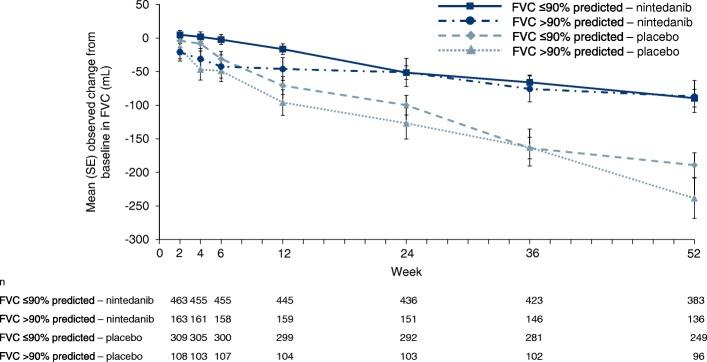
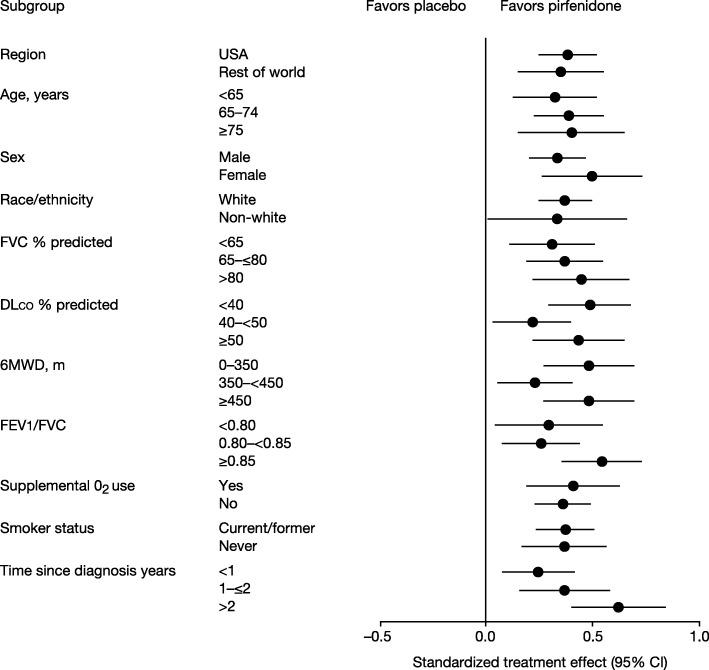
Idiopathic pulmonary fibrosis (IPF) is a progressive disease with a dismal prognosis. The average life expectancy of untreated patients with IPF is only 3 to 4 years. Decline in forced vital capacity (FVC) in patients with IPF appears to be almost linear, with patients with well-preserved FVC at baseline experiencing the same rate of decline in FVC as patients with more advanced disease. Two antifibrotic therapies have been approved for the treatment of IPF: nintedanib and pirfenidone. These drugs slow decline in lung function and reduce the risk of acute respiratory deteriorations, which are associated with very high morbidity and mortality. Individual clinical trials have not been powered to show reductions in mortality, but analyses of pooled data from clinical trials, as well as observational studies, suggest that antifibrotic therapies improve life expectancy. Despite this, many individuals with IPF remain untreated. In many cases, this is because the physician perceives that the disease is stable and so does not warrant therapy, or has concerns over the potential side-effects of antifibrotic drugs. There remains a need to educate pulmonologists that IPF is a progressive, irreversible and fatal disease and that prompt treatment is critical to preserving patients' lung function and improving outcomes. Most individuals can tolerate antifibrotic therapy, and dose adjustment has been shown to be effective at reducing side effects without compromising efficacy. In addition to anti-fibrotic therapies, individuals with IPF benefit from a holistic approach to their care that includes symptom management and supportive care tailored to the needs of the individual. An animation illustrating the themes covered in this article will be available at: http://www.usscicomms.com/respiratory/maher/treatment-of-IPF .
特发性肺纤维化(IPF)是一种进行性疾病,预后不良。未经治疗的 IPF 患者的平均预期寿命仅为 3 至 4 年。IPF 患者的用力肺活量(FVC)下降似乎几乎呈线性趋势,基线时 FVC 保存良好的患者与疾病进展更严重的患者具有相同的 FVC 下降率。两种抗纤维化疗法已被批准用于治疗 IPF:尼达尼布和吡非尼酮。这些药物可减缓肺功能下降速度,并降低急性呼吸恶化的风险,急性呼吸恶化与极高的发病率和死亡率相关。个别临床试验没有足够的能力显示死亡率降低,但临床试验汇总数据分析以及观察性研究表明,抗纤维化疗法可提高预期寿命。尽管如此,许多 IPF 患者仍未接受治疗。在许多情况下,这是因为医生认为疾病稳定,因此不需要治疗,或者担心抗纤维化药物的潜在副作用。仍然需要教育肺科医生,IPF 是一种进行性、不可逆转和致命的疾病,及时治疗对于保持患者的肺功能和改善预后至关重要。大多数人可以耐受抗纤维化治疗,并且已经证明剂量调整可以在不影响疗效的情况下有效减少副作用。除了抗纤维化治疗外,IPF 患者还受益于一种整体治疗方法,包括针对个体需求的症状管理和支持性护理。本文涵盖主题的动画将在以下网址提供:http://www.usscicomms.com/respiratory/maher/treatment-of-IPF。




 Zotero 插件