
病毒与氧化应激:对病毒发病机制的影响。
Viruses and Oxidative Stress: Implications for Viral Pathogenesis.
机构信息
Institute of Human Virology and Zhongshan School of Medicine, Sun Yat-sen University, Guangzhou 510080, China.
Key Laboratory of Tropical Disease Control (Sun Yat-sen University), Ministry of Education, Guangzhou 510080, China.
出版信息
Oxid Med Cell Longev. 2019 Aug 19;2019:1409582. doi: 10.1155/2019/1409582. eCollection 2019.
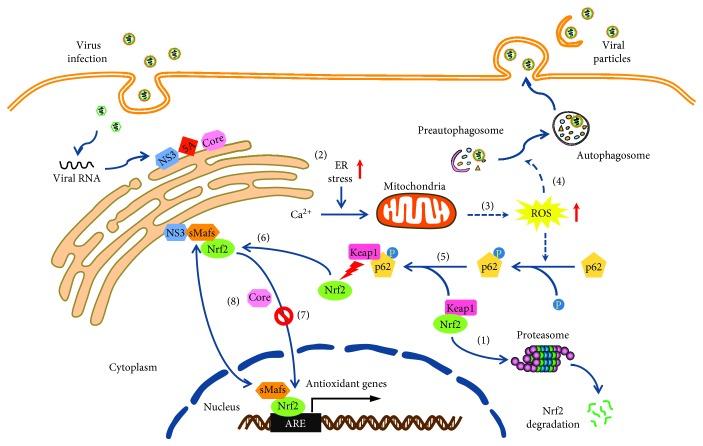
Oxidative stress is induced once the balance of generation and neutralization of reactive oxygen species (ROS) is broken in the cell, and it plays crucial roles in a variety of natural and diseased processes. Infections of viruses trigger oxidative stress, which affects both the cellular metabolism and the life cycle of the viruses. Oxidative stress associated with specific viral proteins, experimental culture systems, and patient infections, as well as its correlations with the viral pathogenesis attracts much research attention. In this review, we primarily focus on hepatitis C virus (HCV), dengue virus (DENV), Zika virus (ZIKV), Japanese encephalitis virus (JEV), West Nile virus (WNV), and tick-borne encephalitis virus (TBEV) as representatives of viruses and we summarize the mechanisms involved in the relevance of oxidative stress for virus-associated pathogenesis. We discuss the current understanding of the pathogenic mechanisms of oxidative stress induced by viruses and highlight the relevance of autophagy and DNA damage in the life cycle of viruses. Understanding the crosstalk between viral infection and oxidative stress-induced molecular events may offer new avenues for antiviral therapeutics.
氧化应激是指细胞内活性氧(ROS)的产生和中和平衡被打破时诱导的一种应激反应,它在多种自然和疾病过程中发挥着关键作用。病毒感染会引发氧化应激,从而影响细胞代谢和病毒生命周期。与特定病毒蛋白、实验培养系统和患者感染相关的氧化应激,以及其与病毒发病机制的相关性引起了广泛的研究关注。在这篇综述中,我们主要以丙型肝炎病毒(HCV)、登革热病毒(DENV)、寨卡病毒(ZIKV)、日本脑炎病毒(JEV)、西尼罗河病毒(WNV)和蜱传脑炎病毒(TBEV)为例,聚焦于病毒,并总结了氧化应激与病毒相关发病机制相关性的相关机制。我们讨论了病毒诱导氧化应激的发病机制的现有认识,并强调了自噬和 DNA 损伤在病毒生命周期中的相关性。了解病毒感染与氧化应激诱导的分子事件之间的相互作用可能为抗病毒治疗提供新的途径。
 Zotero 插件