
不同上肢训练模式对慢性阻塞性肺疾病患者的影响:一项系统评价和荟萃分析
Effects of Different Modes of Upper Limb Training in Individuals With Chronic Obstructive Pulmonary Disease: A Systematic Review and Meta-Analysis.
作者信息
Kruapanich Chathipat, Tantisuwat Anong, Thaveeratitham Premtip, Lertmaharit Somrat, Ubolnuar Nutsupa, Mathiyakom Witaya
机构信息
Department of Physical Therapy, Faculty of Allied Health Sciences, Chulalongkorn University, Bangkok, Thailand.
Department of Preventive and Social Medicine, Faculty of Medicine, Chulalongkorn University, Bangkok, Thailand.
出版信息
Ann Rehabil Med. 2019 Oct;43(5):592-614. doi: 10.5535/arm.2019.43.5.592. Epub 2019 Oct 31.
OBJECTIVE
To determine effects of different modes of upper limb training on dyspnea and quality of life of individuals with chronic obstructive pulmonary disease (COPD) having different disease severity.
METHODS
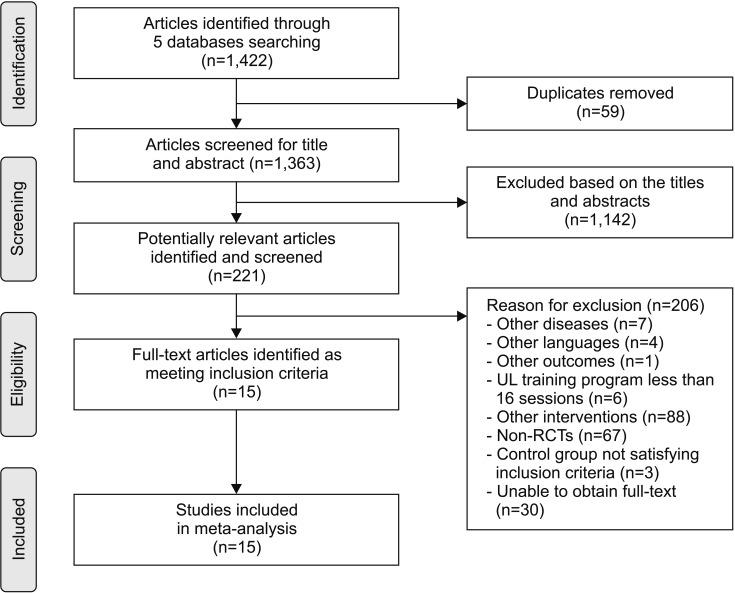
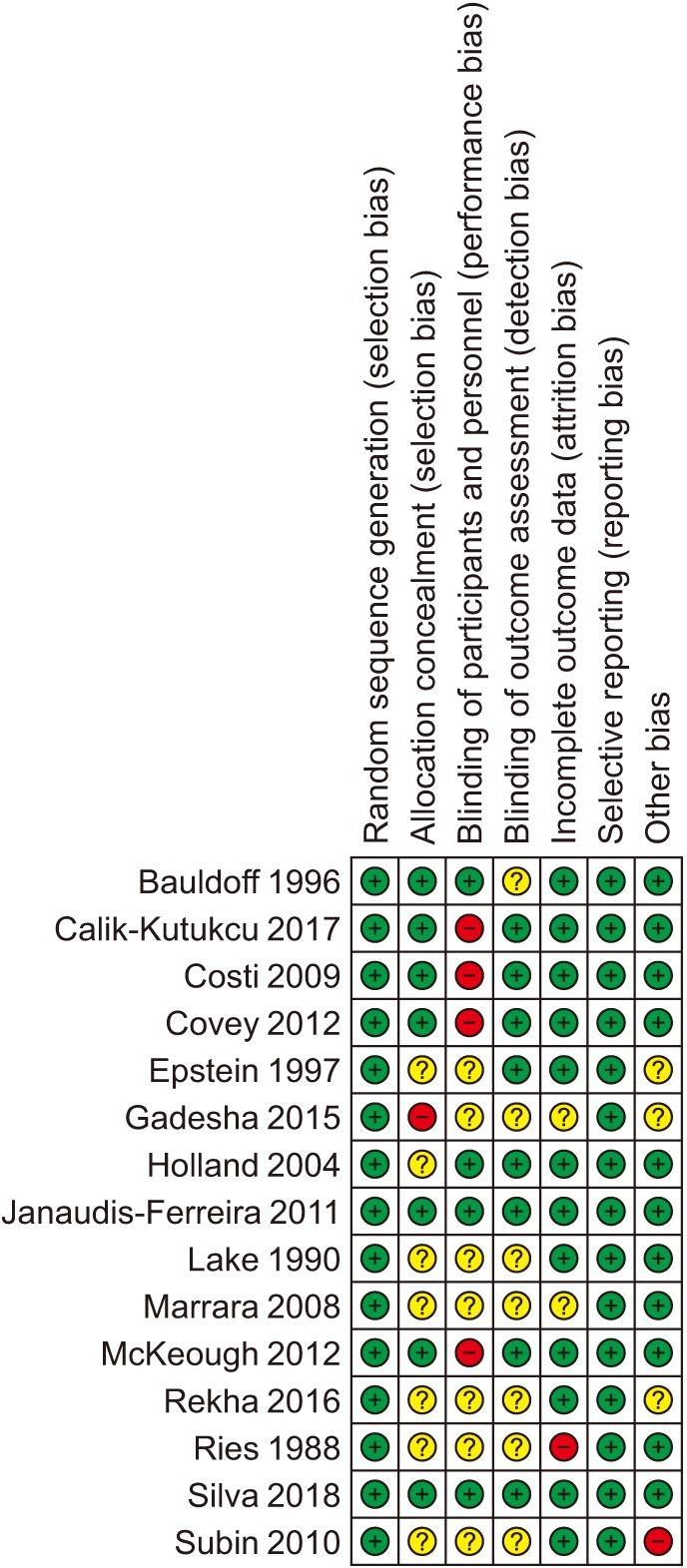
Randomized clinical trials were retrieved from five electronic databases. Risk of bias and quality of evidence were assessed using the Cochrane Collaboration's tool and the GRADE approach, respectively. Effects of upper limb training compared to control were identified using standardized mean difference and 95% confidence interval.
RESULTS
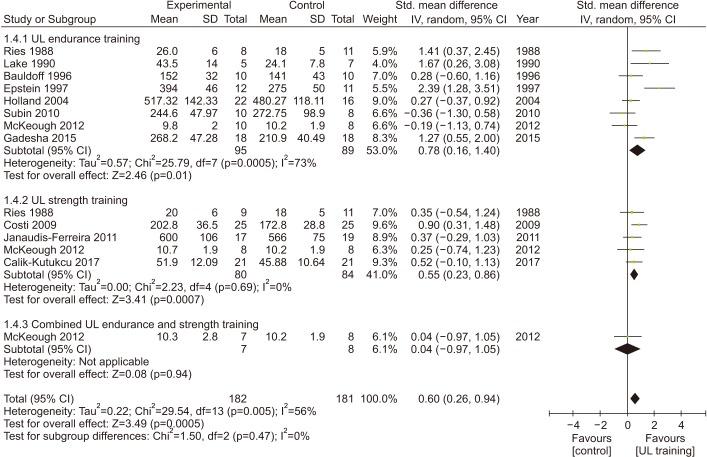
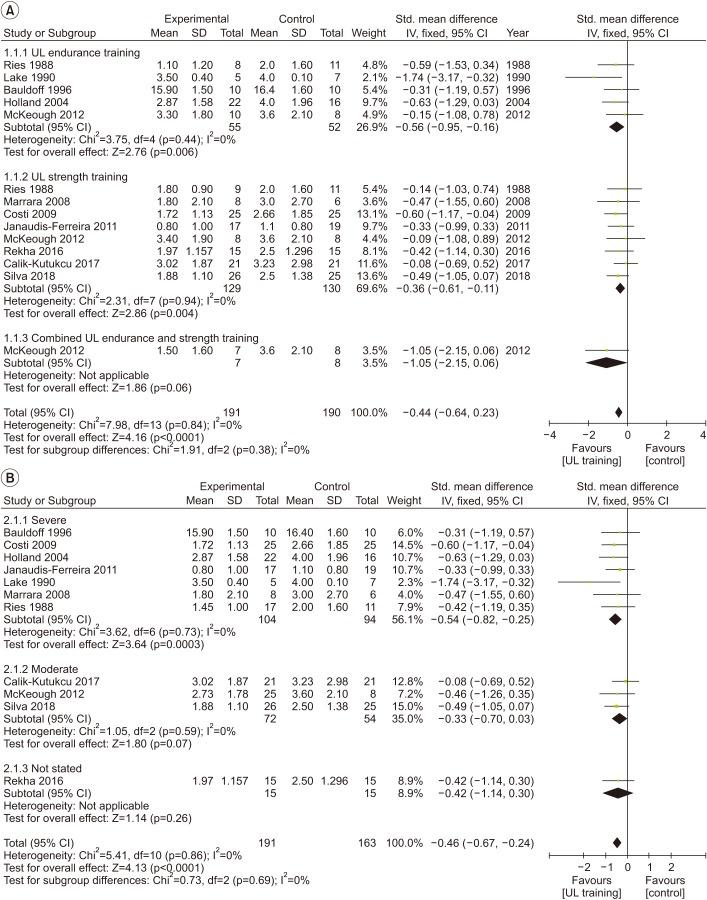
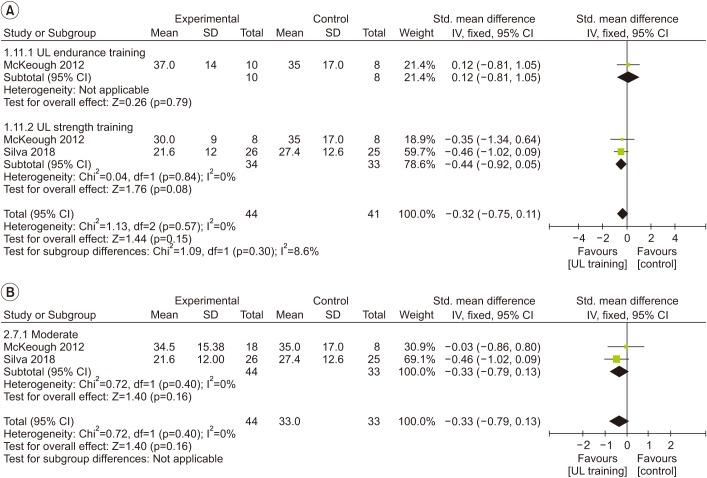
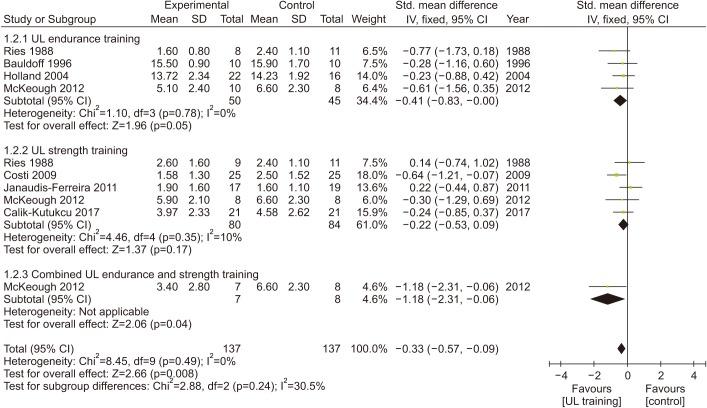
Fifteen studies with 514 subjects were included. When compared to control, upper limb endurance and strength training with moderate quality of evidence resulted in significant improvement in dyspnea. However, quality of life was not significantly different between upper limb training of all modes of and the control. The upper limb training was more effective in reducing dyspnea in patients with severe COPD than in those with mild to moderate levels of COPD. Although quality of life was slightly improved by upper limb training for those with moderate or severe level of COPD, such improvement did not reach a significant level when compared to the control.
CONCLUSION
Upper limb endurance and strength training could significantly improve dyspnea in individuals with chronic obstructive pulmonary disease. Thus, incorporating the upper limb training into pulmonary rehabilitation is recommended to reduce dyspnea, especially for those with severe patients. Further studies with larger sample size and standardized training protocol are needed to confirm these finding (Registration No. CRD42018102805).
目的
确定不同模式的上肢训练对不同疾病严重程度的慢性阻塞性肺疾病(COPD)患者呼吸困难及生活质量的影响。
方法
从五个电子数据库中检索随机临床试验。分别使用Cochrane协作网工具和GRADE方法评估偏倚风险和证据质量。采用标准化均数差和95%置信区间确定上肢训练与对照组相比的效果。
结果
纳入15项研究,共514名受试者。与对照组相比,证据质量中等的上肢耐力和力量训练可显著改善呼吸困难。然而,所有模式的上肢训练与对照组相比,生活质量无显著差异。上肢训练对重度COPD患者减轻呼吸困难的效果比对轻度至中度COPD患者更有效。虽然上肢训练使中度或重度COPD患者的生活质量略有改善,但与对照组相比,这种改善未达到显著水平。
结论
上肢耐力和力量训练可显著改善慢性阻塞性肺疾病患者的呼吸困难。因此,建议将上肢训练纳入肺康复以减轻呼吸困难,尤其是对重度患者。需要进一步开展样本量更大、训练方案标准化的研究来证实这些发现(注册号:CRD42018102805)。


 Zotero 插件