
自我报告的睡眠与整个成年期的海马体萎缩有关:来自 Lifebrain 联盟的结果。
Self-reported sleep relates to hippocampal atrophy across the adult lifespan: results from the Lifebrain consortium.
机构信息
Center for Lifespan Changes in Brain and Cognition, University of Oslo, Norway.
Department of Radiology and Nuclear Medicine, Oslo University Hospital, Norway.
出版信息
Sleep. 2020 May 12;43(5). doi: 10.1093/sleep/zsz280.
OBJECTIVES
Poor sleep is associated with multiple age-related neurodegenerative and neuropsychiatric conditions. The hippocampus plays a special role in sleep and sleep-dependent cognition, and accelerated hippocampal atrophy is typically seen with higher age. Hence, it is critical to establish how the relationship between sleep and hippocampal volume loss unfolds across the adult lifespan.
METHODS
Self-reported sleep measures and MRI-derived hippocampal volumes were obtained from 3105 cognitively normal participants (18-90 years) from major European brain studies in the Lifebrain consortium. Hippocampal volume change was estimated from 5116 MRIs from 1299 participants for whom longitudinal MRIs were available, followed up to 11 years with a mean interval of 3.3 years. Cross-sectional analyses were repeated in a sample of 21,390 participants from the UK Biobank.
RESULTS
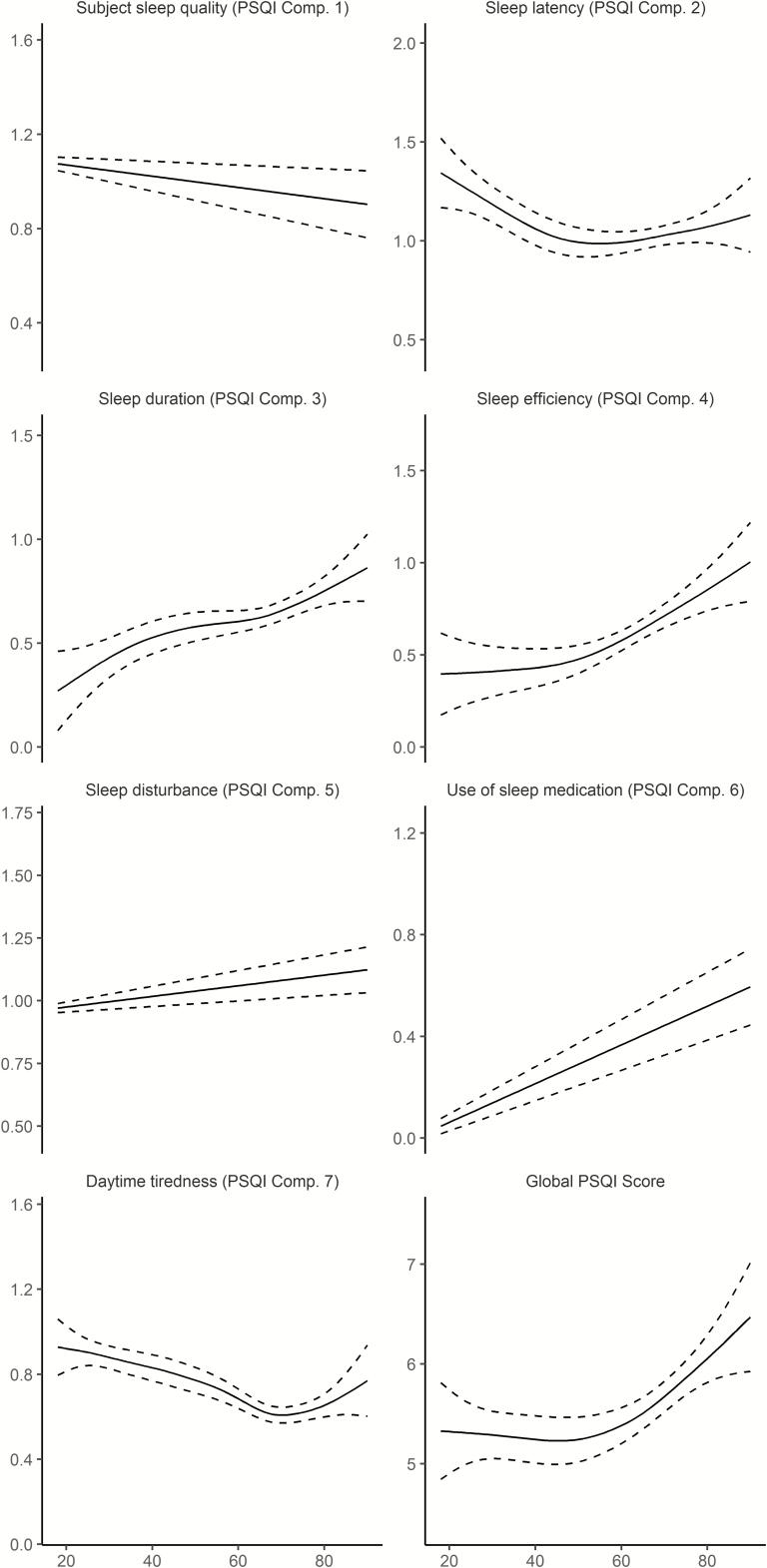
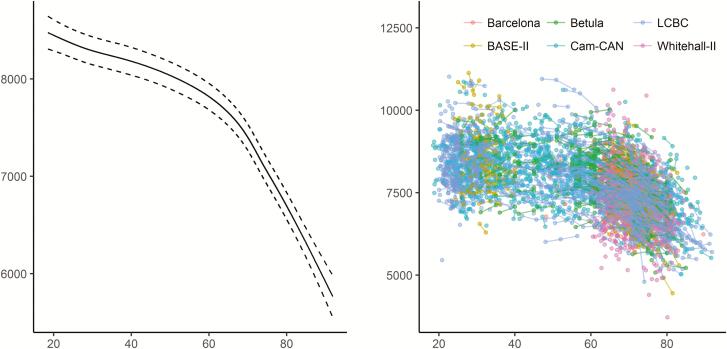
No cross-sectional sleep-hippocampal volume relationships were found. However, worse sleep quality, efficiency, problems, and daytime tiredness were related to greater hippocampal volume loss over time, with high scorers showing 0.22% greater annual loss than low scorers. The relationship between sleep and hippocampal atrophy did not vary across age. Simulations showed that the observed longitudinal effects were too small to be detected as age-interactions in the cross-sectional analyses.
CONCLUSIONS
Worse self-reported sleep is associated with higher rates of hippocampal volume decline across the adult lifespan. This suggests that sleep is relevant to understand individual differences in hippocampal atrophy, but limited effect sizes call for cautious interpretation.
目的
睡眠质量差与多种与年龄相关的神经退行性和神经精神疾病有关。海马体在睡眠和睡眠相关认知中起着特殊的作用,并且随着年龄的增长,海马体的加速萎缩通常更为明显。因此,确定睡眠与海马体体积损失之间的关系如何在整个成年期展开至关重要。
方法
从 Lifebrain 联盟的主要欧洲大脑研究中获得了 3105 名认知正常参与者(18-90 岁)的自我报告睡眠测量和 MRI 衍生的海马体体积。从 1299 名有纵向 MRI 数据的参与者的 5116 个 MRI 中估算了海马体体积变化,随访时间长达 11 年,平均间隔为 3.3 年。在 UK Biobank 的 21390 名参与者样本中重复了横断面分析。
结果
没有发现横断面睡眠与海马体体积之间的关系。然而,睡眠质量、效率、问题和白天疲劳较差与随时间推移的海马体体积损失更大相关,高得分者比低得分者每年损失更大 0.22%。睡眠与海马体萎缩之间的关系在不同年龄段没有差异。模拟表明,观察到的纵向效应太小,无法在横断面分析中检测到年龄交互作用。
结论
自我报告的睡眠质量较差与整个成年期海马体体积下降的速度较快有关。这表明睡眠与个体之间的海马体萎缩差异有关,但由于有限的效应大小,需要谨慎解释。





 Zotero 插件