
病毒与病毒之间的相互作用会影响流感和普通感冒的种群动态。
Virus-virus interactions impact the population dynamics of influenza and the common cold.
作者信息
Nickbakhsh Sema, Mair Colette, Matthews Louise, Reeve Richard, Johnson Paul C D, Thorburn Fiona, von Wissmann Beatrix, Reynolds Arlene, McMenamin James, Gunson Rory N, Murcia Pablo R
机构信息
MRC-University of Glasgow Centre for Virus Research, Institute of Infection, Immunity and Inflammation, College of Medical, Veterinary and Life Sciences, University of Glasgow, G61 1QH Glasgow, United Kingdom.
School of Mathematics and Statistics, College of Science and Engineering, University of Glasgow, G12 8QQ Glasgow, United Kingdom.
出版信息
Proc Natl Acad Sci U S A. 2019 Dec 26;116(52):27142-27150. doi: 10.1073/pnas.1911083116. Epub 2019 Dec 16.
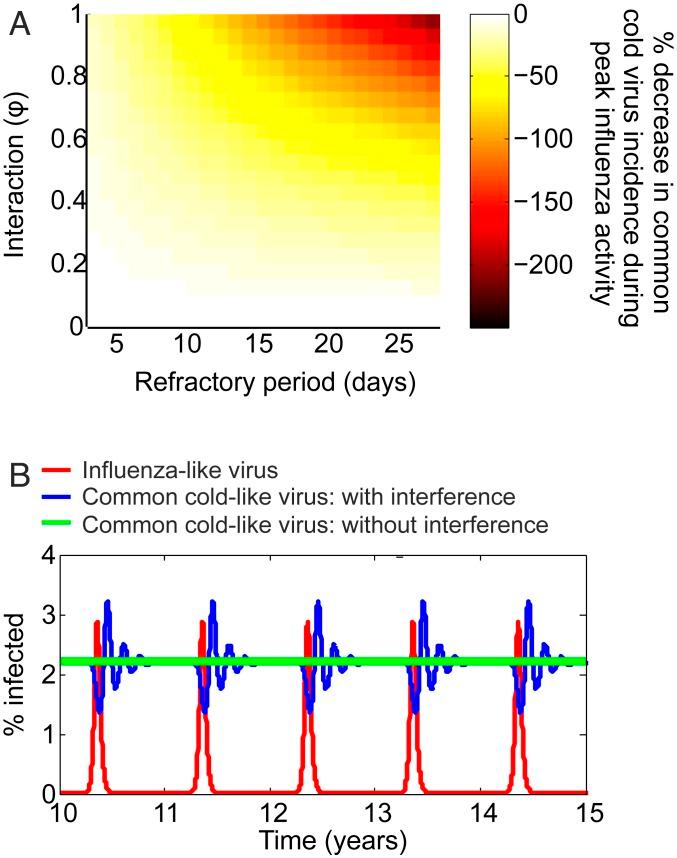
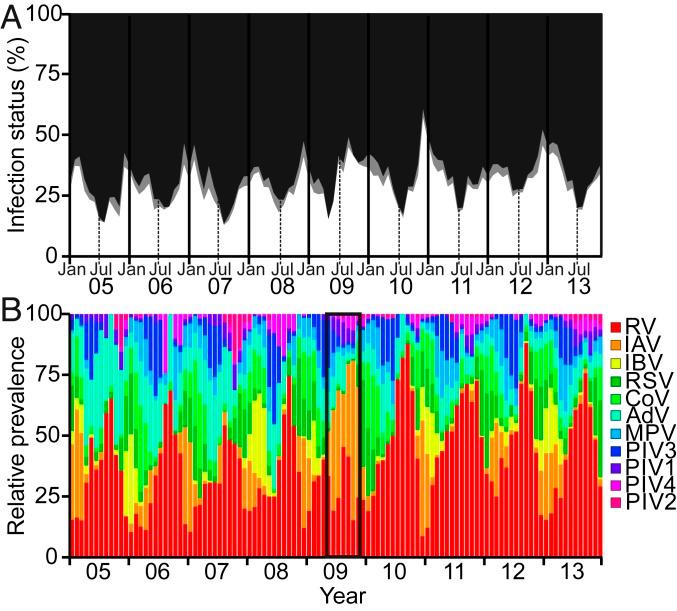
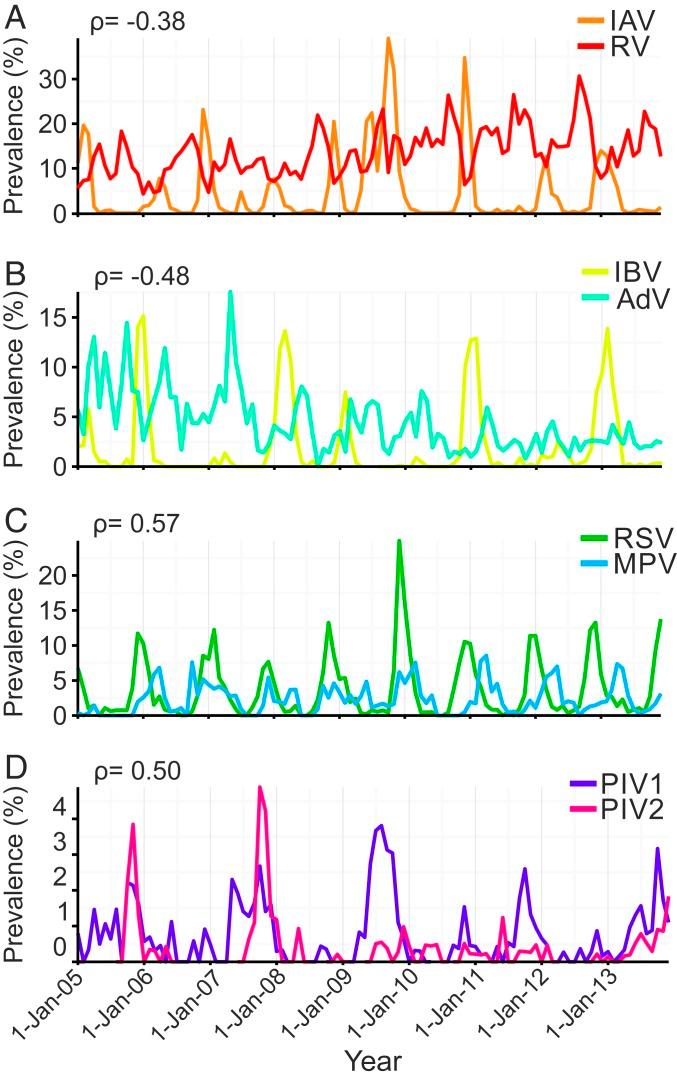
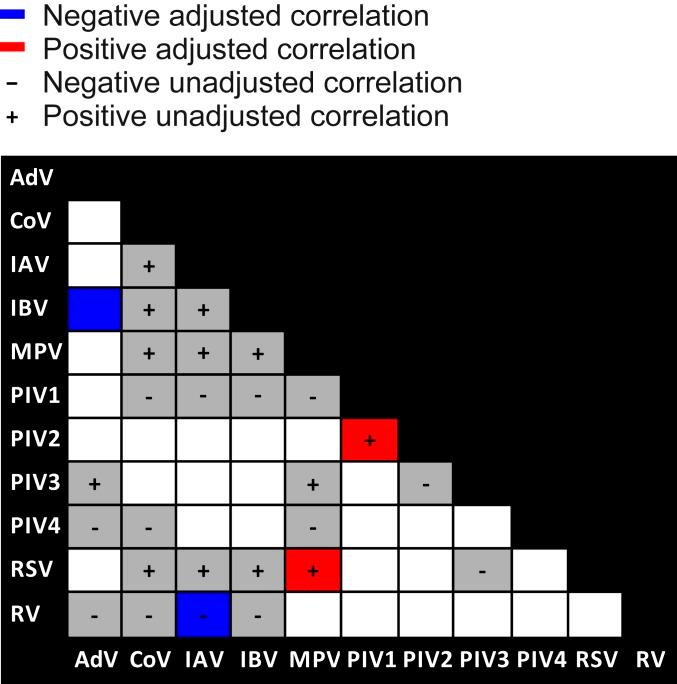
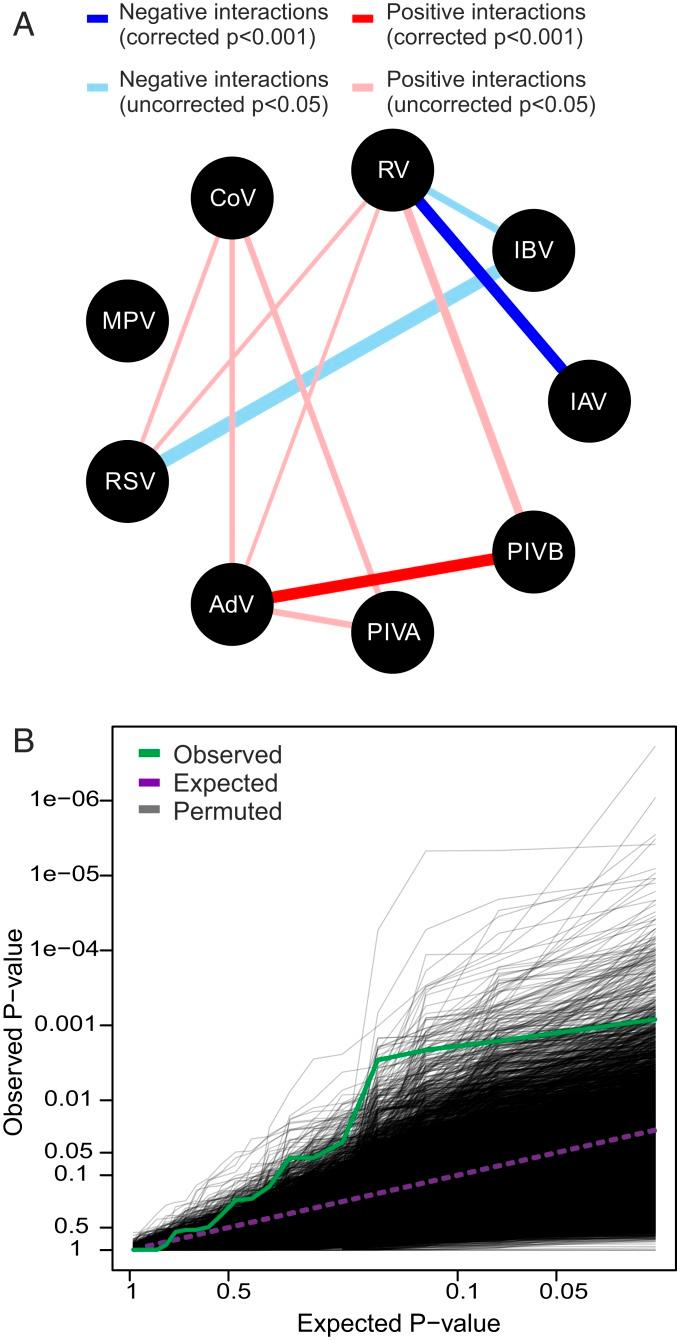
The human respiratory tract hosts a diverse community of cocirculating viruses that are responsible for acute respiratory infections. This shared niche provides the opportunity for virus-virus interactions which have the potential to affect individual infection risks and in turn influence dynamics of infection at population scales. However, quantitative evidence for interactions has lacked suitable data and appropriate analytical tools. Here, we expose and quantify interactions among respiratory viruses using bespoke analyses of infection time series at the population scale and coinfections at the individual host scale. We analyzed diagnostic data from 44,230 cases of respiratory illness that were tested for 11 taxonomically broad groups of respiratory viruses over 9 y. Key to our analyses was accounting for alternative drivers of correlated infection frequency, such as age and seasonal dependencies in infection risk, allowing us to obtain strong support for the existence of negative interactions between influenza and noninfluenza viruses and positive interactions among noninfluenza viruses. In mathematical simulations that mimic 2-pathogen dynamics, we show that transient immune-mediated interference can cause a relatively ubiquitous common cold-like virus to diminish during peak activity of a seasonal virus, supporting the potential role of innate immunity in driving the asynchronous circulation of influenza A and rhinovirus. These findings have important implications for understanding the linked epidemiological dynamics of viral respiratory infections, an important step towards improved accuracy of disease forecasting models and evaluation of disease control interventions.
人类呼吸道中存在多种共同传播的病毒群落,这些病毒会引发急性呼吸道感染。这个共同的生态位为病毒之间的相互作用提供了机会,这种相互作用有可能影响个体感染风险,进而影响群体层面的感染动态。然而,关于相互作用的定量证据一直缺乏合适的数据和恰当的分析工具。在此,我们通过对群体规模的感染时间序列和个体宿主规模的共感染进行定制分析,揭示并量化呼吸道病毒之间的相互作用。我们分析了44230例呼吸道疾病病例的诊断数据,这些病例在9年时间里接受了针对11个分类广泛的呼吸道病毒组的检测。我们分析的关键在于考虑感染频率相关性的其他驱动因素,比如年龄和感染风险的季节性依赖性,这使我们能够有力地支持流感病毒与非流感病毒之间存在负相互作用以及非流感病毒之间存在正相互作用的观点。在模拟双病原体动态的数学模拟中,我们表明短暂的免疫介导干扰会导致一种相对普遍的类普通感冒病毒在季节性病毒的活动高峰期减少,这支持了先天免疫在推动甲型流感病毒和鼻病毒异步传播中的潜在作用。这些发现对于理解病毒性呼吸道感染的相关流行病学动态具有重要意义,这是朝着提高疾病预测模型的准确性和评估疾病控制干预措施迈出的重要一步。
 Zotero 插件