
作为前列腺肿瘤潜在生物标志物的12种无细胞微小RNA检测组
The Panel of 12 Cell-Free MicroRNAs as Potential Biomarkers in Prostate Neoplasms.
作者信息
Konoshenko Maria Yu, Lekchnov Evgeniy A, Bryzgunova Olga E, Zaporozhchenko Ivan A, Yarmoschuk Sergey V, Pashkovskaya Oksana A, Pak Svetlana V, Laktionov Pavel P
机构信息
Institute of Chemical Biology and Fundamental Medicine SB RAS, 630090 Novosibirsk, Russia.
E.N. Meshalkin National Medical Research Center of the Ministry of Health of the Russian Federation, 630055 Novosibirsk, Russia.
出版信息
Diagnostics (Basel). 2020 Jan 10;10(1):38. doi: 10.3390/diagnostics10010038.
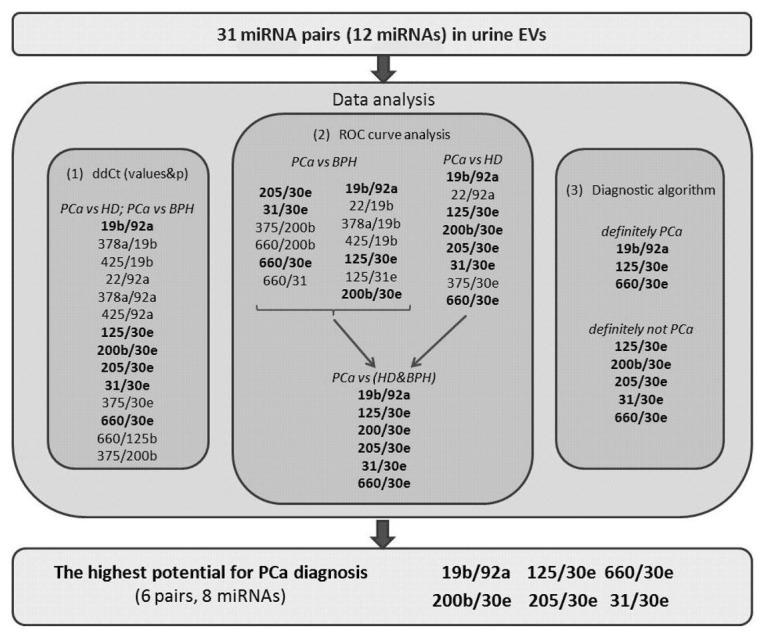
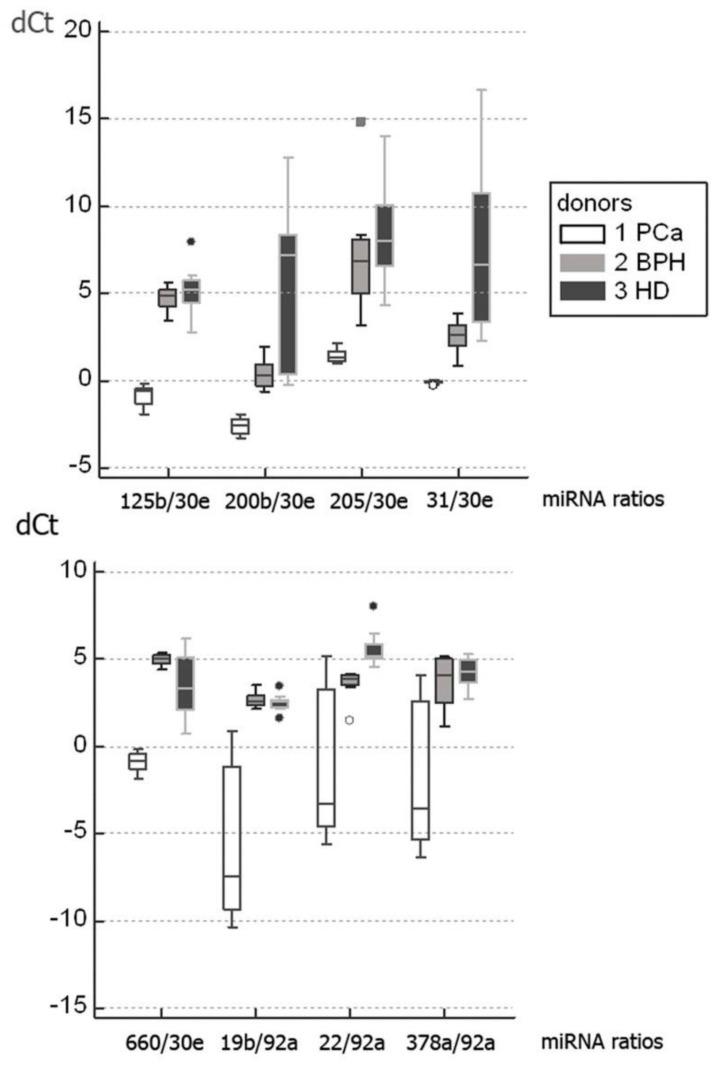
Prostate cancer is a global biological, medical, and social issue aggravated by the lack of reliable, highly specific, and sensitive non-invasive tests for diagnosis and staging of prostate cancer. One prospective source of biomarkers are the cell-free miRNAs present in various biological fluids. In the present study, we validated the diagnostic potential of cell-free miRNAs: miR-19b, miR-22, miR-92a, miR-378, miR-425, miR-30e, miR-31, miR-125b, miR-200b, miR-205, miR-375, and miR-660; we estimated the required sample size and the minimal miRNA set for a subsequent large-scale validation study. Relative expression of 12 miRNA combined in 31 ratios was investigated in three fractions of biological fluids (urine extracellular vesicles, clarified urine, and plasma) obtained from patients with prostate cancer (n = 10), benign prostate hyperplasia (n = 8), and healthy volunteers (n = 11). Eight of the miRNAs found in urine vesicles (miR-19b, miR-30e, miR-31, miR-92a, miR-125, miR-200, miR-205, and miR-660) showed great promise and when combined into six ratios (miR-125b/miR-30e, miR-200/miR-30e, miR-205/miR-30e, miR-31/miR-30e, miR-660/miR-30e, and miR-19b/miR-92a) could classify patients with prostate cancer, benign prostate hyperplasia, and healthy donors with 100% specificity, 100% sensitivity, and with a high degree of reliability for most donors.
前列腺癌是一个全球性的生物学、医学和社会问题,因缺乏用于前列腺癌诊断和分期的可靠、高度特异且敏感的非侵入性检测方法而加剧。生物标志物的一个潜在来源是存在于各种生物体液中的游离微小RNA(miRNA)。在本研究中,我们验证了游离miRNA(miR-19b、miR-22、miR-92a、miR-378、miR-425、miR-30e、miR-31、miR-125b、miR-200b、miR-205、miR-375和miR-660)的诊断潜力;我们估计了后续大规模验证研究所需的样本量和最小miRNA组合。研究了从前列腺癌患者(n = 10)、良性前列腺增生患者(n = 8)和健康志愿者(n = 11)获得的三种生物体液(尿液细胞外囊泡、澄清尿液和血浆)中12种miRNA以31种比例组合后的相对表达。在尿液囊泡中发现的8种miRNA(miR-19b、miR-30e、miR-31、miR-92a、miR-125、miR-200、miR-205和miR-660)显示出巨大潜力,当组合成六种比例(miR-125b/miR-30e、miR-200/miR-30e、miR-205/miR-30e、miR-31/miR-30e、miR-660/miR-30e和miR-19b/miR-92a)时,能够以100%的特异性、100%的敏感性以及对大多数供体的高度可靠性对前列腺癌患者、良性前列腺增生患者和健康供体进行分类。
 Zotero 插件