
蛋白激酶 D3 通过激活 ERK1/c-MYC 轴促进乳腺癌细胞增殖。
Protein Kinase D3 promotes the cell proliferation by activating the ERK1/c-MYC axis in breast cancer.
机构信息
The Key Laboratory of Bio-Medical Diagnostics, Suzhou Institute of Biomedical Engineering and Technology, Chinese Academy of Sciences, Suzhou, China.
Changchun Institute of Optics, Fine Mechanics and Physics, Chinese Academy of Sciences, Changchun, China.
出版信息
J Cell Mol Med. 2020 Feb;24(3):2135-2144. doi: 10.1111/jcmm.14772. Epub 2020 Jan 16.
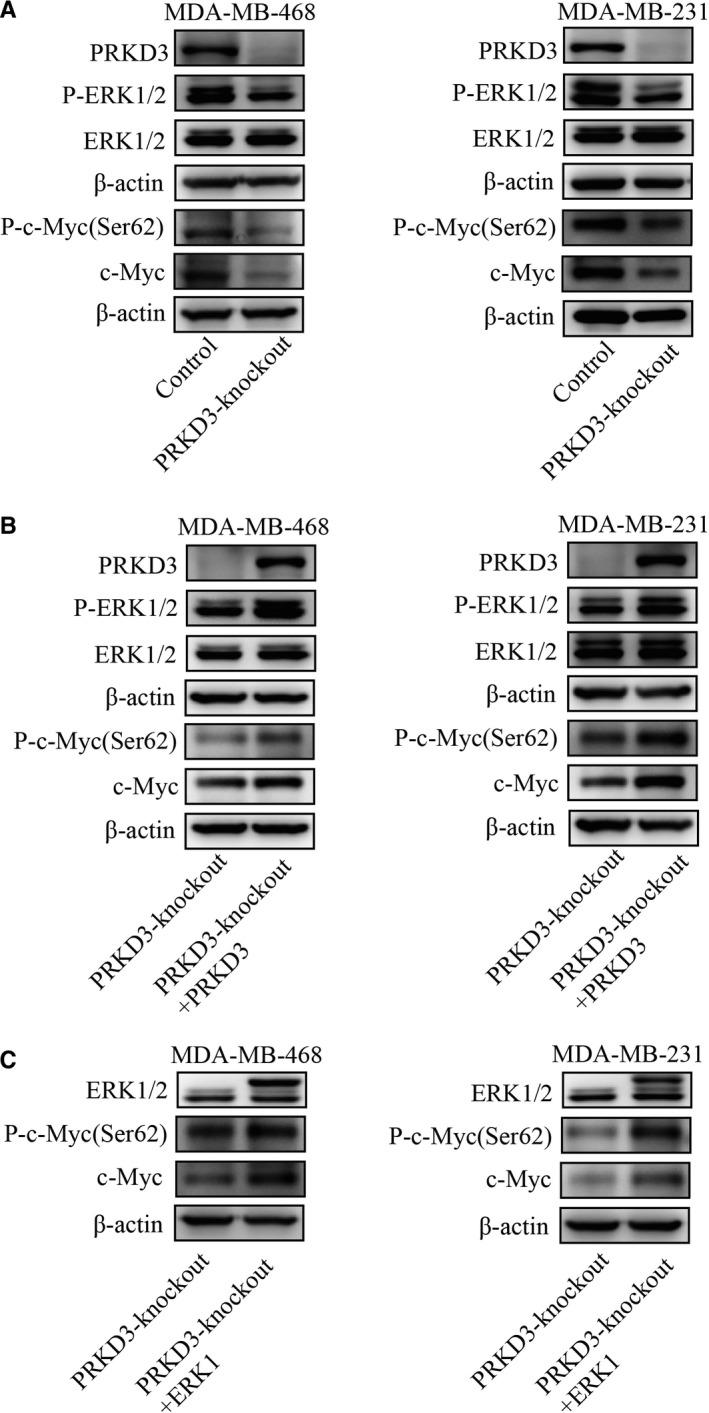
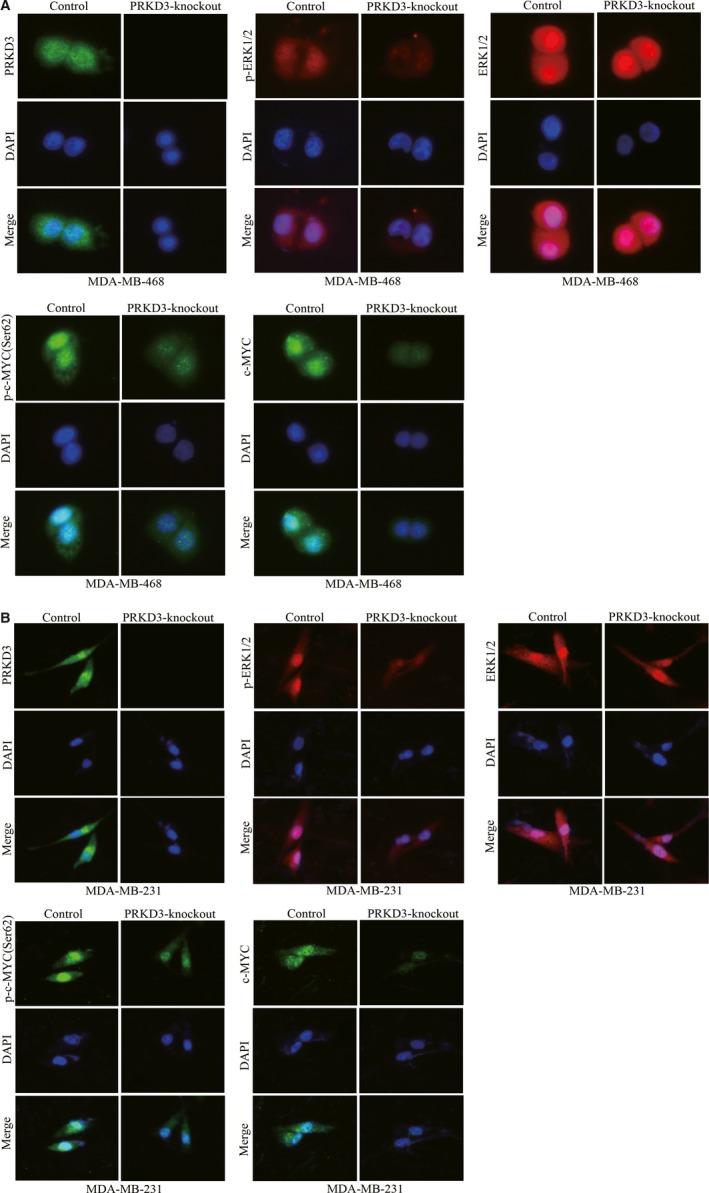
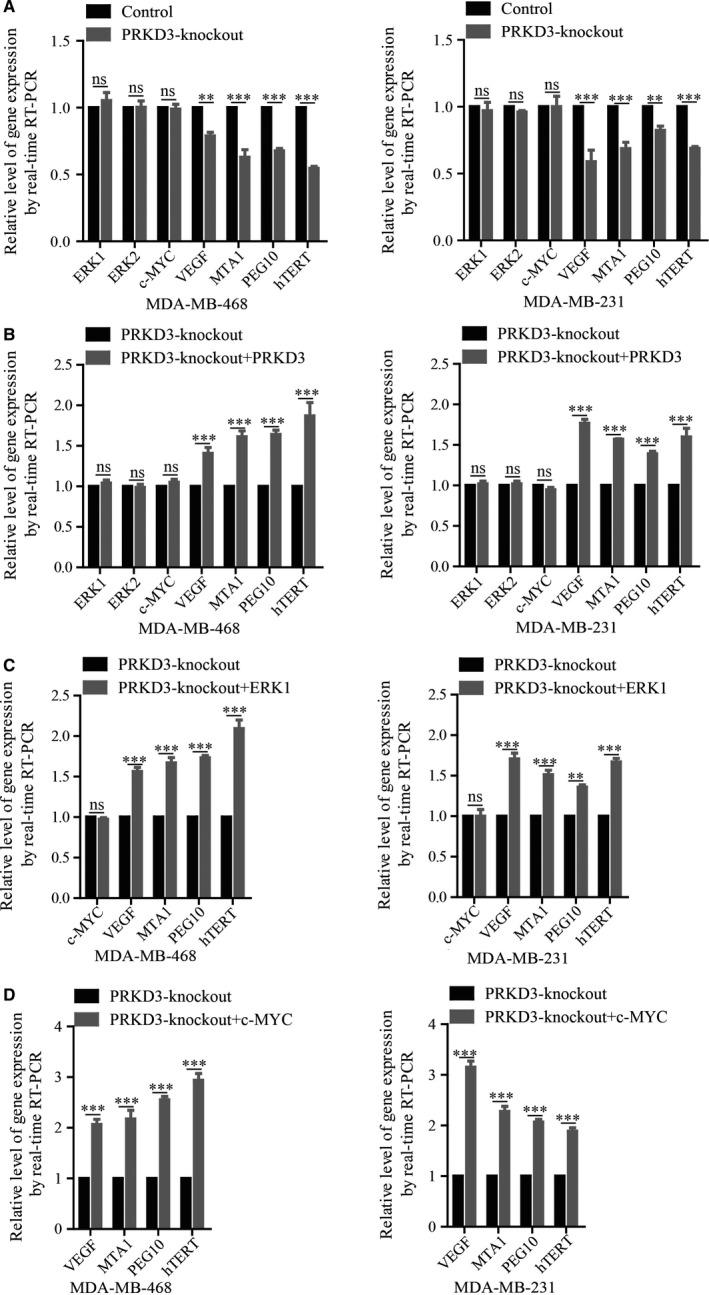
Breast cancer is the second leading death cause of cancer death for all women. Previous study suggested that Protein Kinase D3 (PRKD3) was involved in breast cancer progression. In addition, the protein level of PRKD3 in triple-negative breast adenocarcinoma was higher than that in normal breast tissue. However, the oncogenic mechanisms of PRKD3 in breast cancer is not fully investigated. Multi-omic data showed that ERK1/c-MYC axis was identified as a major pivot in PRKD3-mediated downstream pathways. Our study provided the evidence to support that the PRKD3/ERK1/c-MYC pathway play an important role in breast cancer progression. We found that knocking out PRKD3 by performing CRISPR/Cas9 genome engineering technology suppressed phosphorylation of both ERK1 and c-MYC but did not down-regulate ERK1/2 expression or phosphorylation of ERK2. The inhibition of ERK1 and c-MYC phosphorylation further led to the lower protein level of c-MYC and then reduced the expression of the c-MYC target genes in breast cancer cells. We also found that loss of PRKD3 reduced the rate of the cell proliferation in vitro and tumour growth in vivo, whereas ectopic (over)expression of PRKD3, ERK1 or c-MYC in the PRKD3-knockout breast cells reverse the suppression of the cell proliferation and tumour growth. Collectively, our data strongly suggested that PRKD3 likely promote the cell proliferation in the breast cancer cells by activating ERK1-c-MYC axis.
乳腺癌是女性癌症死亡的第二大主要原因。先前的研究表明,蛋白激酶 D3(PRKD3)参与乳腺癌的进展。此外,三阴性乳腺癌腺癌细胞中 PRKD3 的蛋白水平高于正常乳腺组织。然而,PRKD3 在乳腺癌中的致癌机制尚未完全研究清楚。多组学数据表明,ERK1/c-MYC 轴被确定为 PRKD3 介导的下游途径中的主要枢轴。我们的研究提供了证据支持 PRKD3/ERK1/c-MYC 通路在乳腺癌进展中发挥重要作用。我们发现,通过使用 CRISPR/Cas9 基因组工程技术敲除 PRKD3,抑制了 ERK1 和 c-MYC 的磷酸化,但没有下调 ERK1/2 的表达或 ERK2 的磷酸化。ERK1 和 c-MYC 磷酸化的抑制进一步导致 c-MYC 蛋白水平降低,然后降低乳腺癌细胞中 c-MYC 靶基因的表达。我们还发现,PRKD3 的缺失降低了体外细胞增殖和体内肿瘤生长的速度,而在 PRKD3 敲除的乳腺细胞中外源(过表达)PRKD3、ERK1 或 c-MYC 则逆转了细胞增殖和肿瘤生长的抑制。综上所述,我们的数据强烈表明,PRKD3 通过激活 ERK1-c-MYC 轴可能促进乳腺癌细胞的增殖。


 Zotero 插件