
纳米塑料对斑马鱼造成神经行为损伤、生殖和氧化损伤以及生物标志物反应:敲响广泛暴露健康风险的警钟。
Nanoplastics Cause Neurobehavioral Impairments, Reproductive and Oxidative Damages, and Biomarker Responses in Zebrafish: Throwing up Alarms of Wide Spread Health Risk of Exposure.
作者信息
Sarasamma Sreeja, Audira Gilbert, Siregar Petrus, Malhotra Nemi, Lai Yu-Heng, Liang Sung-Tzu, Chen Jung-Ren, Chen Kelvin H-C, Hsiao Chung-Der
机构信息
Department of Chemistry, Chung Yuan Christian University, Chung-Li 32023, Taiwan.
Department of Bioscience Technology, Chung Yuan Christian University, Chung-Li 32023, Taiwan.
出版信息
Int J Mol Sci. 2020 Feb 19;21(4):1410. doi: 10.3390/ijms21041410.
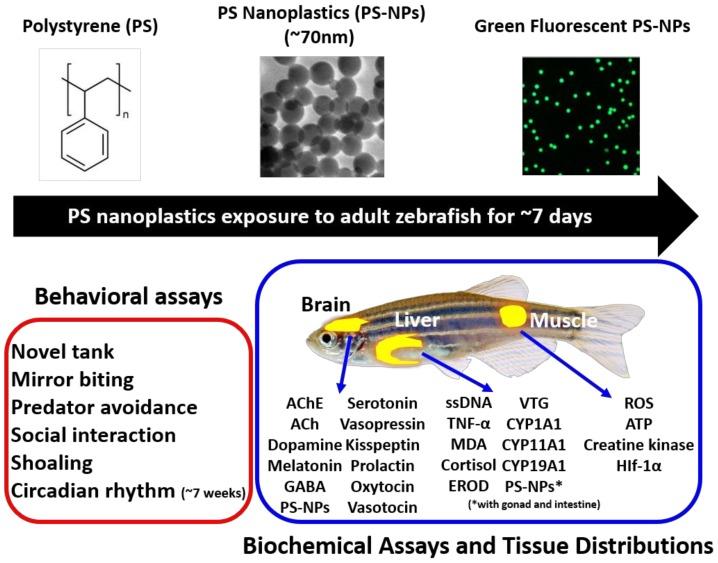
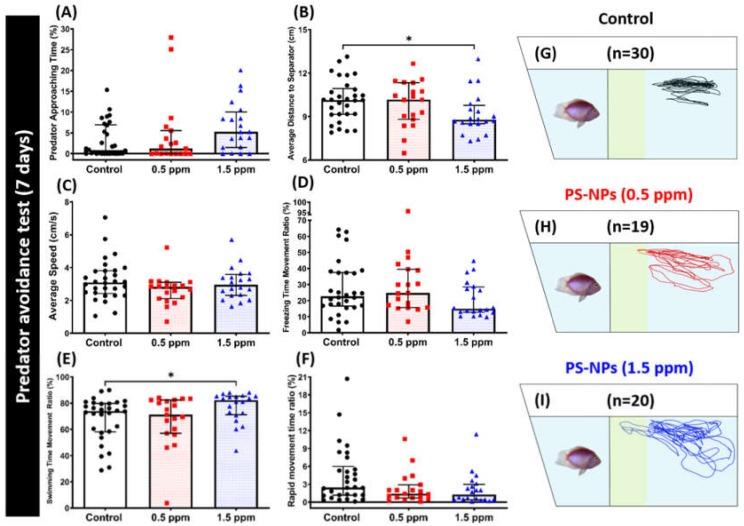
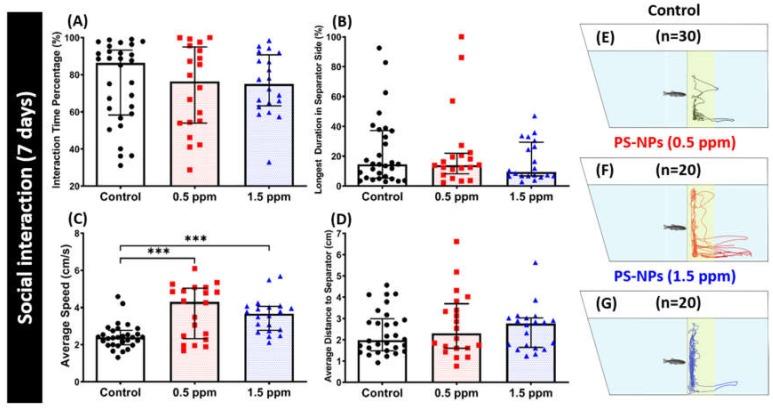
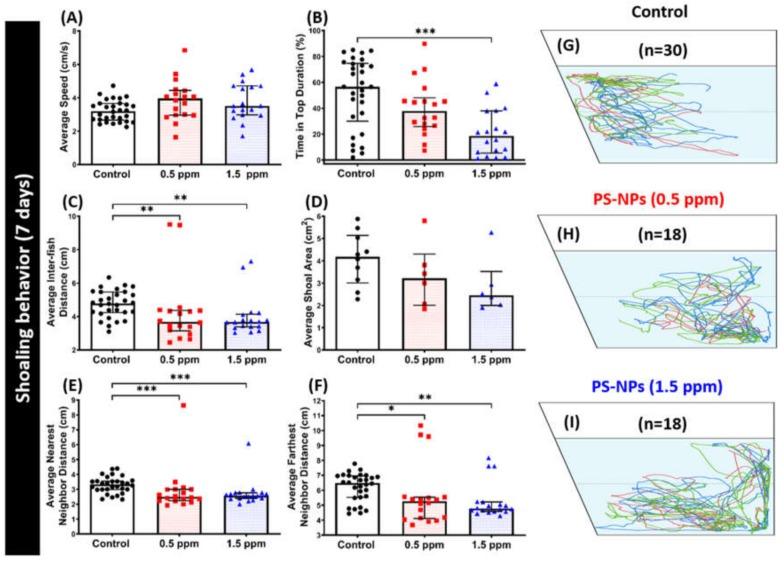
Plastic pollution is a growing global emergency and it could serve as a geological indicator of the Anthropocene era. Microplastics are potentially more hazardous than macroplastics, as the former can permeate biological membranes. The toxicity of microplastic exposure on humans and aquatic organisms has been documented, but the toxicity and behavioral changes of nanoplastics (NPs) in mammals are scarce. In spite of their small size, nanoplastics have an enormous surface area, which bears the potential to bind even bigger amounts of toxic compounds in comparison to microplastics. Here, we used polystyrene nanoplastics (PS-NPs) (diameter size at ~70 nm) to investigate the neurobehavioral alterations, tissue distribution, accumulation, and specific health risk of nanoplastics in adult zebrafish. The results demonstrated that PS-NPs accumulated in gonads, intestine, liver, and brain with a tissue distribution pattern that was greatly dependent on the size and shape of the NPs particle. Importantly, an analysis of multiple behavior endpoints and different biochemical biomarkers evidenced that PS-NPs exposure induced disturbance of lipid and energy metabolism as well as oxidative stress and tissue accumulation. Pronounced behavior alterations in their locomotion activity, aggressiveness, shoal formation, and predator avoidance behavior were exhibited by the high concentration of the PS-NPs group, along with the dysregulated circadian rhythm locomotion activity after its chronic exposure. Moreover, several important neurotransmitter biomarkers for neurotoxicity investigation were significantly altered after one week of PS-NPs exposure and these significant changes may indicate the potential toxicity from PS-NPs exposure. In addition, after ~1-month incubation, the fluorescence spectroscopy results revealed the accumulation and distribution of PS-NPs across zebrafish tissues, especially in gonads, which would possibly further affect fish reproductive function. Overall, our results provided new evidence for the adverse consequences of PS-NPs-induced behavioral dysregulation and changes at the molecular level that eventually reduce the survival fitness of zebrafish in the ecosystem.
塑料污染是日益严重的全球紧急情况,它可能成为人类世时代的一个地质指标。微塑料可能比大塑料更具危害性,因为前者能够穿透生物膜。微塑料对人类和水生生物的毒性已有记录,但纳米塑料在哺乳动物中的毒性和行为变化却鲜有报道。尽管纳米塑料尺寸小,但其具有巨大的表面积,与微塑料相比,它有可能结合更多的有毒化合物。在此,我们使用聚苯乙烯纳米塑料(PS-NPs)(直径约70纳米)来研究纳米塑料在成年斑马鱼中的神经行为改变、组织分布、积累情况以及特定的健康风险。结果表明,PS-NPs在性腺、肠道、肝脏和大脑中积累,其组织分布模式很大程度上取决于纳米颗粒的大小和形状。重要的是,对多个行为终点和不同生化生物标志物的分析表明,PS-NPs暴露会导致脂质和能量代谢紊乱以及氧化应激和组织积累。高浓度PS-NPs组表现出明显的行为改变,包括运动活性、攻击性、群体形成和躲避捕食者行为,长期暴露后其昼夜节律运动活性也失调。此外,PS-NPs暴露一周后,几种用于神经毒性研究的重要神经递质生物标志物发生了显著变化,这些显著变化可能表明PS-NPs暴露存在潜在毒性。另外,经过约1个月的孵育后,荧光光谱结果揭示了PS-NPs在斑马鱼组织中的积累和分布情况,尤其是在性腺中,这可能会进一步影响鱼类的生殖功能。总体而言,我们的结果为PS-NPs诱导的行为失调和分子水平变化的不良后果提供了新证据,这些变化最终会降低斑马鱼在生态系统中的生存适应性。





 Zotero 插件