
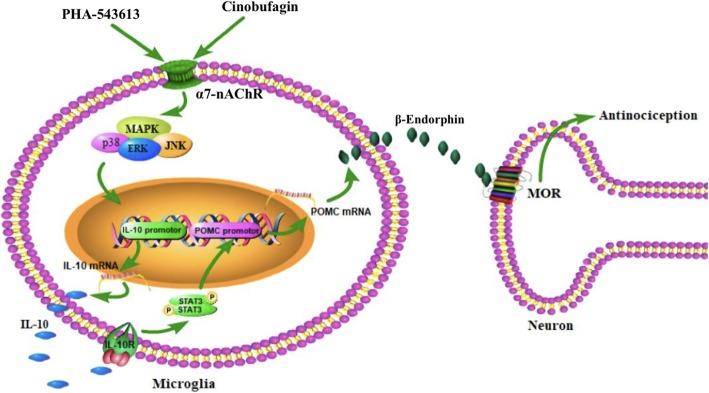
脊髓小胶质细胞的 IL-10/β-内啡肽通路负责介导华蟾酥毒基通过激活α7 型烟碱型乙酰胆碱受体诱导的骨癌痛机械性抗伤害感受。
The spinal microglial IL-10/β-endorphin pathway accounts for cinobufagin-induced mechanical antiallodynia in bone cancer pain following activation of α7-nicotinic acetylcholine receptors.
机构信息
Shanghai Jiao Tong University School of Pharmacy, 800 Dongchuan Road, Shanghai, 200240, China.
出版信息
J Neuroinflammation. 2020 Feb 29;17(1):75. doi: 10.1186/s12974-019-1616-z.
BACKGROUND
Cinobufagin is the major bufadienolide of Bufonis venenum (Chansu), which has been traditionally used for the treatment of chronic pain especially cancer pain. The current study aimed to evaluate its antinociceptive effects in bone cancer pain and explore the underlying mechanisms.
METHODS
Rat bone cancer model was used in this study. The withdrawal threshold evoked by stimulation of the hindpaw was determined using a 2290 CE electrical von Frey hair. The β-endorphin and IL-10 levels were measured in the spinal cord and cultured primary microglia, astrocytes, and neurons.
RESULTS
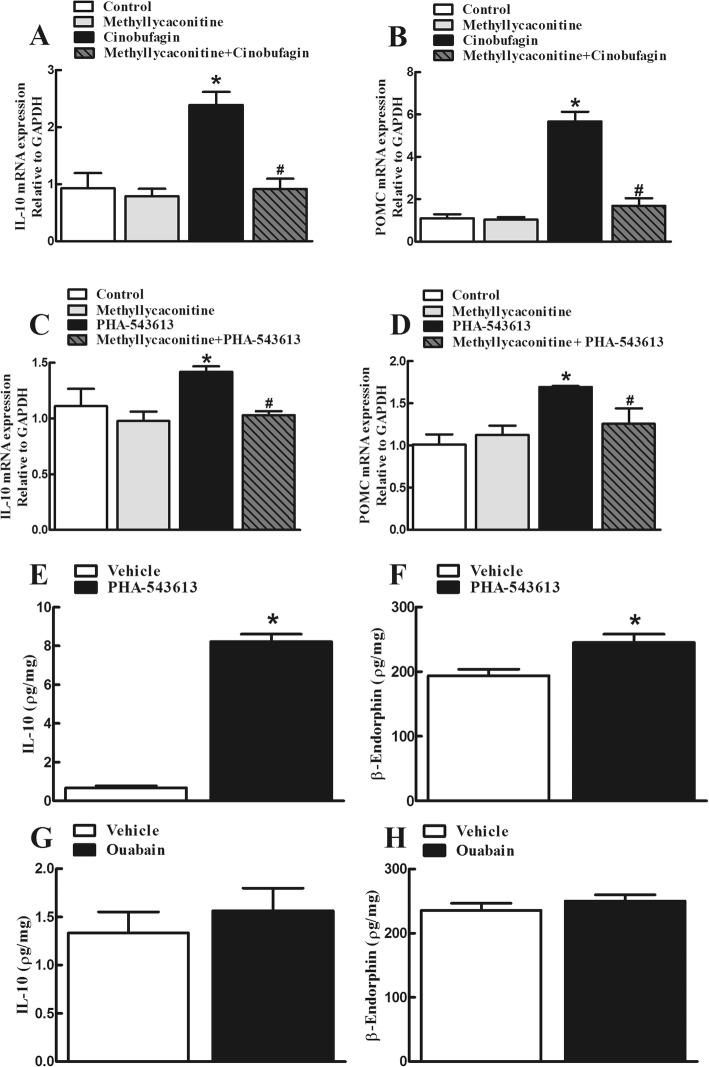
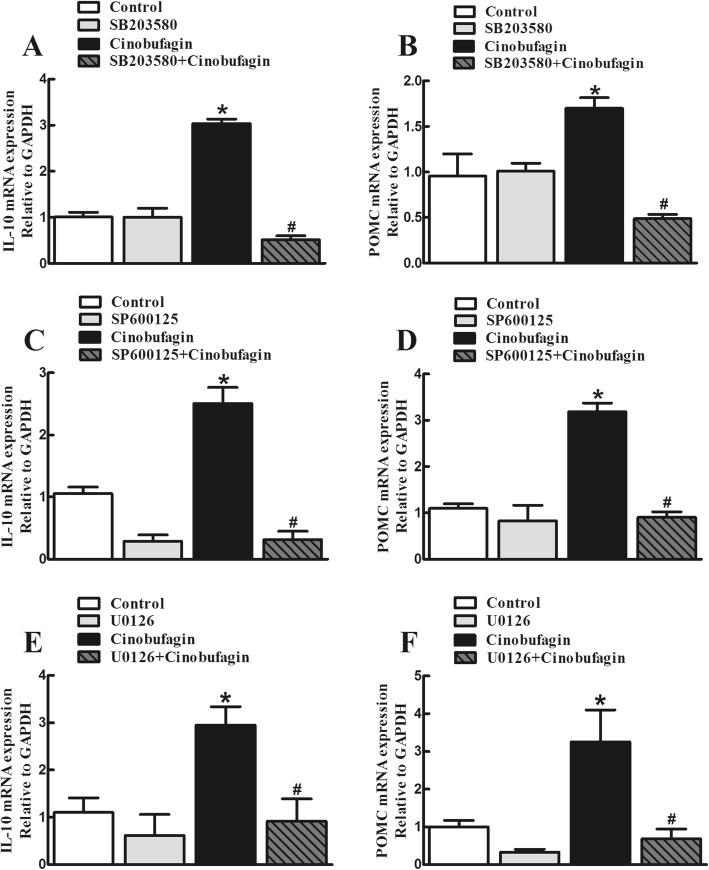
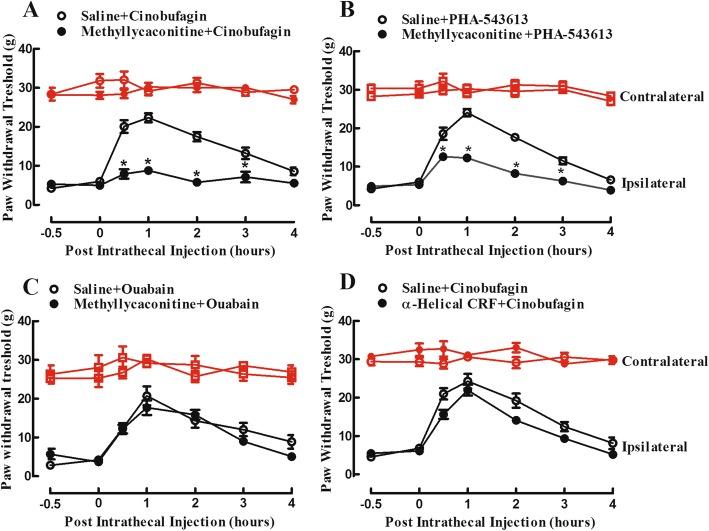
Cinobufagin, given intrathecally, dose-dependently attenuated mechanical allodynia in bone cancer pain rats, with the projected E of 90% MPE and ED of 6.4 μg. Intrathecal cinobufagin also stimulated the gene and protein expression of IL-10 and β-endorphin (but not dynorphin A) in the spinal cords of bone cancer pain rats. In addition, treatment with cinobufagin in cultured primary spinal microglia but not astrocytes or neurons stimulated the mRNA and protein expression of IL-10 and β-endorphin, which was prevented by the pretreatment with the IL-10 antibody but not β-endorphin antiserum. Furthermore, spinal cinobufagin-induced mechanical antiallodynia was inhibited by the pretreatment with intrathecal injection of the microglial inhibitor minocycline, IL-10 antibody, β-endorphin antiserum and specific μ-opioid receptor antagonist CTAP. Lastly, cinobufagin- and the specific α-7 nicotinic acetylcholine receptor (α7-nAChR) agonist PHA-543613-induced microglial gene expression of IL-10/β-endorphin and mechanical antiallodynia in bone cancer pain were blocked by the pretreatment with the specific α7-nAChR antagonist methyllycaconitine.
CONCLUSIONS
Our results illustrate that cinobufagin produces mechanical antiallodynia in bone cancer pain through spinal microglial expression of IL-10 and subsequent β-endorphin following activation of α7-nAChRs. Our results also highlight the broad significance of the recently uncovered spinal microglial IL-10/β-endorphin pathway in antinociception.
背景
华蟾酥毒基是蟾酥(Chansu)的主要蟾毒配基,传统上用于治疗慢性疼痛,特别是癌痛。本研究旨在评估其在骨癌痛中的镇痛作用,并探讨其潜在机制。
方法
本研究采用大鼠骨癌模型。使用 2290 CE 电 von Frey 毛发刺激测定后爪的退缩阈值。测定脊髓和培养的原代小胶质细胞、星形胶质细胞和神经元中的β-内啡肽和 IL-10 水平。
结果
鞘内给予华蟾酥毒基可剂量依赖性地减轻骨癌痛大鼠的机械性痛觉过敏,其预测的 90%最大效应(E)为 90%,半数有效剂量(ED)为 6.4 μg。鞘内华蟾酥毒基还刺激骨癌痛大鼠脊髓中 IL-10 和 β-内啡肽(而非强啡肽 A)的基因和蛋白表达。此外,华蟾酥毒基在培养的原代脊髓小胶质细胞中治疗,但不在星形胶质细胞或神经元中治疗,可刺激 IL-10 和 β-内啡肽的 mRNA 和蛋白表达,该作用可被 IL-10 抗体而非 β-内啡肽抗血清预先阻断。此外,鞘内注射小胶质细胞抑制剂米诺环素、IL-10 抗体、β-内啡肽抗血清和特异性 μ-阿片受体拮抗剂 CTAP 预处理可抑制脊髓华蟾酥毒基诱导的机械性抗痛觉过敏。最后,华蟾酥毒基和特异性 α7 烟碱型乙酰胆碱受体(α7-nAChR)激动剂 PHA-543613 诱导骨癌痛大鼠小胶质细胞中 IL-10/β-内啡肽的基因表达和机械性抗痛觉过敏作用可被特异性 α7-nAChR 拮抗剂甲基六氢烟碱预先阻断。
结论
我们的结果表明,华蟾酥毒基通过激活 α7-nAChR 后脊髓小胶质细胞表达 IL-10 和随后的 β-内啡肽产生骨癌痛中的机械性抗痛觉过敏。我们的结果还突出了最近发现的脊髓小胶质细胞 IL-10/β-内啡肽途径在镇痛中的广泛意义。


 Zotero 插件