
惯性传感器作为诊断腰骶部椎间盘病变导致的病理性步态的工具:一项初步研究。
Inertial Sensors as a Tool for Diagnosing Discopathy Lumbosacral Pathologic Gait: A Preliminary Research.
作者信息
Glowinski Sebastian, Łosiński Karol, Kowiański Przemysław, Waśkow Monika, Bryndal Aleksandra, Grochulska Agnieszka
机构信息
Institute of Health Sciences, Pomeranian University in Slupsk, Westerplatte 64, 76200 Slupsk, Poland.
出版信息
Diagnostics (Basel). 2020 May 26;10(6):342. doi: 10.3390/diagnostics10060342.
BACKGROUND
the goal of the study is to ascertain the influence of discopathy in the lumbosacral (L-S) segment on the gait parameters. The inertial sensors are used to determine the pathologic parameters of gait.
METHODS
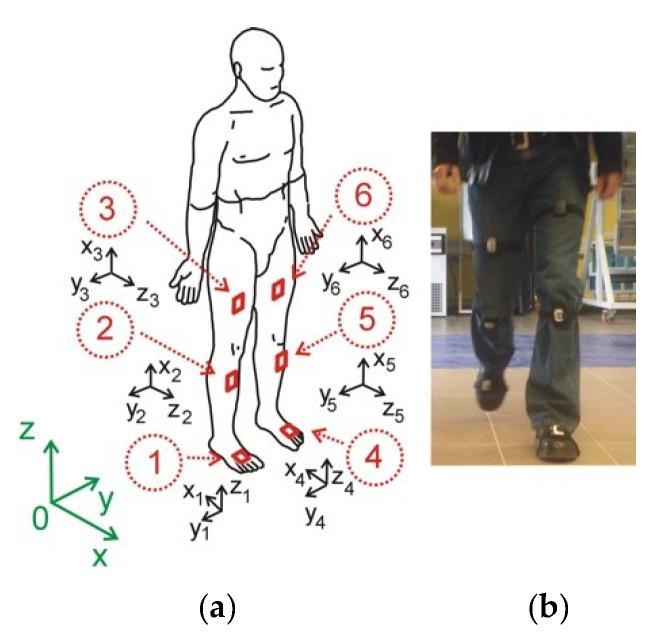
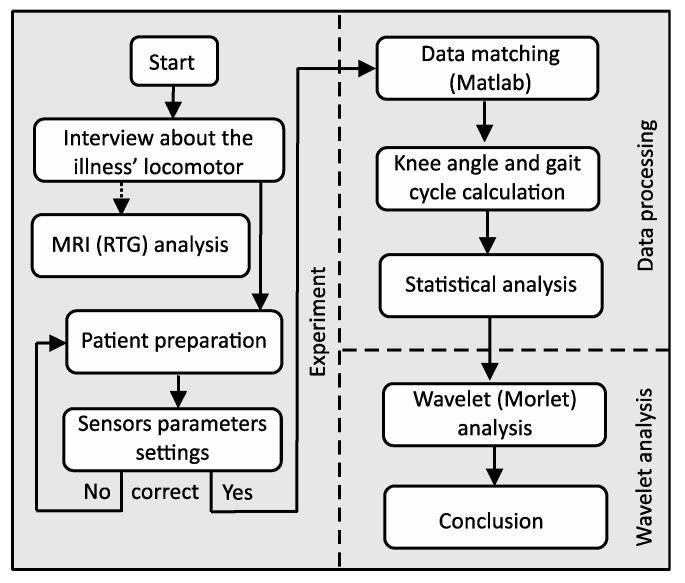
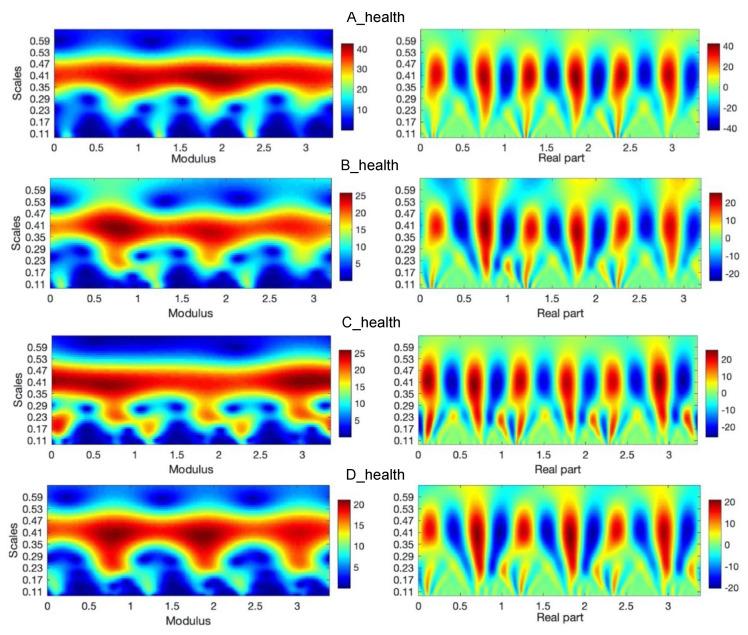
the study involved four patients (44, 46, 42, and 38 years). First, the goal of the survey was to analyze by a noninvasive medical test magnetic resonance imaging (MRI) of each patient. Next, by using inertial sensors, the flexion-extension of joint angles of the left and right knees were calculated. The statistical analysis was performed. The wavelet transform was applied to analyze periodic information in the acceleration data.
RESULTS
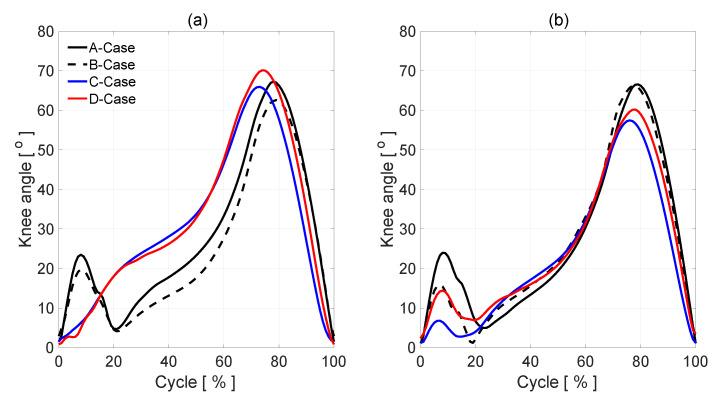
in the patients with discopathy, the amount of knee flexion attained during stance phase is significantly lower than that of normal (health side), which could indicate poor eccentric control or a pain avoidance mechanism. The biggest differences are observed in the Initial Swing phase. Bending of the lower limb in the knee joint at this stage reaches maximum values during the entire gait cycle.
CONCLUSIONS
It has been difficult to quantify the knee angle during gait by visual inspection. The inertial measurement unit (IMU) system can be useful in determining the level of spine damage and its degree. In patients in the first stages of the intervertebral disc disease who may undergo conservative treatment, it may also partially delay or completely exclude the decision to perform a complicated imaging examination which is MRI, often showing a false positive result in this phase of the disease.
背景
本研究的目的是确定腰骶段椎间盘病变对步态参数的影响。使用惯性传感器来确定步态的病理参数。
方法
该研究纳入了4名患者(年龄分别为44岁、46岁、42岁和38岁)。首先,通过对每位患者进行无创医学检查磁共振成像(MRI)来分析。接下来,使用惯性传感器计算左右膝关节的屈伸关节角度。进行了统计分析。应用小波变换分析加速度数据中的周期性信息。
结果
在患有椎间盘病变的患者中,站立期膝关节屈曲的程度明显低于正常情况(健侧),这可能表明离心控制不佳或存在疼痛回避机制。在初始摆动期观察到最大差异。在此阶段,膝关节下肢的弯曲在整个步态周期中达到最大值。
结论
通过目视检查很难量化步态期间的膝关节角度。惯性测量单元(IMU)系统有助于确定脊柱损伤的程度及其严重性。对于可能接受保守治疗的椎间盘疾病早期患者,它还可能部分延迟或完全排除进行复杂成像检查(即MRI)的决定,因为在该疾病阶段MRI常显示假阳性结果。



 Zotero 插件