
HMGA2在融合阴性横纹肌肉瘤细胞中的致癌作用。
Oncogenic role of HMGA2 in fusion-negative rhabdomyosarcoma cells.
作者信息
Ouchi Kazutaka, Miyachi Mitsuru, Yagyu Shigeki, Kikuchi Ken, Kuwahara Yasumichi, Tsuchiya Kunihiko, Iehara Tomoko, Hosoi Hajime
机构信息
Department of Pediatrics, Graduate School of Medical Science, Kyoto Prefectural University of Medicine, 465 Kajii-cho, Hirokoji, Kamigyo-ku, Kyoto, 602-8566 Japan.
Department of Molecular Biochemistry, Graduate School of Medical Science, Kyoto Prefectural University of Medicine, 465 Kajii-cho, Hirokoji, Kamigyo-ku, Kyoto, 602-8566 Japan.
出版信息
Cancer Cell Int. 2020 May 24;20:192. doi: 10.1186/s12935-020-01282-z. eCollection 2020.
BACKGROUND
Rhabdomyosarcoma (RMS) is the most common pediatric soft tissue sarcoma. There are two subtypes, fusion gene-positive RMS (FP-RMS) and fusion gene-negative RMS (FN-RMS), depending on the presence of a fusion gene, either - or -. These fusion genes are thought to be oncogenic drivers of FP-RMS. By contrast, the underlying mechanism of FN-RMS has not been thoroughly investigated. It has recently been shown that HMGA2 is specifically positive in pathological tissue from FN-RMS, but the role of HMGA2 in FN-RMS remains to be clarified.
METHODS
In this study, we used FN-RMS cell lines to investigate the function of HMGA2. Gene expression, cell growth, cell cycle, myogenic differentiation, tumor formation in vivo, and cell viability under drug treatment were assessed.
RESULTS
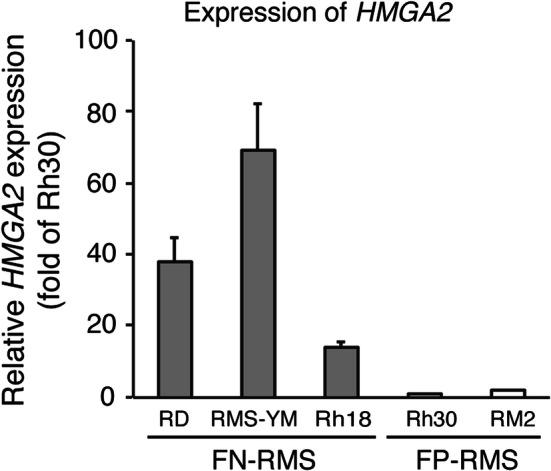
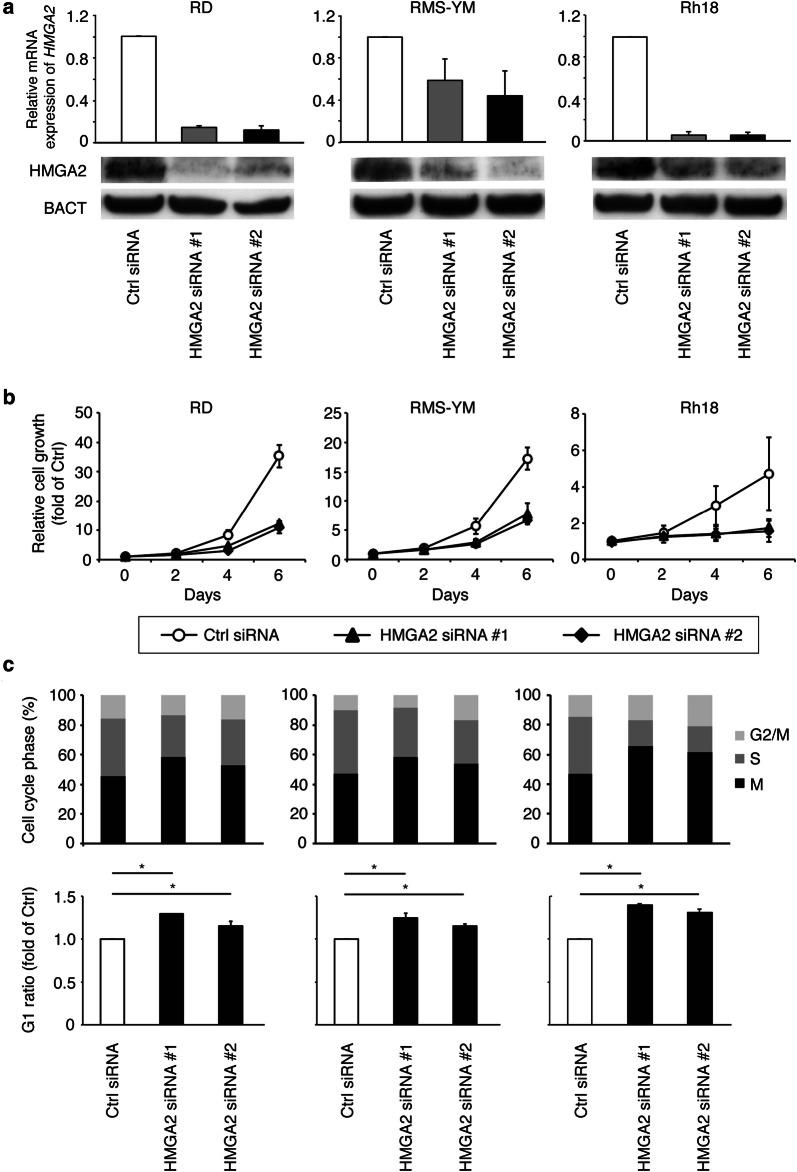
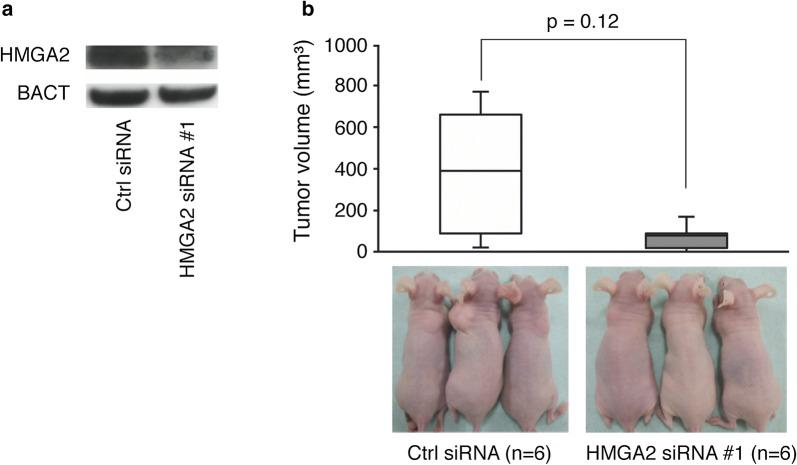
We found that was highly expressed in FN-RMS cells compared with FP-RMS cells and that knockdown of in FN-RMS cells inhibited cell growth and induced G1 phase accumulation in the cell cycle and myogenic differentiation. Additionally, we showed using both gain-of-function and loss-of-function assays that was required for tumor formation in vivo. Consistent with these findings, the HMGA2 inhibitor netropsin inhibited the cell growth of FN-RMS.
CONCLUSIONS
Our results suggest that HMGA2 has important role in the oncogenicity of FP-RMS and may be a potential therapeutic target in patients with FN-RMS.
背景
横纹肌肉瘤(RMS)是最常见的小儿软组织肉瘤。根据是否存在融合基因,可分为两种亚型,即融合基因阳性RMS(FP-RMS)和融合基因阴性RMS(FN-RMS)。这些融合基因被认为是FP-RMS的致癌驱动因素。相比之下,FN-RMS的潜在机制尚未得到充分研究。最近有研究表明,HMGA2在FN-RMS的病理组织中呈特异性阳性,但HMGA2在FN-RMS中的作用仍有待阐明。
方法
在本研究中,我们使用FN-RMS细胞系来研究HMGA2的功能。评估了基因表达、细胞生长、细胞周期、肌源性分化、体内肿瘤形成以及药物处理下的细胞活力。
结果
我们发现,与FP-RMS细胞相比, 在FN-RMS细胞中高表达,并且在FN-RMS细胞中敲低 可抑制细胞生长,并诱导细胞周期中G1期积累和肌源性分化。此外,我们通过功能获得和功能丧失试验均表明, 是体内肿瘤形成所必需的。与这些发现一致,HMGA2抑制剂纺锤菌素可抑制FN-RMS的细胞生长。
结论
我们的结果表明,HMGA2在FP-RMS的致癌性中具有重要作用,并且可能是FN-RMS患者的潜在治疗靶点。



 Zotero 插件