
一种基于对健康细胞与癌细胞中锌成像的新型四肽荧光传感器,用于前列腺癌的早期诊断。
A novel tetrapeptide fluorescence sensor for early diagnosis of prostate cancer based on imaging Zn in healthy versus cancerous cells.
作者信息
An Yong, Chang Wei, Wang Wei, Wu Hao, Pu Ke, Wu Anhu, Qin Ze, Tao Yan, Yue Zhongjin, Wang Peng, Wang Zhiping
机构信息
Department of Urology, Institute of Urology, Gansu Nephro-Urological Clinical Center, Key Laboratory of Urological Diseases in Gansu Province, The Second Hospital of Lanzhou University, Lanzhou, Gansu 730030, China.
Department of Gastroenterology, The First Hospital of Lanzhou University, Lanzhou, China.
出版信息
J Adv Res. 2020 Apr 28;24:363-370. doi: 10.1016/j.jare.2020.04.008. eCollection 2020 Jul.
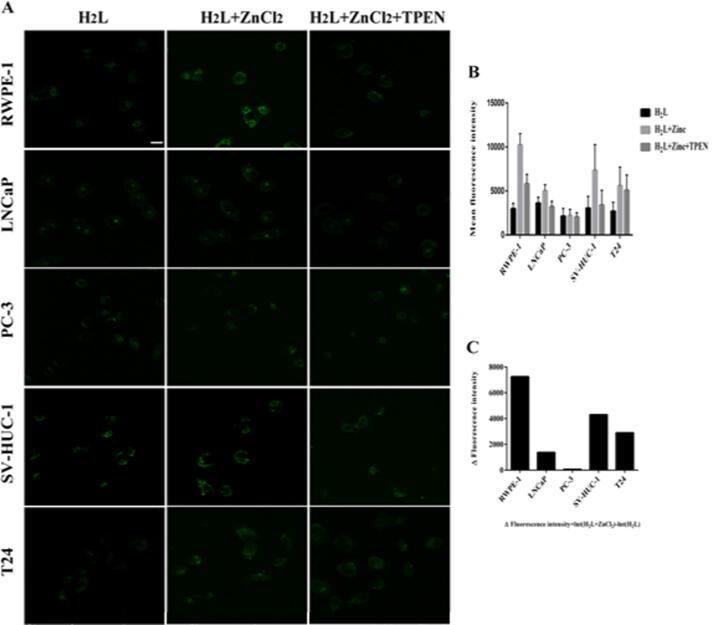
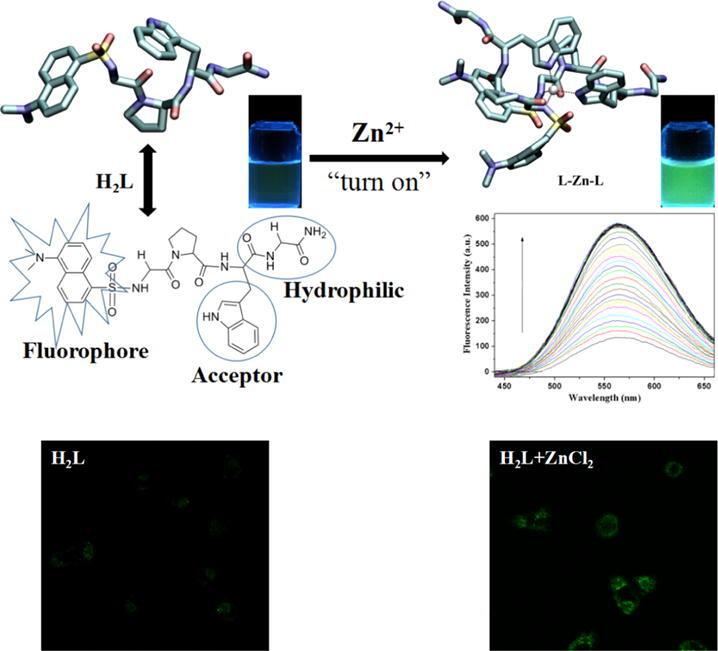
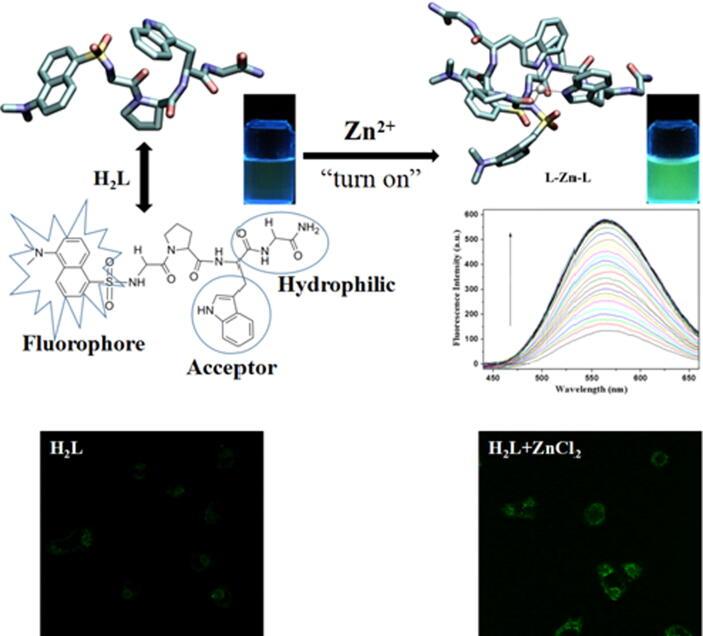
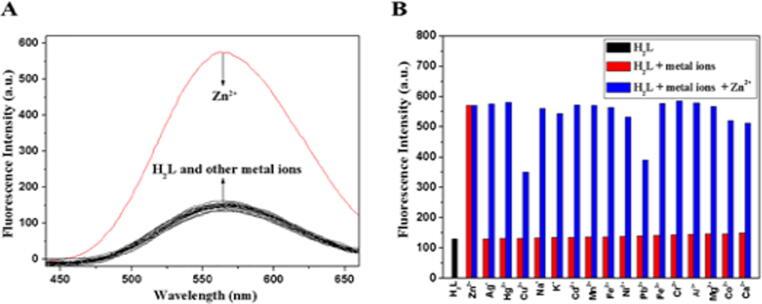
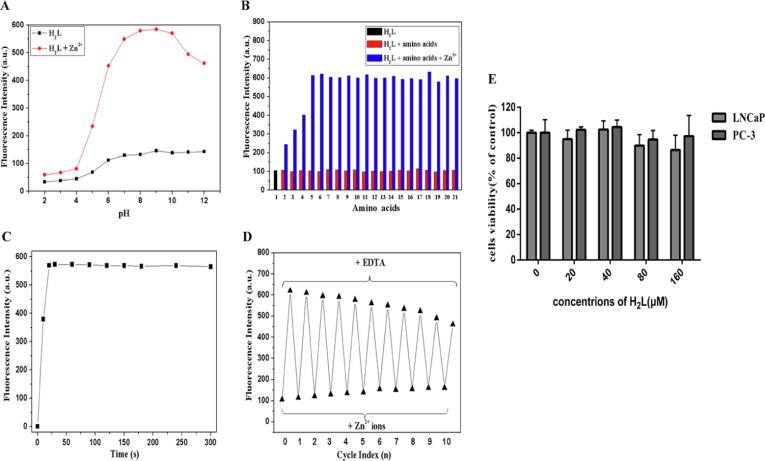
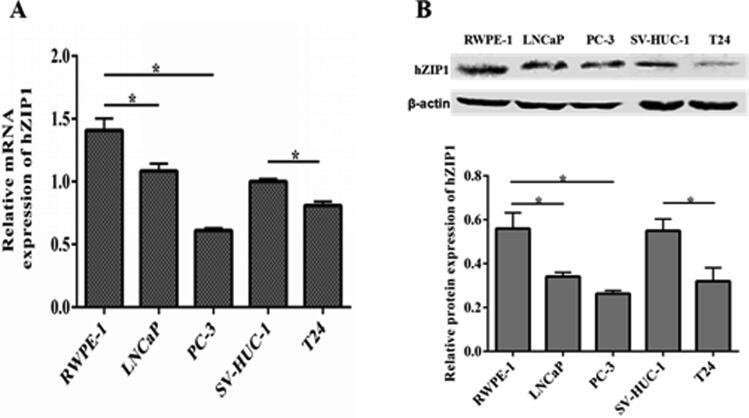
Zinc as a biomarker can be used to diagnose the early stage prostate cancer, while ZIP1 protein, a zinc transporter is significantly down-regulated in prostate cancer cells. This behavior leads to the apparent alteration of the enrichment ability for zinc between early prostate cancer tissues and healthy tissues. This difference inspires us to develop a novel Zn sensor that applies to the clinic diagnosis of early prostate cancer. We designed a tetrapeptide sensor (Dansyl-Gly-Pro-Trp-Gly-NH) according to the photo-induced electron transfer principle (PET), and it performed adequately in Zn imaging of prostate cell lines. Based on the assessment of Zn enrichment ability, there was distinctly lower Zn concentrate in prostate cancer cell lines than healthy prostate epithelial cells. Furthermore, displayed high sensitivity with a detection limit as low as 49.5 nM, and high specificity for Zn detection. Also the low toxicity and the superior cell permeability of made the imaging of Zn ions detection safe and rapid. We expect that to be a powerful tool for early diagnosis of prostate cancer and a good indicator for the precise resection of cancer tissue during surgery.
锌作为一种生物标志物可用于诊断早期前列腺癌,而锌转运蛋白ZIP1在前列腺癌细胞中显著下调。这种行为导致早期前列腺癌组织与健康组织之间锌富集能力的明显改变。这种差异促使我们开发一种适用于早期前列腺癌临床诊断的新型锌传感器。我们根据光诱导电子转移原理(PET)设计了一种四肽传感器(丹磺酰甘氨酰脯氨酰色氨酰甘氨酰胺),它在前列腺癌细胞系的锌成像中表现良好。基于对锌富集能力的评估,前列腺癌细胞系中的锌浓度明显低于健康前列腺上皮细胞。此外,该传感器显示出高灵敏度,检测限低至49.5 nM,对锌检测具有高特异性。而且其低毒性和优异的细胞通透性使锌离子检测成像安全且快速。我们期望该传感器成为早期诊断前列腺癌的有力工具以及手术中精确切除癌组织的良好指标。

 Zotero 插件