
通过综合生物信息学分析鉴定多个胶原蛋白基因家族成员作为潜在的胃癌生物标志物。
Identifying multiple collagen gene family members as potential gastric cancer biomarkers using integrated bioinformatics analysis.
作者信息
Li Zhaoxing, Liu Zhao, Shao Zhiting, Li Chuang, Li Yong, Liu Qingwei, Zhang Yifei, Tan Bibo, Liu Yu
机构信息
Department of General Surgery, The Fourth Affiliated Hospital of Hebei Medical University, Shijiazhuang, China.
Key Laboratory of Carcinogenesis and Translational Research (Ministry of Education), Department of Gastrointestinal Surgery, Peking University Cancer Hospital and Institute, Beijing, China.
出版信息
PeerJ. 2020 May 25;8:e9123. doi: 10.7717/peerj.9123. eCollection 2020.
BACKGROUND
Gastric cancer is one of the most common malignant cancers worldwide. Despite substantial developments in therapeutic strategies, the five-year survival rate remains low. Therefore, novel biomarkers and therapeutic targets involved in the progression of gastric tumors need to be identified.
METHODS
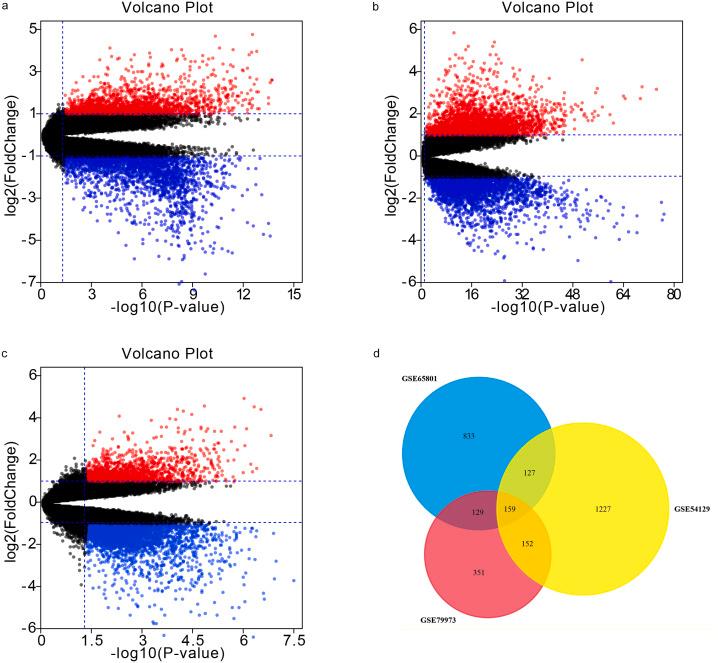
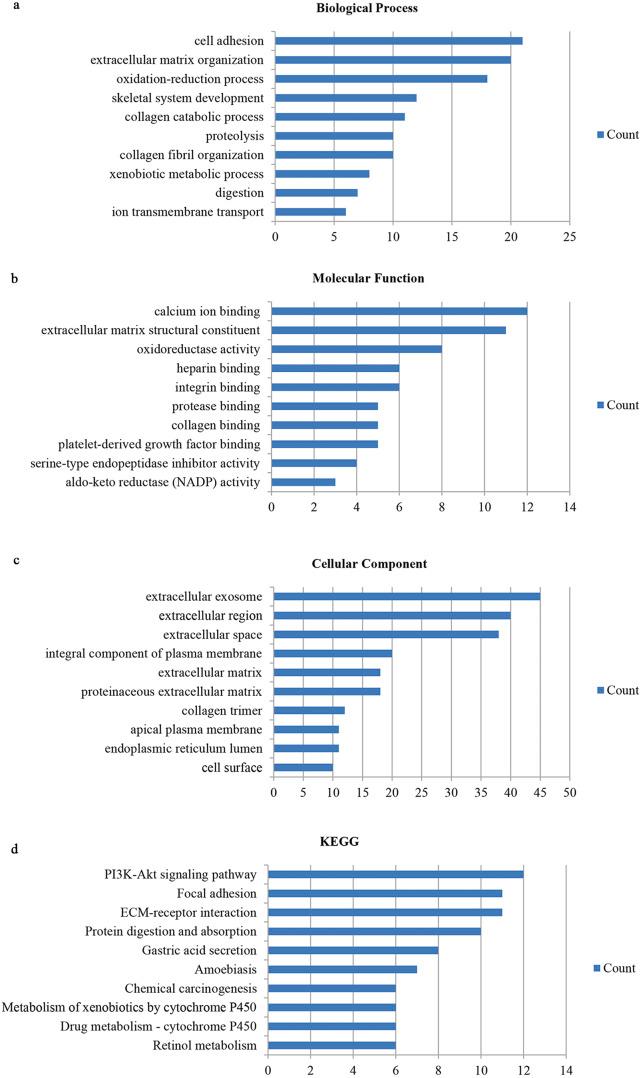
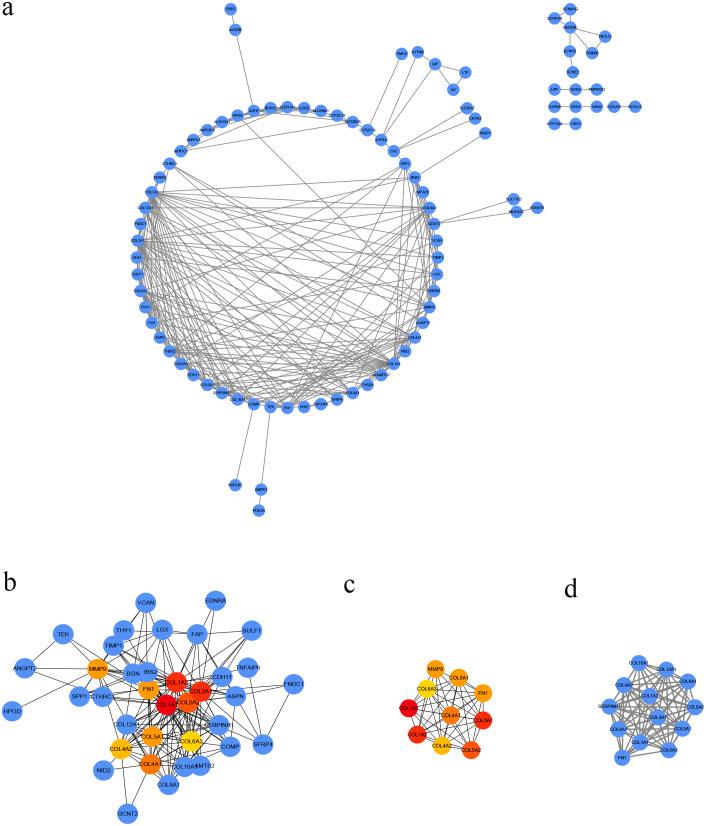
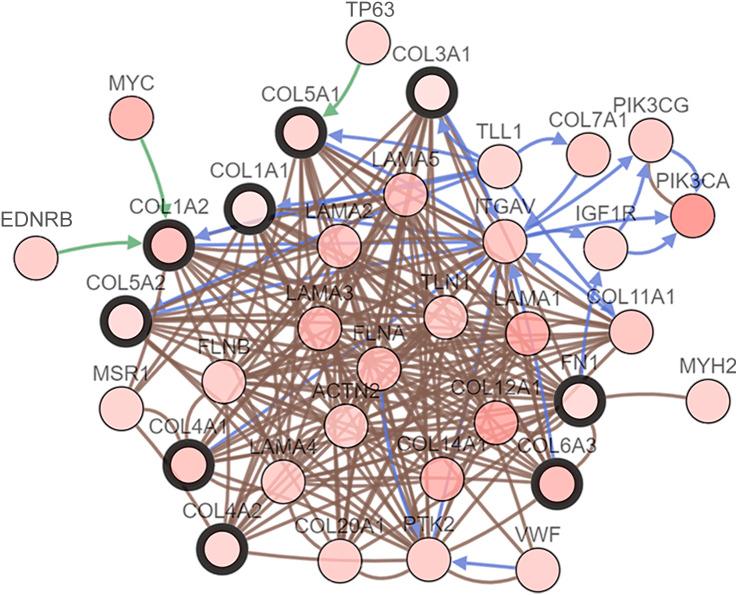
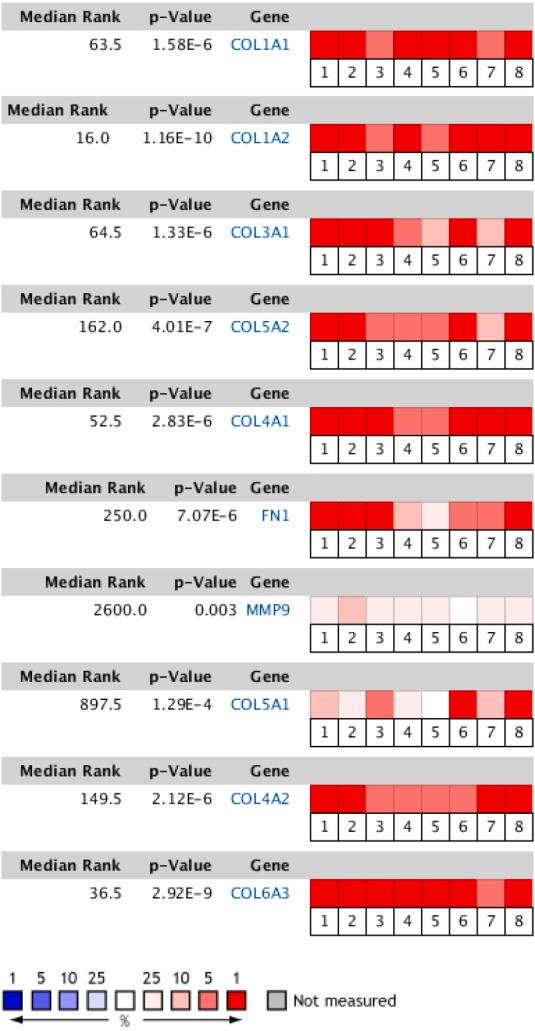
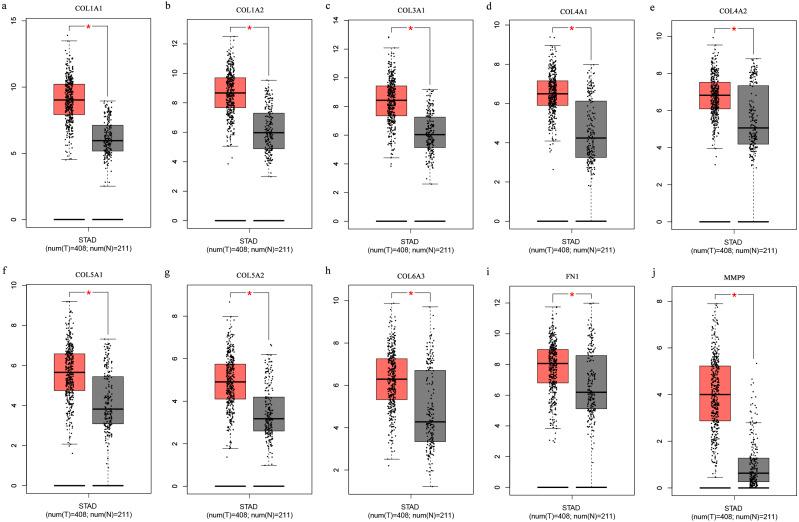
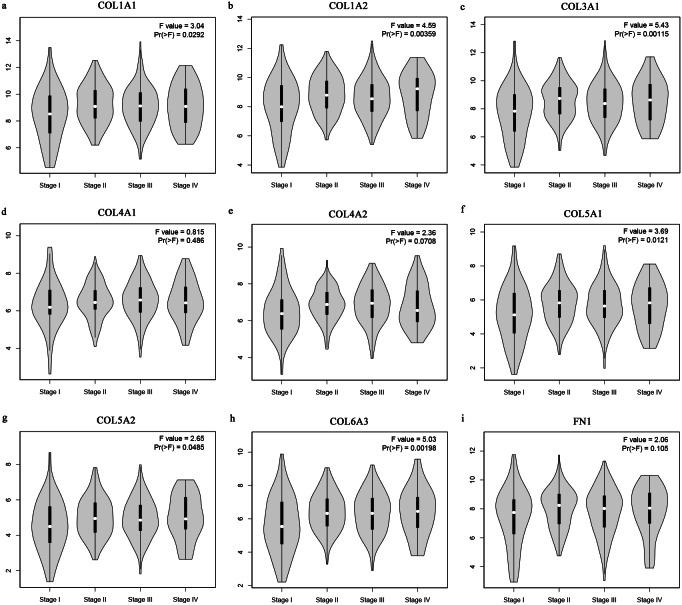
We obtained the mRNA microarray datasets GSE65801, GSE54129 and GSE79973 from the Gene Expression Omnibus database to acquire differentially expressed genes (DEGs). We used the Database for Annotation, Visualization, and Integrated Discovery (DAVID) to analyze DEG pathways and functions, and the Search Tool for the Retrieval of Interacting Genes (STRING) and Cytoscape to obtain the protein-protein interaction (PPI) network. Next, we validated the hub gene expression levels using the Oncomine database and Gene Expression Profiling Interactive Analysis (GEPIA), and conducted stage expression and survival analysis.
RESULTS
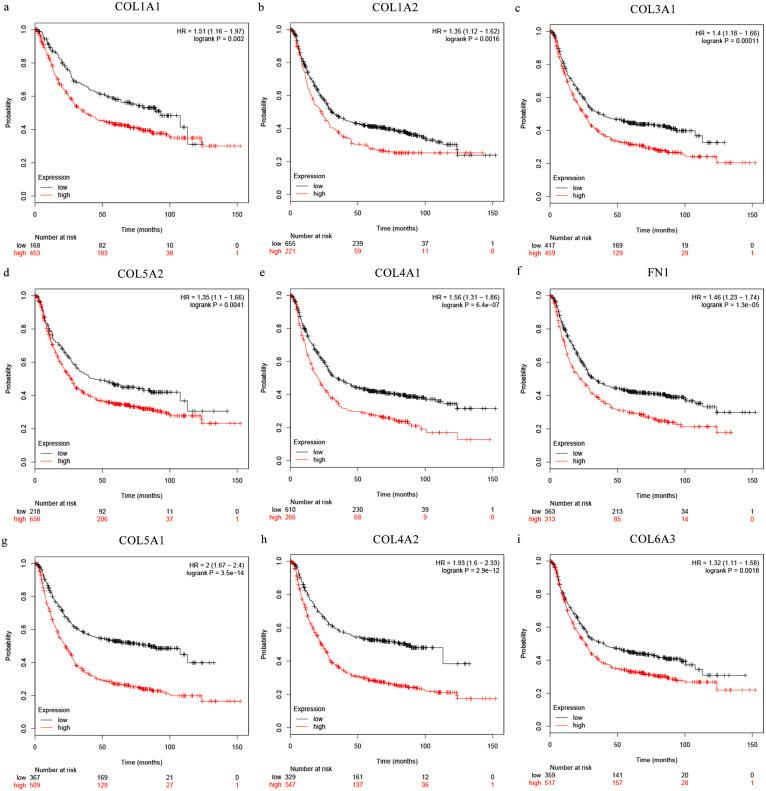
From the three microarray datasets, we identified nine major hub genes: COL1A1, COL1A2, COL3A1, COL5A2, COL4A1, FN1, COL5A1, COL4A2, and COL6A3.
CONCLUSION
Our study identified COL1A1 and COL1A2 as potential gastric cancer prognostic biomarkers.
背景
胃癌是全球最常见的恶性肿瘤之一。尽管治疗策略有了重大进展,但五年生存率仍然很低。因此,需要确定参与胃肿瘤进展的新型生物标志物和治疗靶点。
方法
我们从基因表达综合数据库中获取了mRNA微阵列数据集GSE65801、GSE54129和GSE79973,以获得差异表达基因(DEG)。我们使用注释、可视化和综合发现数据库(DAVID)分析DEG途径和功能,并使用相互作用基因检索工具(STRING)和Cytoscape获得蛋白质-蛋白质相互作用(PPI)网络。接下来,我们使用Oncomine数据库和基因表达谱交互式分析(GEPIA)验证中心基因的表达水平,并进行阶段表达和生存分析。
结果
从这三个微阵列数据集中,我们确定了九个主要的中心基因:COL1A1、COL1A2、COL3A1、COL5A2、COL4A1、FN1、COL5A1、COL4A2和COL6A3。
结论
我们的研究确定COL1A1和COL1A2为潜在的胃癌预后生物标志物。

 Zotero 插件