
传染性支气管炎病毒抑制 TLR7 途径的激活,但不抑制 TLR3 途径。
Infectious bronchitis virus inhibits activation of the TLR7 pathway, but not the TLR3 pathway.
机构信息
Beijing Key Laboratory of Traditional Chinese Veterinary Medicine, College of Animal Science and Technology, Beijing University of Agriculture, Beijing, 102206, China.
出版信息
Arch Virol. 2020 Sep;165(9):2037-2043. doi: 10.1007/s00705-020-04690-8. Epub 2020 Jun 10.
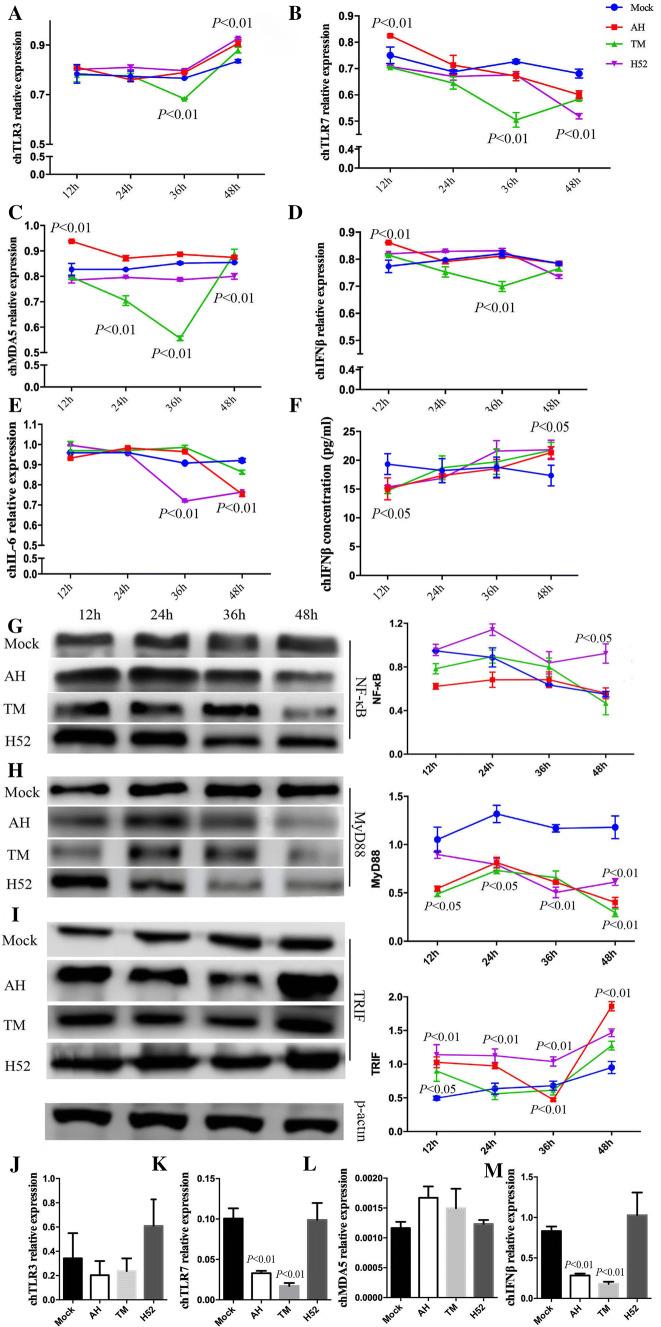
Various strains of infectious bronchitis virus (IBV) cause different forms of infectious bronchitis with different clinical signs. Here, primary chicken embryo kidney (CEK) cells and specific-pathogen-free (SPF) chickens were infected with three pathogenic IBV strains, and it was observed that the TLR7-MYD88 pathway was inhibited but the TLR3-TIRF pathway was activated. After treatment with poly(I:C)-LMW, poly (I:C)-LMW/LyoVec, and Imiquimod, the replication of IBV was significantly suppressed after 24 h. However, treatment with TLR3 pathway inhibitors such as Pepinh-TRIF, celastrol, chloroquine, and BX795 resulted in increased replication of IBV after 36 h. These results also showed that chloroquine and celastrol were most effective inhibitors of the antiviral response at 48 hpi.
不同血清型的传染性支气管炎病毒(IBV)引起具有不同临床症状的传染性支气管炎。在这里,用三种致病性 IBV 株感染原代鸡胚肾(CEK)细胞和无特定病原体(SPF)鸡,观察到 TLR7-MYD88 途径被抑制而 TLR3-TIRF 途径被激活。用聚肌苷酸-低分子量(poly(I:C)-LMW)、聚肌苷酸-低分子量/LyoVec 和咪喹莫特处理后,24 h 时 IBV 的复制明显受到抑制。然而,用 TLR3 途径抑制剂如 Pepinh-TRIF、雷公藤红素、氯喹和 BX795 处理后,36 h 时 IBV 的复制增加。这些结果还表明,氯喹和雷公藤红素在 48 hpi 时是抗病毒反应的最有效抑制剂。

 Zotero 插件