
抗病毒先天免疫反应中 MAVS 表达和信号功能的调节。
Regulation of MAVS Expression and Signaling Function in the Antiviral Innate Immune Response.
机构信息
Key Laboratory of Animal Disease and Human Health of Sichuan Province, College of Veterinary Medicine, Sichuan Agricultural University, Chengdu, China.
The College of Animal Science and Veterinary Medicine, Henan Agricultural University, Zhengzhou, China.
出版信息
Front Immunol. 2020 May 27;11:1030. doi: 10.3389/fimmu.2020.01030. eCollection 2020.
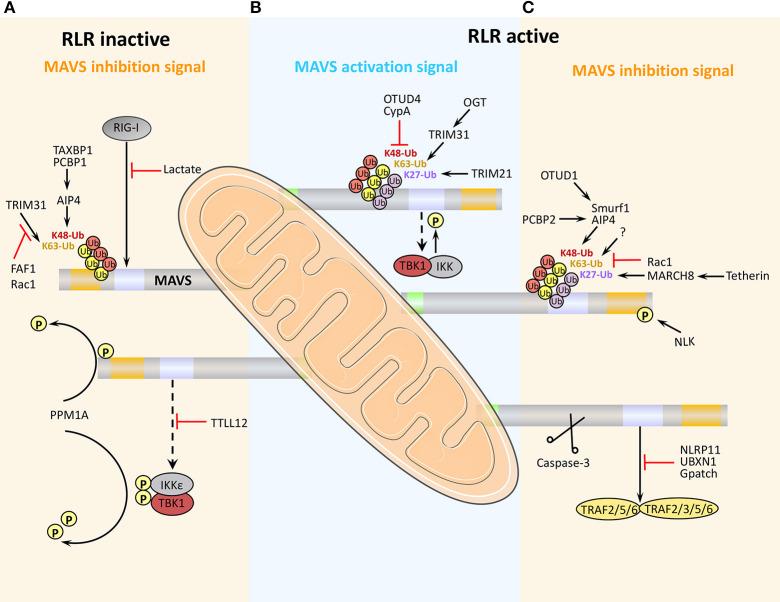
Viral infection is controlled by host innate immune cells that express specialized receptors for viral components. Engagement of these pattern recognition receptors triggers a series of signaling pathways that culminate in the production of antiviral mediators such as type I interferons. Mitochondrial antiviral-signaling protein (MAVS) acts as a central hub for signal transduction initiated by RIG-I-like receptors, which predominantly recognize viral RNA. MAVS expression and function are regulated by both post-transcriptional and post-translational mechanisms, of which ubiquitination and phosphorylation play the most important roles in modulating MAVS function. Increasing evidence indicates that viruses can escape the host antiviral response by interfering at multiple points in the MAVS signaling pathways, thereby maintaining viral survival and replication. This review summarizes recent studies on the mechanisms by which MAVS expression and signaling are normally regulated and on the various strategies employed by viruses to antagonize MAVS activity, which may provide new insights into the design of novel antiviral agents.
病毒感染受宿主固有免疫细胞控制,这些细胞表达专门的病毒成分受体。这些模式识别受体的结合触发一系列信号通路,最终导致产生抗病毒介质,如 I 型干扰素。线粒体抗病毒信号蛋白 (MAVS) 作为 RIG-I 样受体引发的信号转导的中心枢纽,RIG-I 样受体主要识别病毒 RNA。MAVS 的表达和功能受到转录后和翻译后机制的调节,其中泛素化和磷酸化在调节 MAVS 功能方面起着最重要的作用。越来越多的证据表明,病毒可以通过干扰 MAVS 信号通路中的多个点来逃避宿主的抗病毒反应,从而维持病毒的存活和复制。本综述总结了 MAVS 表达和信号转导正常调节的机制以及病毒拮抗 MAVS 活性的各种策略的最新研究,这可能为新型抗病毒药物的设计提供新的思路。


 Zotero 插件