
围产期妇女心理健康的城乡差异:一项基于英国的横断面研究。
Rural-urban differences in the mental health of perinatal women: a UK-based cross-sectional study.
作者信息
Ginja Samuel, Jackson Katherine, Newham James J, Henderson Emily J, Smart Debbie, Lingam Raghu
机构信息
School of Psychology, Ulster University, Cromore Road, Coleraine, BT52 1SA, Northern Ireland, UK.
Department of Sociology, Durham University, 29 Old Elvet, Durham, DH1 3HN, England, UK.
出版信息
BMC Pregnancy Childbirth. 2020 Aug 14;20(1):464. doi: 10.1186/s12884-020-03132-2.
BACKGROUND
International data suggest that living in a rural area is associated with an increased risk of perinatal mental illness. This study tested the association between rurality and risk for two mental illnesses prevalent in perinatal women - depression and anxiety.
METHODS
Using a cross-sectional design, antenatal and postnatal women were approached by healthcare professionals and through other networks in a county in Northern England (UK). After providing informed consent, women completed a questionnaire where they indicated their postcode (used to determine rural-urban status) and completed three outcome measures: the Edinburgh Postnatal Depression Scale (EPDS), the Whooley questions (depression measure), and the Generalised Anxiety Disorder 2-item (GAD-2). Logistic regression models were developed, both unadjusted and adjusted for potential confounders, including socioeconomic status, social support and perinatal stage.
RESULTS
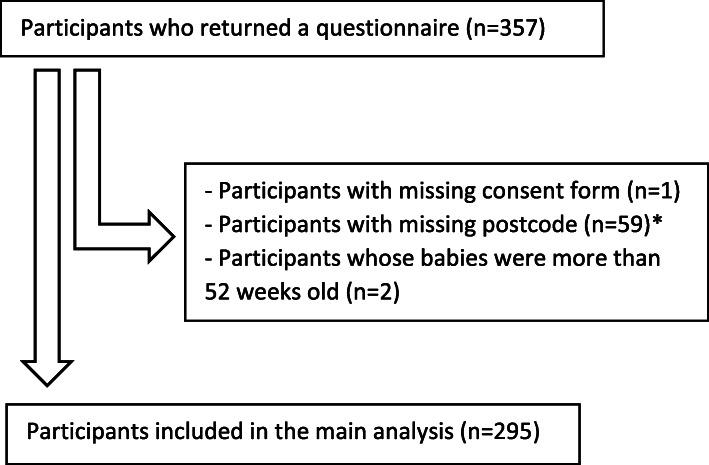
Two hundred ninety-five participants provided valid data. Women in rural areas (n = 130) were mostly comparable to their urban counterparts (n = 165). Risk for depression and/or anxiety was found to be higher in the rural group across all models: unadjusted OR 1.67 (0.42) 95% CI 1.03 to 2.72, p = .038. This difference though indicative did not reach statistical significance after adjusting for socioeconomic status and perinatal stage (OR 1.57 (0.40), 95% CI 0.95 to 2.58, p = .078), and for social support (OR 1.65 (0.46), 95% CI 0.96 to 2.84, p = .070).
CONCLUSIONS
Data suggested that women in rural areas were at higher risk of depression and anxiety than their urban counterparts. Further work should be undertaken to corroborate these findings and investigate the underlying factors. This will help inform future interventions and the allocation of perinatal services to where they are most needed.
背景
国际数据表明,生活在农村地区会增加围产期精神疾病的风险。本研究检验了农村地区与围产期女性中两种常见精神疾病——抑郁症和焦虑症风险之间的关联。
方法
采用横断面设计,英国英格兰北部一个县的医疗保健专业人员通过其他网络联系产前和产后女性。在获得知情同意后,女性完成一份问卷,其中她们表明自己的邮政编码(用于确定城乡身份),并完成三项结果测量:爱丁堡产后抑郁量表(EPDS)、Whooley问题(抑郁测量)和广泛性焦虑症2项量表(GAD - 2)。建立了未调整和针对潜在混杂因素(包括社会经济地位、社会支持和围产期阶段)进行调整的逻辑回归模型。
结果
295名参与者提供了有效数据。农村地区的女性(n = 130)大多与城市女性(n = 165)具有可比性。在所有模型中,农村组患抑郁症和/或焦虑症的风险更高:未调整的比值比为1.67(0.42),95%置信区间为1.03至2.72,p = 0.038。不过,在调整社会经济地位和围产期阶段后(比值比为1.57(0.40),95%置信区间为0.95至2.58,p = 0.078),以及调整社会支持后(比值比为1.65(0.46),95%置信区间为0.96至2.84,p = 0.070),这种差异虽有指示性但未达到统计学显著性。
结论
数据表明,农村地区的女性比城市女性患抑郁症和焦虑症的风险更高。应进一步开展工作以证实这些发现并调查潜在因素。这将有助于为未来的干预措施以及围产期服务的分配提供依据,使其分配到最需要的地方。
 Zotero 插件