
美国不良童年经历的频率和差异
The frequencies and disparities of adverse childhood experiences in the U.S.
机构信息
Center for Rural Health, Oklahoma State University--Center for Health Sciences, 1111 W 17th Street, Tulsa, OK, 74107, USA.
出版信息
BMC Public Health. 2020 Sep 10;20(1):1327. doi: 10.1186/s12889-020-09411-z.
BACKGROUND
Adversity experienced during childhood manifests deleteriously across the lifespan. This study provides updated frequency estimates of ACEs using the most comprehensive and geographically diverse sample to date.
METHODS
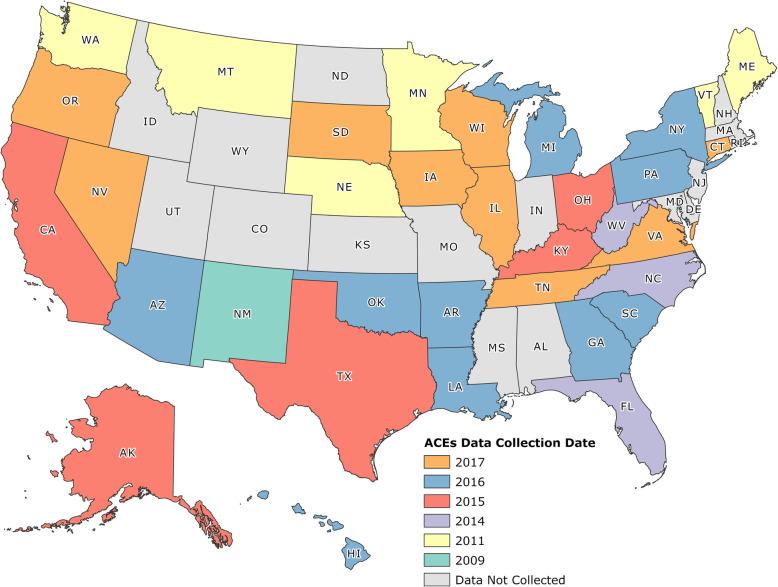
ACEs data were collected via BRFSS (Behavioral Risk Factor Surveillance System). Data from a total of 211,376 adults across 34 states were analyzed. The ACEs survey is comprised of 8 domains: physical/emotional/sexual abuse, household mental illness, household substance use, household domestic violence, incarcerated household member, and parental separation/divorce. Frequencies were calculated for each domain and summed to derive mean ACE scores. Findings were weighted and stratified by demographic variables. Group differences were assessed by post-estimation F-tests.
RESULTS
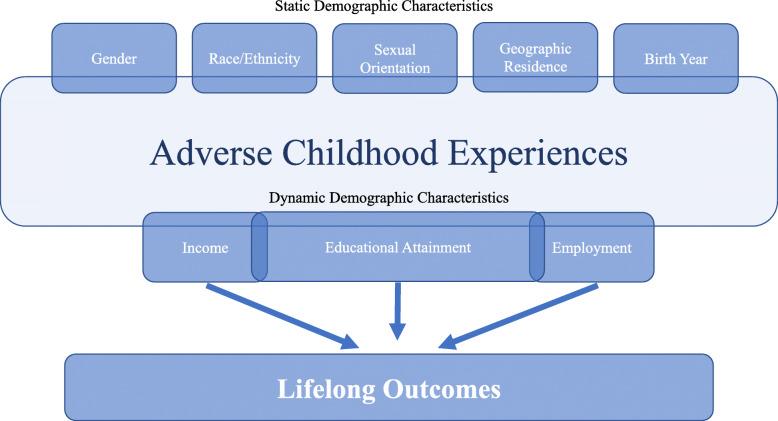
Most individuals experienced at least one ACE (57.8%) with 21.5% experiencing 3+ ACEs. F-tests showed females had significantly higher ACEs than males (1.64 to 1.46). Multiracial individuals had a significantly higher ACEs (2.39) than all other races/ethnicities, while White individuals had significantly lower mean ACE scores (1.53) than Black (1.66) or Hispanic (1.63) individuals. The 25-to-34 age group had a significantly higher mean ACE score than any other group (1.98). Generally, those with higher income/educational attainment had lower mean ACE scores than those with lower income/educational attainment. Sexual minority individuals had higher ACEs than straight individuals, with significantly higher ACEs in bisexual individuals (3.01).
CONCLUSION
Findings highlight that childhood adversity is common across sociodemographic, yet higher in certain categories. Identifying at-risk populations for higher ACEs is essential to improving the health outcomes and attainment across the lifespan.
背景
儿童时期经历的逆境会在整个生命周期中产生有害影响。本研究使用迄今为止最全面和地理上最多样化的样本,提供了 ACE 的最新频率估计。
方法
ACE 数据通过 BRFSS(行为风险因素监测系统)收集。对来自 34 个州的总共 211376 名成年人的数据进行了分析。ACE 调查由 8 个领域组成:身体/情感/性虐待、家庭精神疾病、家庭药物使用、家庭家庭暴力、监禁家庭成员和父母分居/离婚。为每个领域计算了频率,并求和得出平均 ACE 分数。发现结果按人口统计学变量进行加权和分层。通过后估计 F 检验评估组间差异。
结果
大多数人至少经历过一次 ACE(57.8%),21.5%的人经历过 3 次以上 ACE。F 检验显示女性的 ACE 明显高于男性(1.64 比 1.46)。多种族个体的 ACE 明显高于其他所有种族/族裔(2.39),而白人个体的平均 ACE 得分明显低于黑人(1.53)或西班牙裔(1.63)个体。25 至 34 岁年龄组的平均 ACE 得分明显高于其他任何年龄组(1.98)。一般来说,收入/教育程度较高的人比收入/教育程度较低的人平均 ACE 得分较低。性少数群体的 ACE 明显高于异性恋者,双性恋者的 ACE 明显更高(3.01)。
结论
研究结果表明,社会人口统计学中普遍存在儿童逆境,但在某些类别中更高。确定具有较高 ACE 的高危人群对于改善整个生命周期的健康结果和成就至关重要。
 Zotero 插件