
中国新生儿重症监护病房新型菌株的法医学基因组学揭示了定植、进化和流行病学模式。
Forensic genomics of a novel type from a neonatal intensive care unit in China reveals patterns of colonization, evolution and epidemiology.
机构信息
The First Affiliated Hospital of Wenzhou Medical University, Wenzhou, PR China.
Infection and Immunity Program, Biomedicine Discovery Institute and Department of Microbiology, Monash University, Australia.
出版信息
Microb Genom. 2020 Oct;6(10). doi: 10.1099/mgen.0.000433.
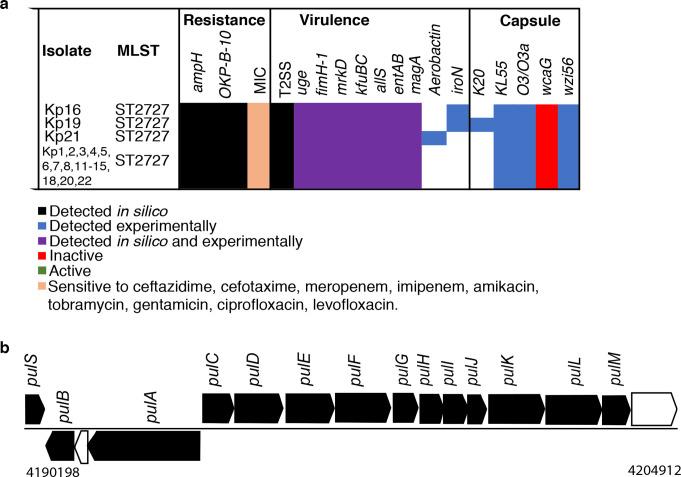
During March 2017, a neonatal patient with severe diarrhoea subsequently developed septicaemia and died, with isolated as the causative microorganism. In keeping with infection control protocols, the coincident illness of an attending staff member and three other neonates with infection triggered an outbreak response, leading to microbiological assessment of isolates collected from the staff member and all 21 co-housed neonates. Multilocus sequence typing and genomic sequencing identified that the isolates from the 21 neonates were of a new sequence type, ST2727, and taxonomically belonged to subsp. (formerly referred to as KpIIB). Genomic characterization showed that the isolated ST2727 strains had diverged from other subsp. strains at least 90 years ago, whereas the neonatal samples were highly similar with a genomic divergence of 3.6 months. There was no relationship to the isolate from the staff member. This demonstrates that no transmission occurred from staff to patient or between patients. Rather, the data suggest that ST2727 colonized each neonate from a common hospital source. Sequence-based analysis of the genomes revealed several genes for antimicrobial resistance and some virulence features, but suggest that ST2727 is neither extremely-drug resistant nor hypervirulent. Our results highlight the clinical significance and genomic properties of ST2727 and urge genome-based measures be implemented for diagnostics and surveillance within hospital environments. Additionally, the present study demonstrates the need to scale the power of genomic analysis in retrospective studies where relatively few samples are available.
2017 年 3 月,一名严重腹泻的新生儿随后发生败血症并死亡,被分离为致病微生物。根据感染控制协议,一名主治医护人员和另外三名患有感染的新生儿同时患病,引发了疫情应对,导致对医护人员和所有 21 名同住新生儿采集的分离物进行微生物学评估。多位点序列分型和基因组测序确定,21 名新生儿的分离株为新的序列型 ST2727,分类上属于 亚种(以前称为 KpIIB)。基因组特征表明,分离的 ST2727 菌株与其他 亚种菌株至少在 90 年前就已经分化,而新生儿样本高度相似,基因组差异为 3.6 个月。与医护人员的 分离株没有关系。这表明没有发生从医护人员到患者或患者之间的传播。相反,数据表明 ST2727 从医院的一个共同来源定植于每个新生儿。基于序列的基因组分析揭示了一些抗生素耐药性和一些毒力特征的基因,但表明 ST2727 既不是极耐药的也不是高毒力的。我们的研究结果强调了 ST2727 的临床意义和基因组特性,并敦促在医院环境中实施基于基因组的诊断和监测措施。此外,本研究表明,在可用样本相对较少的回顾性研究中,需要扩大基因组分析的力量。


 Zotero 插件