
基于生物工程化小干扰RNA的纳米平台靶向分子信号通路治疗三阴性乳腺癌:临床前和临床进展
Bioengineered siRNA-Based Nanoplatforms Targeting Molecular Signaling Pathways for the Treatment of Triple Negative Breast Cancer: Preclinical and Clinical Advancements.
作者信息
Hattab Dima, Bakhtiar Athirah
机构信息
School of Pharmacy, University of Jordan, Queen Rania Street, 11942 Amman, Jordan.
School of Pharmacy, Monash University Malaysia, Bandar Sunway, 47500 Selangor, Malaysia.
出版信息
Pharmaceutics. 2020 Sep 29;12(10):929. doi: 10.3390/pharmaceutics12100929.
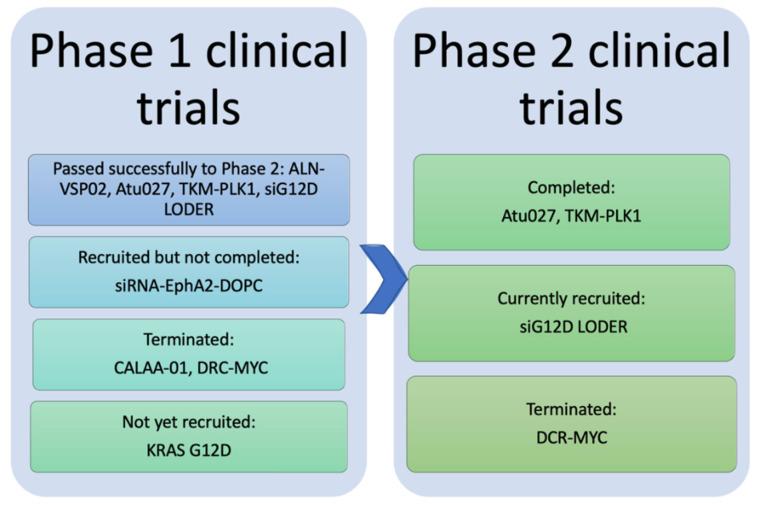
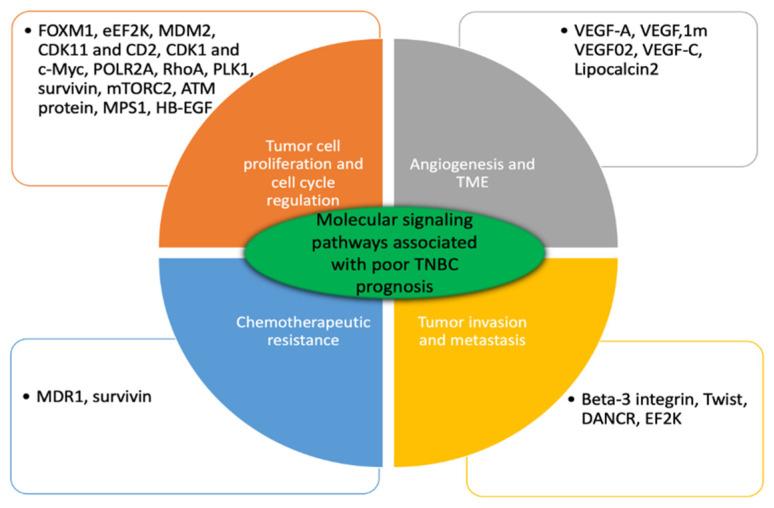
Triple negative breast cancer (TNBC) is one of the most aggressive types of breast cancer. Owing to the absenteeism of hormonal receptors expressed at the cancerous breast cells, hormonal therapies and other medications targeting human epidermal growth factor receptor 2 (HER2) are ineffective in TNBC patients, making traditional chemotherapeutic agents the only current appropriate regimen. Patients' predisposition to relapse and metastasis, chemotherapeutics' cytotoxicity and resistance and poor prognosis of TNBC necessitates researchers to investigate different novel-targeted therapeutics. The role of small interfering RNA (siRNA) in silencing the genes/proteins that are aberrantly overexpressed in carcinoma cells showed great potential as part of TNBC therapeutic regimen. However, targeting specificity, siRNA stability, and delivery efficiency cause challenges in the progression of this application clinically. Nanotechnology was highlighted as a promising approach for encapsulating and transporting siRNA with high efficiency-low toxicity profile. Advances in preclinical and clinical studies utilizing engineered siRNA-loaded nanotherapeutics for treatment of TNBC were discussed. Specific and selective targeting of diverse signaling molecules/pathways at the level of tumor proliferation and cell cycle, tumor invasion and metastasis, angiogenesis and tumor microenvironment, and chemotherapeutics' resistance demonstrated greater activity via integration of siRNA-complexed nanoparticles.
三阴性乳腺癌(TNBC)是最具侵袭性的乳腺癌类型之一。由于癌性乳腺细胞中缺乏激素受体,激素疗法和其他针对人表皮生长因子受体2(HER2)的药物对TNBC患者无效,使得传统化疗药物成为目前唯一合适的治疗方案。患者易于复发和转移、化疗药物的细胞毒性和耐药性以及TNBC的预后不良,这使得研究人员有必要研究不同的新型靶向治疗方法。小干扰RNA(siRNA)在沉默癌细胞中异常过度表达的基因/蛋白质方面的作用,作为TNBC治疗方案的一部分显示出巨大潜力。然而,靶向特异性、siRNA稳定性和递送效率在该应用的临床进展中带来了挑战。纳米技术被视为一种有前景的方法,可用于高效低毒地封装和运输siRNA。讨论了利用工程化载有siRNA的纳米治疗剂治疗TNBC的临床前和临床研究进展。通过整合与siRNA复合的纳米颗粒,在肿瘤增殖和细胞周期、肿瘤侵袭和转移、血管生成和肿瘤微环境以及化疗耐药性水平上对多种信号分子/途径进行特异性和选择性靶向,显示出更大的活性。

 Zotero 插件