
由肿瘤坏死因子α诱导的促炎性椎间盘细胞和器官培养模型
Proinflammatory intervertebral disc cell and organ culture models induced by tumor necrosis factor alpha.
作者信息
Du Jie, Pfannkuche Judith-J, Lang Gernot, Häckel Sonja, Creemers Laura B, Alini Mauro, Grad Sibylle, Li Zhen
机构信息
AO Research Institute Davos Davos Switzerland.
Department of Orthopedics University Medical Center Utrecht Utrecht The Netherlands.
出版信息
JOR Spine. 2020 Jun 19;3(3):e1104. doi: 10.1002/jsp2.1104. eCollection 2020 Sep.
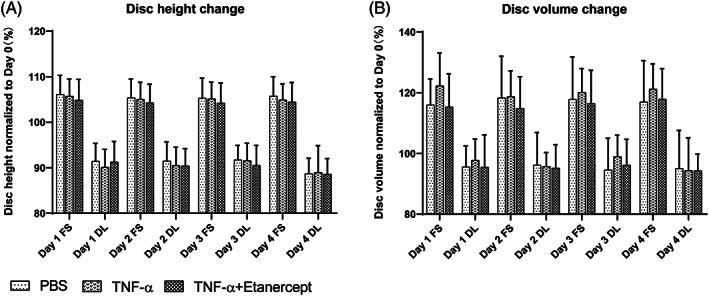
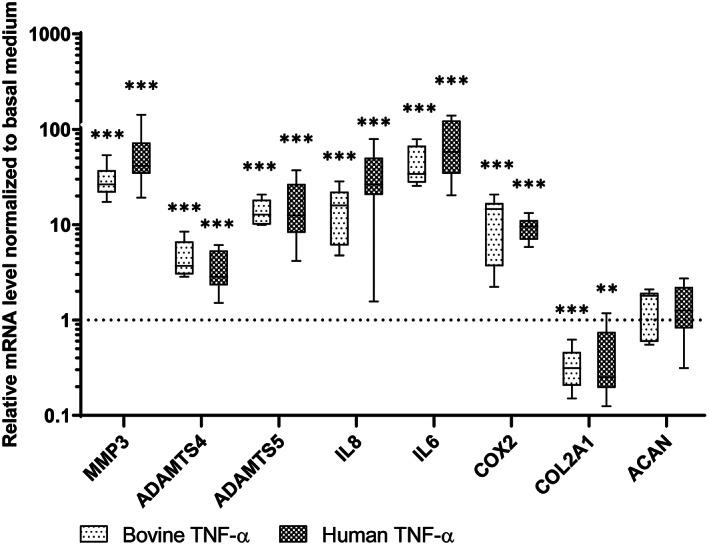
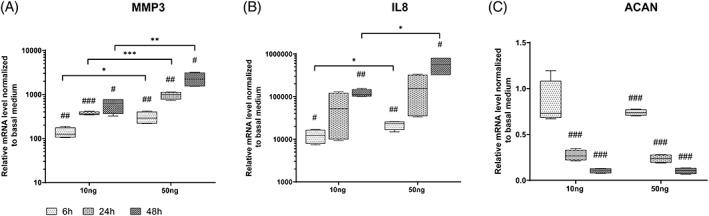
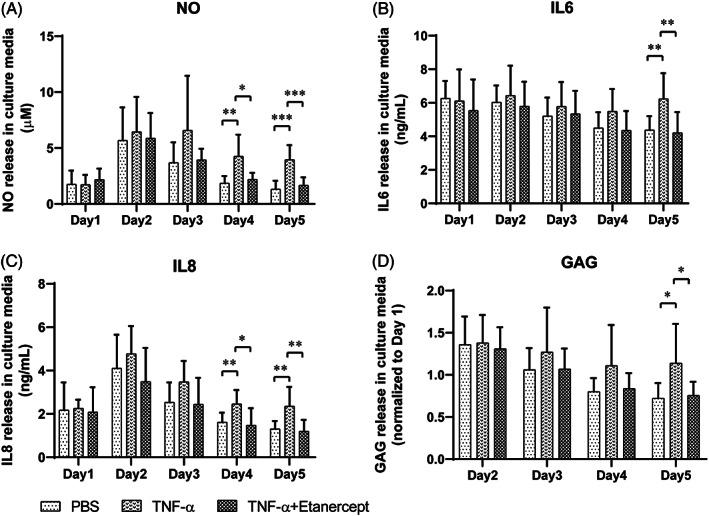
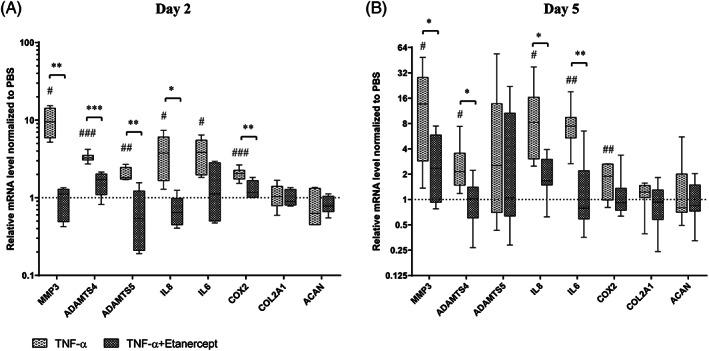
Inflammation plays an important role in the pathogenesis of intervertebral disc (IVD) degeneration. The proinflammatory cytokine tumor necrosis factor alpha (TNF-α) has shown markedly higher expression in degenerated human disc tissue compared with healthy controls. Anti-inflammatory treatment targeting TNF-α has shown to alleviate discogenic pain in patients with low back pain. Therefore, in vitro and ex vivo inflammatory models utilizing TNF-α provide relevant experimental conditions for drug development in disc degeneration research. The current method article addressed several specific questions related to the model establishment. (a) The effects of bovine and human recombinant TNF-α on bovine nucleus pulposus (NP) cells were compared. (b) The required dose for an inflammatory IVD organ culture model with intradiscal TNF-α injection was studied. (c) The effect of TNF-α blocking at different stages of inflammation was evaluated. Outcomes revealed that bovine and human recombinant TNF-α induced equivalent inflammatory effects in bovine NP cells. A bovine whole IVD inflammatory model was established by intradiscal injection of 100 ng TNF-α/ cm disc volume, as indicated by increased nitric oxide, glycosaminoglycan, interleukin 6 (IL-6), and interleukin 8 (IL-8) release in culture media, and upregulation of MMP3, ADAMTS4, IL-8, IL-6, and cyclooxygenase (COX)-2 expression in NP tissue. However, results in human NP cells showed that the time point of anti-inflammatory treatment was crucial to achieve significant effects. Furthermore, anticatabolic therapy in conjunction with TNF-α inhibition would be required to slow down the pathologic cascade of disc degeneration.
炎症在椎间盘退变的发病机制中起重要作用。与健康对照相比,促炎细胞因子肿瘤坏死因子α(TNF-α)在退变的人类椎间盘组织中表达明显更高。针对TNF-α的抗炎治疗已显示可减轻腰痛患者的椎间盘源性疼痛。因此,利用TNF-α的体外和离体炎症模型为椎间盘退变研究中的药物开发提供了相关实验条件。当前的方法文章解决了与模型建立相关的几个具体问题。(a)比较了牛和人重组TNF-α对牛髓核(NP)细胞的影响。(b)研究了椎间盘内注射TNF-α的炎症性椎间盘器官培养模型所需的剂量。(c)评估了在炎症不同阶段阻断TNF-α的效果。结果显示,牛和人重组TNF-α在牛NP细胞中诱导了等效的炎症效应。通过椎间盘内注射100 ng TNF-α/ cm椎间盘体积建立了牛全椎间盘炎症模型,培养基中一氧化氮、糖胺聚糖、白细胞介素6(IL-6)和白细胞介素8(IL-8)释放增加,以及NP组织中MMP3、ADAMTS4、IL-8、IL-6和环氧化酶(COX)-2表达上调表明了这一点。然而,人NP细胞的结果表明,抗炎治疗的时间点对于取得显著效果至关重要。此外,需要联合抗分解代谢疗法和TNF-α抑制来减缓椎间盘退变病理级联反应。

 Zotero 插件