
侵袭性小叶癌细胞系中雌激素对mTOR信号传导和线粒体功能的调节需要WNT4。
Estrogen Regulation of mTOR Signaling and Mitochondrial Function in Invasive Lobular Carcinoma Cell Lines Requires WNT4.
作者信息
Shackleford Madeleine T, Rao Deviyani M, Bordeaux Evelyn K, Hicks Hannah M, Towers Christina G, Sottnik Joseph L, Oesterreich Steffi, Sikora Matthew J
机构信息
Department of Pathology, University of Colorado Anschutz Medical Campus, Aurora, CO 80045, USA.
Department of Pharmacology, University of Colorado Anschutz Medical Campus, Aurora, CO 80045, USA.
出版信息
Cancers (Basel). 2020 Oct 12;12(10):2931. doi: 10.3390/cancers12102931.
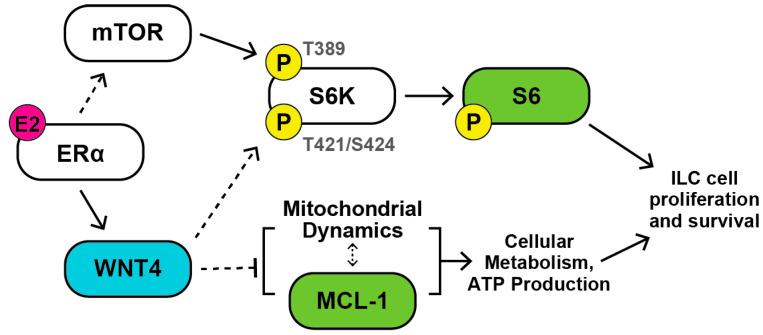
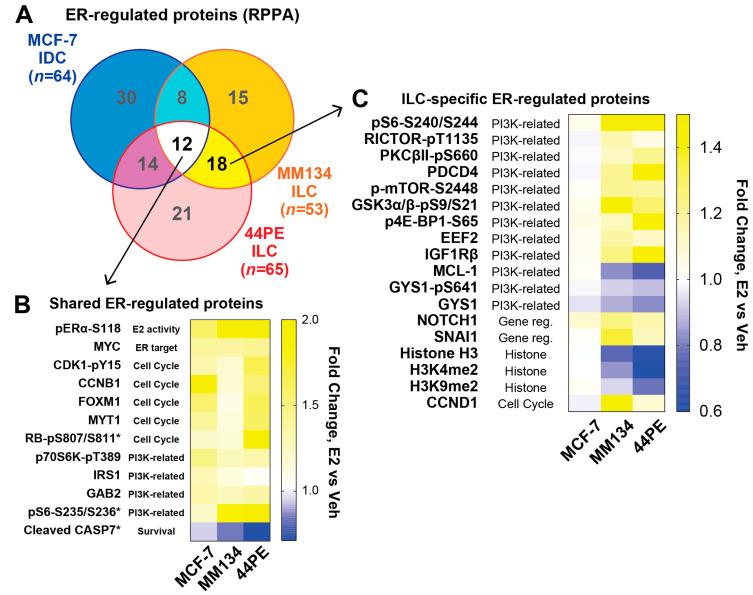
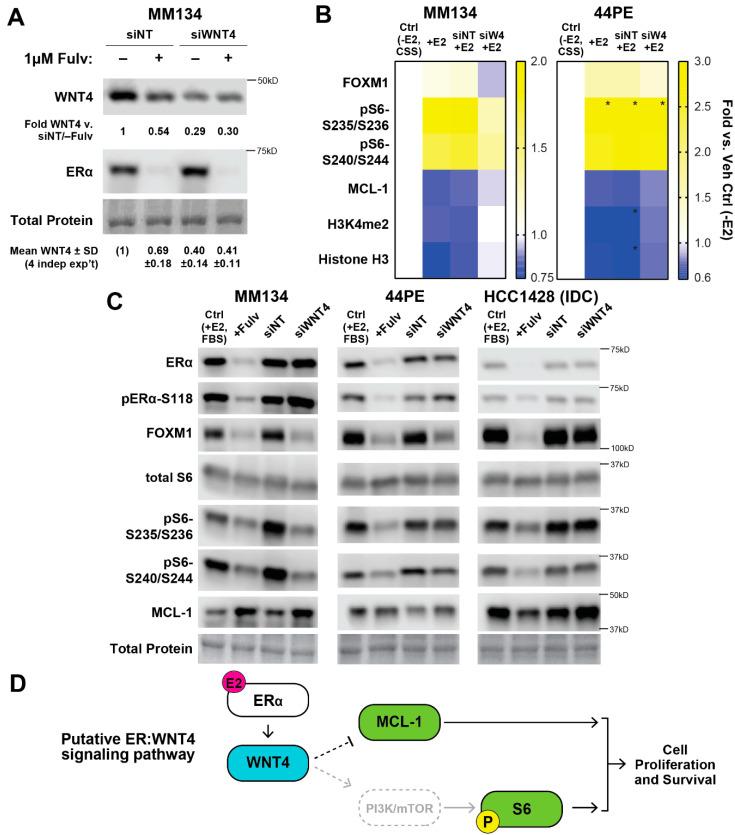
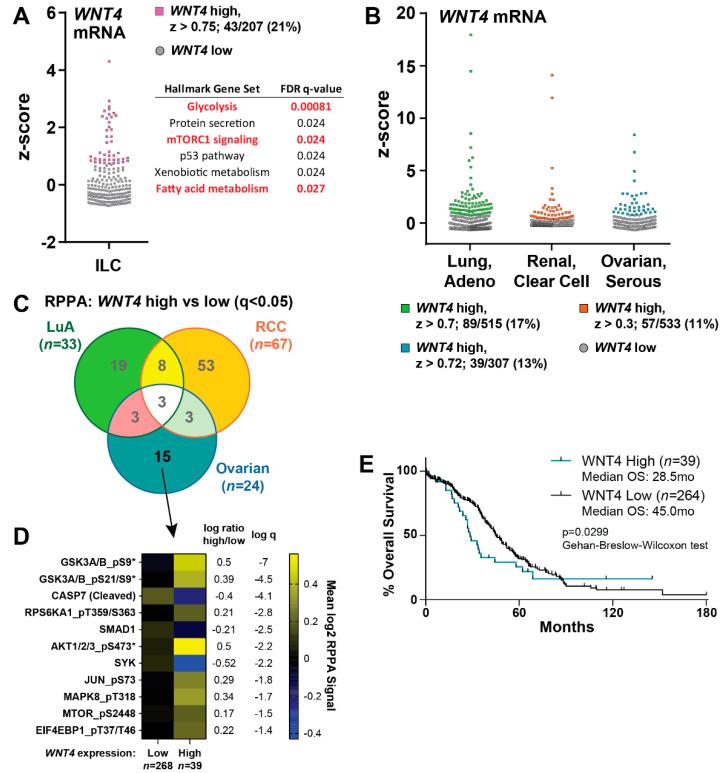
Invasive lobular carcinoma of the breast (ILC) is strongly estrogen-driven and represents a unique context for estrogen receptor (ER) signaling. In ILC, ER controls the expression of the Wnt ligand WNT4, which is critical for endocrine response and anti-estrogen resistance. However, signaling mediated by WNT4 is cell type- and tissue-specific, and has not been explored in ILC. We utilized reverse phase protein array (RPPA) to characterize ER and WNT4-driven signaling in ILC cells and identified that WNT4 mediates downstream mTOR signaling via phosphorylation of S6 Kinase. Additionally, ER and WNT4 control levels of MCL-1, which is associated with regulation of mitochondrial function. In this context, WNT4 knockdown led to decreased ATP production and increased mitochondrial fragmentation. WNT4 regulation of both mTOR signaling and MCL-1 were also observed in anti-estrogen resistant models of ILC. We identified that high WNT4 expression is associated with similar mTOR pathway activation in ILC and serous ovarian cancer tumors, suggesting that WNT4 signaling is active in multiple tumor types. The identified downstream pathways offer insight into WNT4 signaling and represent potential targets to overcome anti-estrogen resistance for patients with ILC.
乳腺浸润性小叶癌(ILC)受雌激素强烈驱动,代表了雌激素受体(ER)信号传导的独特背景。在ILC中,ER控制Wnt配体WNT4的表达,这对内分泌反应和抗雌激素耐药性至关重要。然而,WNT4介导的信号传导具有细胞类型和组织特异性,尚未在ILC中进行探索。我们利用反向蛋白质阵列(RPPA)来表征ILC细胞中ER和WNT4驱动的信号传导,并确定WNT4通过S6激酶的磷酸化介导下游mTOR信号传导。此外,ER和WNT4控制MCL-1的水平,MCL-1与线粒体功能的调节有关。在这种情况下,WNT4基因敲低导致ATP生成减少和线粒体碎片化增加。在ILC的抗雌激素耐药模型中也观察到WNT4对mTOR信号传导和MCL-1的调节。我们发现,WNT4高表达与ILC和浆液性卵巢癌肿瘤中类似的mTOR途径激活有关,这表明WNT4信号传导在多种肿瘤类型中均有活性。所确定的下游途径为深入了解WNT4信号传导提供了思路,并代表了克服ILC患者抗雌激素耐药性的潜在靶点。


 Zotero 插件