
低频超声联合载锌酞菁的胶束的多功能治疗应用。
Bifunctional Therapeutic Application of Low-Frequency Ultrasound Associated with Zinc Phthalocyanine-Loaded Micelles.
机构信息
School of Pharmaceutical Sciences of Ribeirao Preto, University of Sao Paulo, Ribeirao Preto, São Paulo, 14040-903, Brazil.
School of Philosophy, Sciences and Letters of Ribeirao Preto, University of Sao Paulo, Ribeirao Preto, Sao Paulo, 14090-900, Brazil.
出版信息
Int J Nanomedicine. 2020 Oct 20;15:8075-8095. doi: 10.2147/IJN.S264528. eCollection 2020.
PURPOSE
Sonodynamic therapy (SDT) is a new therapeutic modality for the noninvasive cancer treatment based on the association of ultrasound and sonosensitizer drugs. Topical SDT requires the development of delivery systems to properly transport the sonosensitizer, such as zinc phthalocyanine (ZnPc), to the skin. In addition, the delivery system itself can participate in sonodynamic events and influence the therapeutic response. This study aimed to develop ZnPc-loaded micelle to evaluate its potential as a topical delivery system and as a cavitational agent for low-frequency ultrasound (LFU) application with the dual purpose of promoting ZnPc skin penetration and generating reactive oxygen species (ROS) for SDT.
METHODS
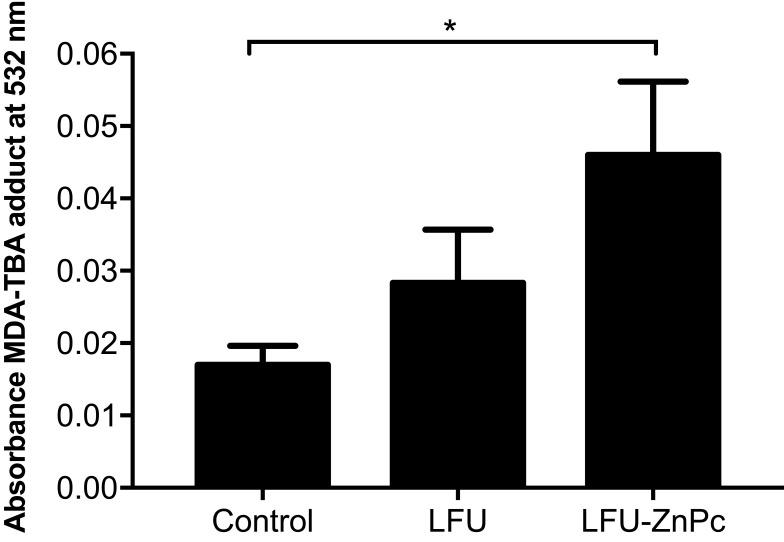
ZnPc-loaded micelles were developed by the thin-film hydration method and optimized using the Quality by Design approach. Micelles' influence on LFU-induced cavitation activity was measured by potassium iodide dosimeter and aluminum foil pits experiments. In vitro skin penetration of ZnPc was assessed after pretreatment of the skin with LFU and simultaneous LFU treatment using ZnPc-loaded micelles as coupling media followed by 6 h of passive permeation of ZnPc-loaded micelles. The singlet oxygen generation by LFU irradiation of the micelles was evaluated using two different hydrophilic probes. The lipid peroxidation of the skin was estimated using the malondialdehyde assay after skin treatment with simultaneous LFU using ZnPc-loaded micelles. The viability of the B16F10 melanoma cell line was evaluated using resazurin after treatment with different concentrations of ZnPc-loaded micelles irradiated or not with LFU.
RESULTS
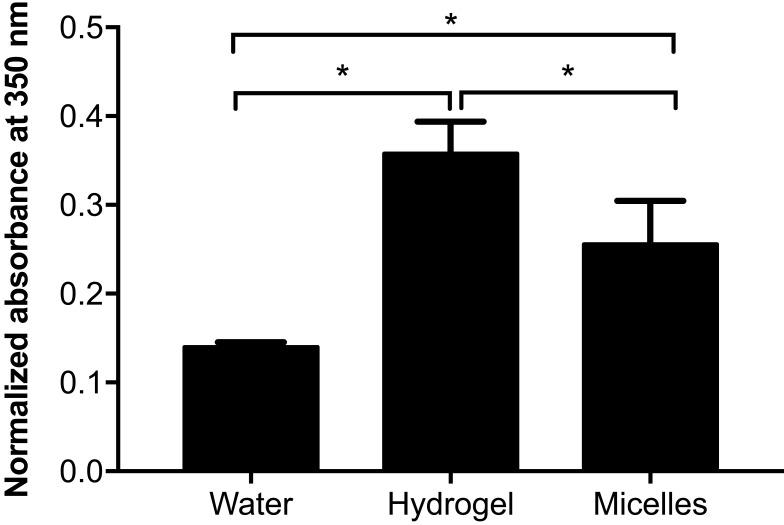
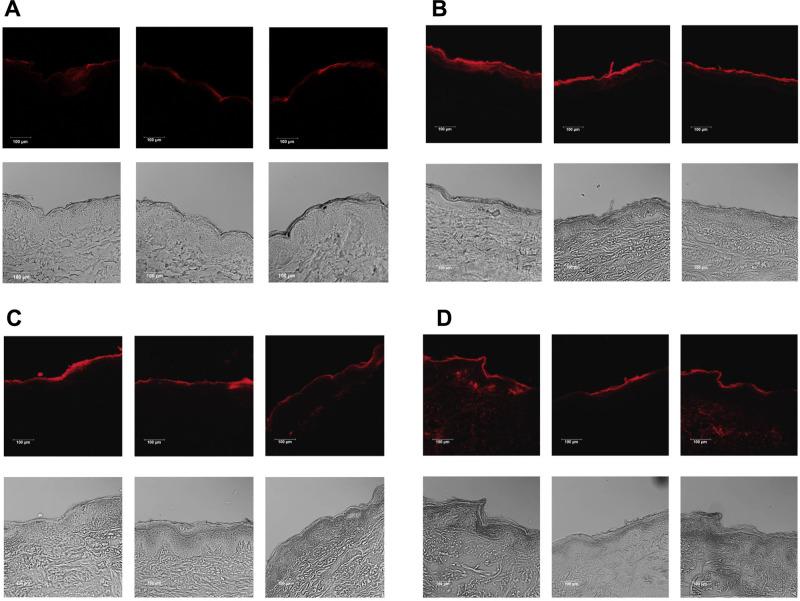
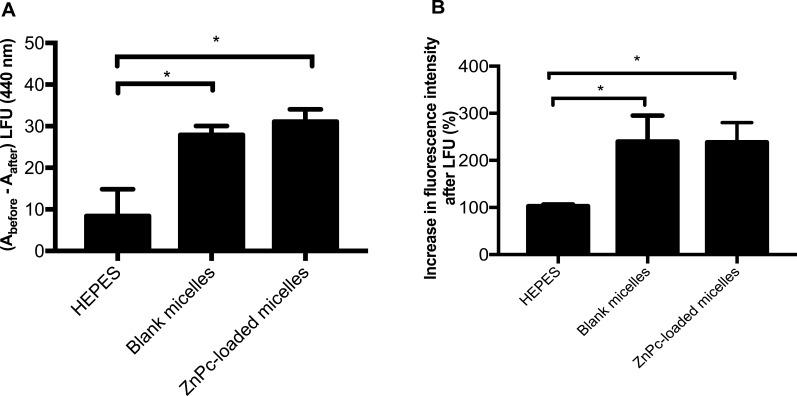
The micelles increased the solubility of ZnPc and augmented the LFU-induced cavitation activity in two times compared to water. After 6 h ZnPc-loaded micelles skin permeation, simultaneous LFU treatment increased the amount of ZnPc in the dermis by more than 40 times, when compared to non-LFU-mediated treatment, and by almost 5 times, when compared to LFU pretreatment protocol. The LFU irradiation of micelles induced the generation of singlet oxygen, and the lipoperoxidation of the skin treated with the simultaneous LFU was enhanced in three times in comparison to the non-LFU-treated skin. A significant reduction in cell viability following treatment with ZnPc-loaded micelles and LFU was observed compared to blank micelles and non-LFU-treated control groups.
CONCLUSION
LFU-irradiated mice can be a potential approach to skin cancer treatment by combining the functions of increasing drug penetration and ROS generation required for SDT.
目的
声动力学疗法(SDT)是一种基于超声和声敏剂药物联合应用的非侵入性癌症治疗新方法。局部 SDT 需要开发输送系统,以将声敏剂(如锌酞菁(ZnPc))适当输送到皮肤。此外,输送系统本身可以参与声动力学事件并影响治疗反应。本研究旨在开发载有 ZnPc 的胶束,以评估其作为局部输送系统的潜力,以及作为低频超声(LFU)应用的声空化剂的潜力,其双重目的是促进 ZnPc 皮肤渗透并产生用于 SDT 的活性氧(ROS)。
方法
通过薄膜水化法制备载有 ZnPc 的胶束,并采用质量源于设计方法进行优化。通过碘化钾剂量计和铝箔凹坑实验测量胶束对 LFU 诱导空化活性的影响。在 LFU 预处理皮肤后,评估 ZnPc 的体外皮肤渗透,同时使用载有 ZnPc 的胶束作为偶联介质进行 LFU 处理,然后进行 6 小时载有 ZnPc 的胶束的被动渗透。使用两种不同的亲水性探针评估 LFU 照射胶束产生的单线态氧。用丙二醛测定法评估皮肤脂质过氧化,方法是用载有 ZnPc 的胶束同时进行 LFU 处理后。用不同浓度的载有 ZnPc 的胶束处理后,用 Resazurin 评估 B16F10 黑色素瘤细胞系的活力。
结果
与水相比,胶束增加了 ZnPc 的溶解度,并使 LFU 诱导的空化活性增加了两倍。载有 ZnPc 的胶束皮肤渗透 6 小时后,与非 LFU 介导的治疗相比,同时 LFU 处理使真皮中 ZnPc 的量增加了 40 多倍,与 LFU 预处理方案相比,增加了近 5 倍。LFU 照射胶束诱导单线态氧的产生,与未用 LFU 处理的皮肤相比,用同时 LFU 处理的皮肤的脂质过氧化增加了三倍。与空白胶束和未用 LFU 处理的对照组相比,用载有 ZnPc 的胶束和 LFU 处理后观察到细胞活力显著降低。
结论
LFU 照射的老鼠可能是一种通过结合 SDT 所需的增加药物渗透和 ROS 生成功能来治疗皮肤癌的潜在方法。



 Zotero 插件