
污水处理厂(WWTPs)去除微塑料的效率:系统评价。
Efficiency of Wastewater Treatment Plants (WWTPs) for Microplastic Removal: A Systematic Review.
机构信息
Department of Medical Sciences, Surgical and Advanced Technologies "G.F. Ingrassia", University of Catania, Via Santa Sofia 87, 95123 Catania, Italy.
出版信息
Int J Environ Res Public Health. 2020 Oct 30;17(21):8014. doi: 10.3390/ijerph17218014.
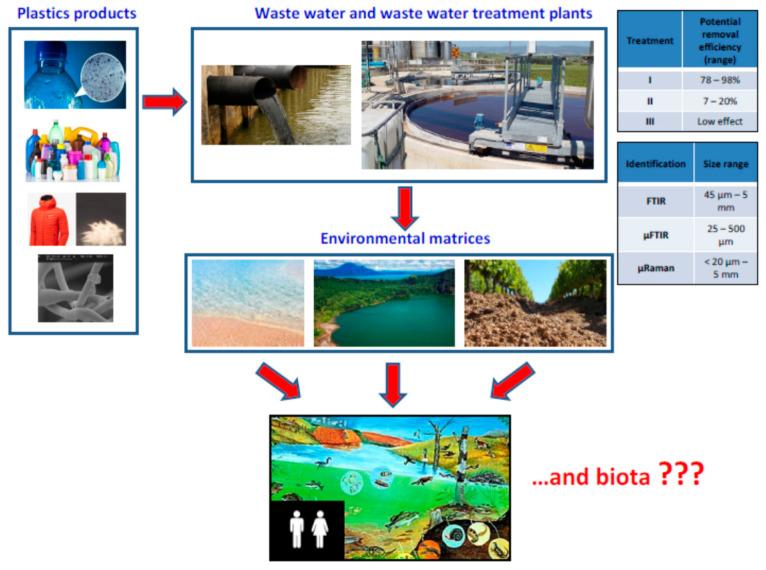
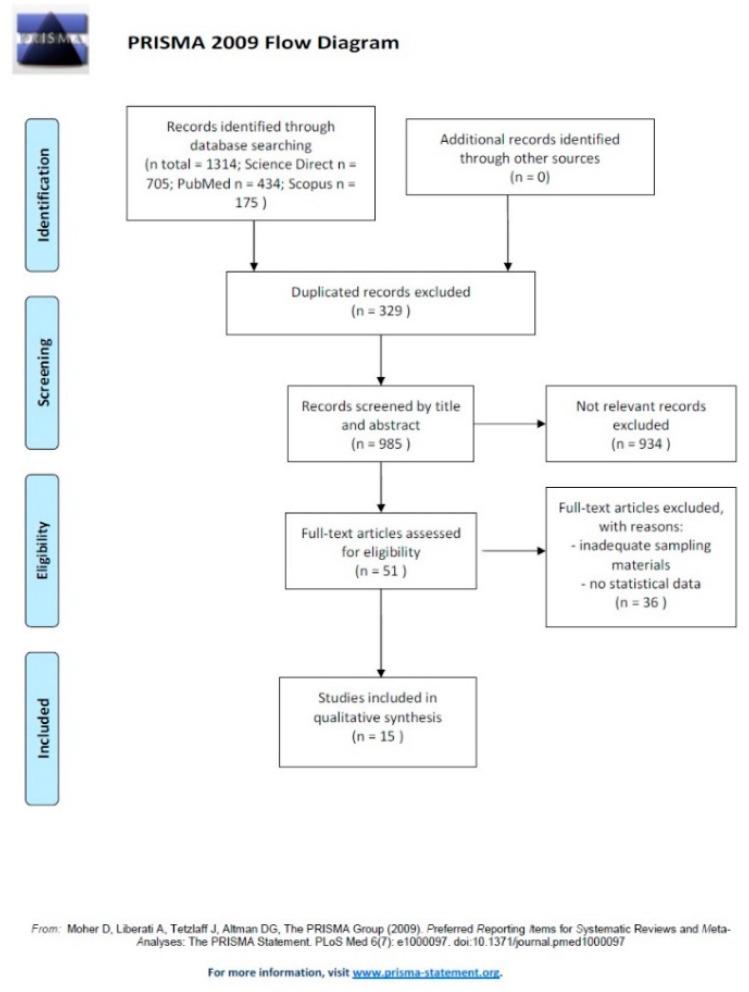
Plastic is widely used for human activities (food packaging, medical, technological devices, etc.) and there is a growing concern regarding the risks for environmental and human health because they have still not been fully evaluated. Particularly, microplastics (primary and secondary) are present in all environmental compartments and this poses a potential threat because of their entry into the food chain. Furthermore, microplastics can absorb numerous pollutants that can be accumulated in the human body through bioaccumulation and biomagnification processes. We carried out a systematic review using a PRISMA approach to verify the efficiency of wastewater treatment plants (WWTPs) for microplastic removal. The international databases (PubMed, Science Direct, Scopus) were used to find published studies on efficiency of wastewater treatment plants (WWTPs) for microplastic removal. The search period was between January 2010 and June 2020. Over 1000 full research papers were initially selected through the use of keywords. After that, the papers were further selected by English language, title, and abstract, and duplicate papers and non-relevant papers were eliminated according to eligibility criteria. Finally, we included 15 full research papers. In each of the 15 full research papers selected, the microplastics identified were categorized by the authors for shape, size, and type of polymers identified. The characterization of the various types of microplastics was performed by Fourier Transform Infrared Spectroscopy (FTIR) or Raman spectroscopy. We have observed how wastewater treatments plants located in different continents (Europe, Asia, North America) mostly use a primary and secondary type of treatment that allows one to reach a high percentage of microplastics removal from wastewater. Most of the wastewater treatments plants investigated reported a microplastics removal efficiency greater than 90%, but despite this, millions of microplastics continue to be released every day into the aquatic environment. Then, in the near future, efficient and common standardized protocols for monitoring MPs should be drawn up, as well as increasing the knowledge of sources and strategies to further reduce microplastics contamination of treated wastewater.
塑料被广泛应用于人类活动(食品包装、医疗、技术设备等),人们越来越关注其对环境和人类健康的风险,因为这些风险尚未得到充分评估。特别是微塑料(原生和次生)存在于所有环境中,这构成了一种潜在的威胁,因为它们有可能进入食物链。此外,微塑料可以吸附大量污染物,这些污染物可以通过生物积累和生物放大过程在人体内积累。我们采用 PRISMA 方法进行了系统评价,以验证污水处理厂(WWTP)去除微塑料的效率。利用国际数据库(PubMed、Science Direct、Scopus)查找关于污水处理厂(WWTP)去除微塑料效率的已发表研究。检索时间为 2010 年 1 月至 2020 年 6 月。最初通过使用关键词筛选出 1000 多篇全文研究论文,然后通过英语语言、标题和摘要进一步筛选,并根据入选标准排除重复论文和不相关论文。最后,我们纳入了 15 篇全文研究论文。在所选的 15 篇全文研究论文中,作者对识别出的微塑料按形状、大小和聚合物类型进行了分类。通过傅里叶变换红外光谱(FTIR)或拉曼光谱对各种类型的微塑料进行了表征。我们观察到,位于不同大陆(欧洲、亚洲、北美洲)的污水处理厂大多采用一级和二级处理,这使得它们能够从废水中去除高达 90%以上的微塑料。调查的大多数污水处理厂报告的微塑料去除效率大于 90%,但尽管如此,每天仍有数百万吨微塑料被释放到水生环境中。然后,在不久的将来,应该制定有效的、常见的标准化协议来监测 MPs,以及增加对污染源的了解,并进一步减少处理后的废水中微塑料的污染。
 Zotero 插件