
与免疫检查点治疗反应成功相关的 TCR 库特征。
Characteristics of TCR Repertoire Associated With Successful Immune Checkpoint Therapy Responses.
机构信息
National Centre for Asbestos Related Diseases, Institute of Respiratory Health, University of Western Australia, Perth, WA, Australia.
School of Biomedical Sciences, University of Western Australia, Perth, WA, Australia.
出版信息
Front Immunol. 2020 Oct 14;11:587014. doi: 10.3389/fimmu.2020.587014. eCollection 2020.
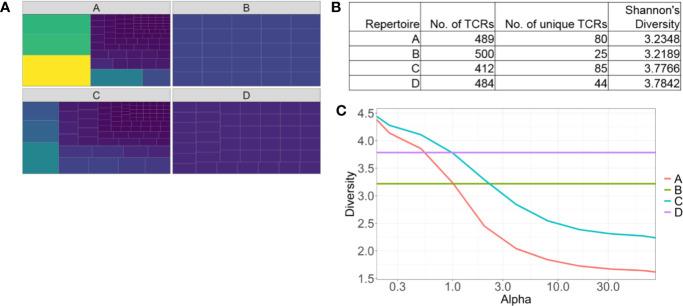
Immunotherapies have revolutionized cancer treatment. In particular, immune checkpoint therapy (ICT) leads to durable responses in some patients with some cancers. However, the majority of treated patients do not respond. Understanding immune mechanisms that underlie responsiveness to ICT will help identify predictive biomarkers of response and develop treatments to convert non-responding patients to responding ones. ICT primarily acts at the level of adaptive immunity. The specificity of adaptive immune cells, such as T and B cells, is determined by antigen-specific receptors. T cell repertoires can be comprehensively profiled by high-throughput sequencing at the bulk and single-cell level. T cell receptor (TCR) sequencing allows for sensitive tracking of dynamic changes in antigen-specific T cells at the clonal level, giving unprecedented insight into the mechanisms by which ICT alters T cell responses. Here, we review how the repertoire influences response to ICT and conversely how ICT affects repertoire diversity. We will also explore how changes to the repertoire in different anatomical locations can better correlate and perhaps predict treatment outcome. We discuss the advantages and limitations of current metrics used to characterize and represent TCR repertoire diversity. Discovery of predictive biomarkers could lie in novel analysis approaches, such as network analysis of amino acids similarities between TCR sequences. Single-cell sequencing is a breakthrough technology that can link phenotype with specificity, identifying T cell clones that are crucial for successful ICT. The field of immuno-sequencing is rapidly developing and cross-disciplinary efforts are required to maximize the analysis, application, and validation of sequencing data. Unravelling the dynamic behavior of the TCR repertoire during ICT will be highly valuable for tracking and understanding anti-tumor immunity, biomarker discovery, and ultimately for the development of novel strategies to improve patient outcomes.
免疫疗法已经彻底改变了癌症的治疗方式。特别是,免疫检查点疗法(ICT)在一些癌症患者中导致了持久的反应。然而,大多数接受治疗的患者并没有反应。了解免疫机制,这些机制是响应 ICT 的基础,将有助于识别反应的预测生物标志物,并开发将非反应性患者转化为反应性患者的治疗方法。ICT 主要作用于适应性免疫。适应性免疫细胞(如 T 细胞和 B 细胞)的特异性由抗原特异性受体决定。T 细胞受体(TCR)序列允许在克隆水平上敏感地跟踪抗原特异性 T 细胞的动态变化,从而对 ICT 改变 T 细胞反应的机制提供前所未有的深入了解。在这里,我们综述了 T 细胞受体库如何影响对 ICT 的反应,以及相反地 ICT 如何影响受体库的多样性。我们还将探讨不同解剖部位的受体库变化如何更好地相关,甚至可能预测治疗结果。我们讨论了当前用于描述和表示 TCR 库多样性的指标的优缺点。预测生物标志物的发现可能在于新颖的分析方法,例如 TCR 序列之间氨基酸相似性的网络分析。单细胞测序是一项突破性技术,可以将表型与特异性联系起来,识别对成功的 ICT 至关重要的 T 细胞克隆。免疫测序领域正在迅速发展,需要跨学科的努力来最大限度地分析、应用和验证测序数据。在 ICT 过程中揭示 TCR 库的动态行为将对跟踪和理解抗肿瘤免疫、生物标志物发现以及最终开发改善患者结果的新策略具有极高的价值。
 Zotero 插件