
人间-水貂-人间传播 SARS-CoV-2。
Transmission of SARS-CoV-2 on mink farms between humans and mink and back to humans.
机构信息
Department of Viroscience, Erasmus MC, WHO Collaborating Centre for Arbovirus and Viral Hemorrhagic Fever Reference and Research, Rotterdam, Netherlands.
Royal GD, Deventer, Netherlands.
出版信息
Science. 2021 Jan 8;371(6525):172-177. doi: 10.1126/science.abe5901. Epub 2020 Nov 10.
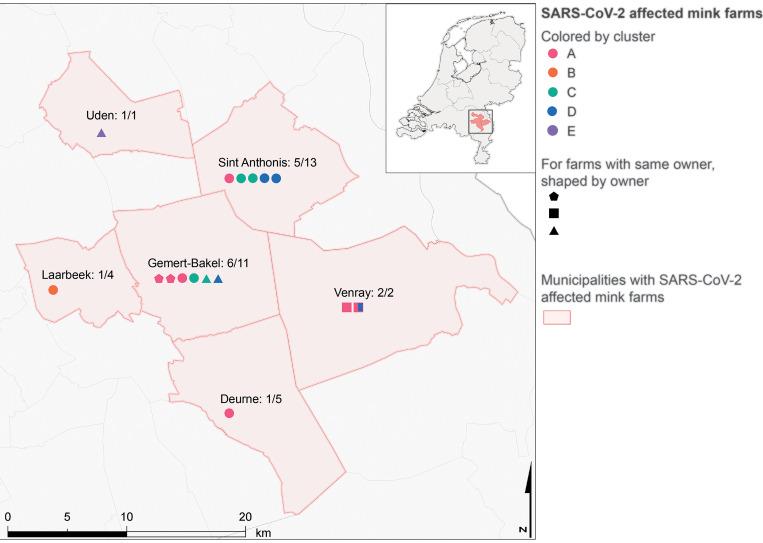
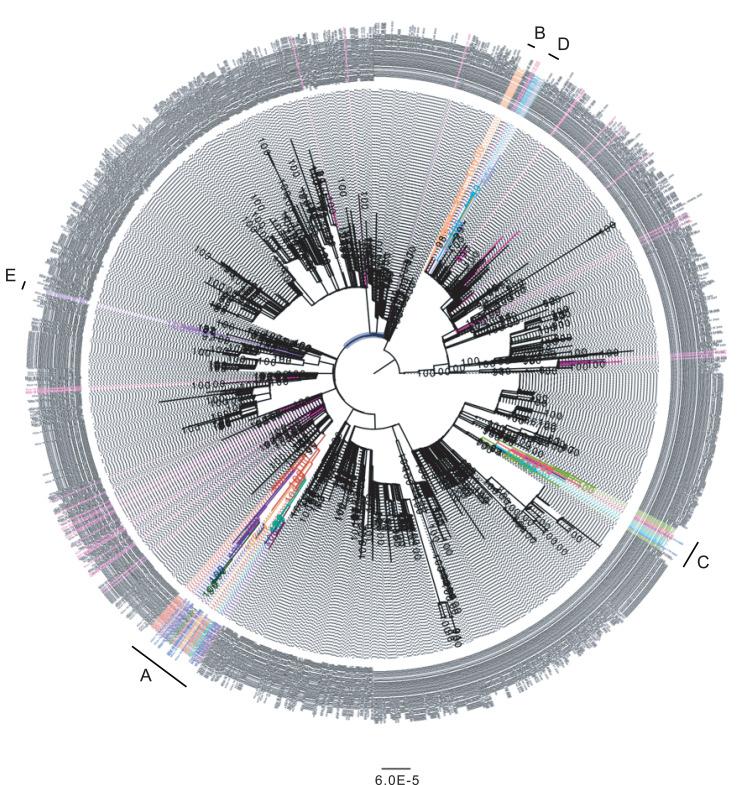
Animal experiments have shown that nonhuman primates, cats, ferrets, hamsters, rabbits, and bats can be infected by severe acute respiratory syndrome coronavirus 2 (SARS-CoV-2). In addition, SARS-CoV-2 RNA has been detected in felids, mink, and dogs in the field. Here, we describe an in-depth investigation using whole-genome sequencing of outbreaks on 16 mink farms and the humans living or working on these farms. We conclude that the virus was initially introduced by humans and has since evolved, most likely reflecting widespread circulation among mink in the beginning of the infection period, several weeks before detection. Despite enhanced biosecurity, early warning surveillance, and immediate culling of animals in affected farms, transmission occurred between mink farms in three large transmission clusters with unknown modes of transmission. Of the tested mink farm residents, employees, and/or individuals with whom they had been in contact, 68% had evidence of SARS-CoV-2 infection. Individuals for which whole genomes were available were shown to have been infected with strains with an animal sequence signature, providing evidence of animal-to-human transmission of SARS-CoV-2 within mink farms.
动物实验表明,非人类灵长类动物、猫、雪貂、仓鼠、兔子和蝙蝠可感染严重急性呼吸综合征冠状病毒 2(SARS-CoV-2)。此外,在野外还检测到猫科动物、水貂和狗体内存在 SARS-CoV-2 RNA。在此,我们通过对 16 个水貂养殖场及其居住或工作的人员进行全基因组测序进行了深入调查。我们的结论是,病毒最初是由人类引入的,此后发生了进化,很可能反映了在感染初期水貂中广泛传播,这比检测到病毒之前早了几周。尽管采取了强化生物安全、早期预警监测和对受感染农场的动物进行立即扑杀等措施,但在三个大型传播集群中,水貂养殖场之间仍发生了传播,传播模式未知。在所检测的水貂养殖场居民、员工以及/或他们有过接触的人当中,有 68%的人有 SARS-CoV-2 感染的证据。对可提供全基因组序列的个体进行分析显示,他们感染的是具有动物序列特征的菌株,这为 SARS-CoV-2 在水貂养殖场内发生动物向人类的传播提供了证据。


 Zotero 插件