
通过机器学习从血液转录组推断多发性硬化症阶段。
Inferring Multiple Sclerosis Stages from the Blood Transcriptome via Machine Learning.
机构信息
Institute of Experimental Neurology and Division of Neuroscience, IRCCS San Raffaele Scientific Institute, Milan, Italy.
出版信息
Cell Rep Med. 2020 Jul 21;1(4):100053. doi: 10.1016/j.xcrm.2020.100053.
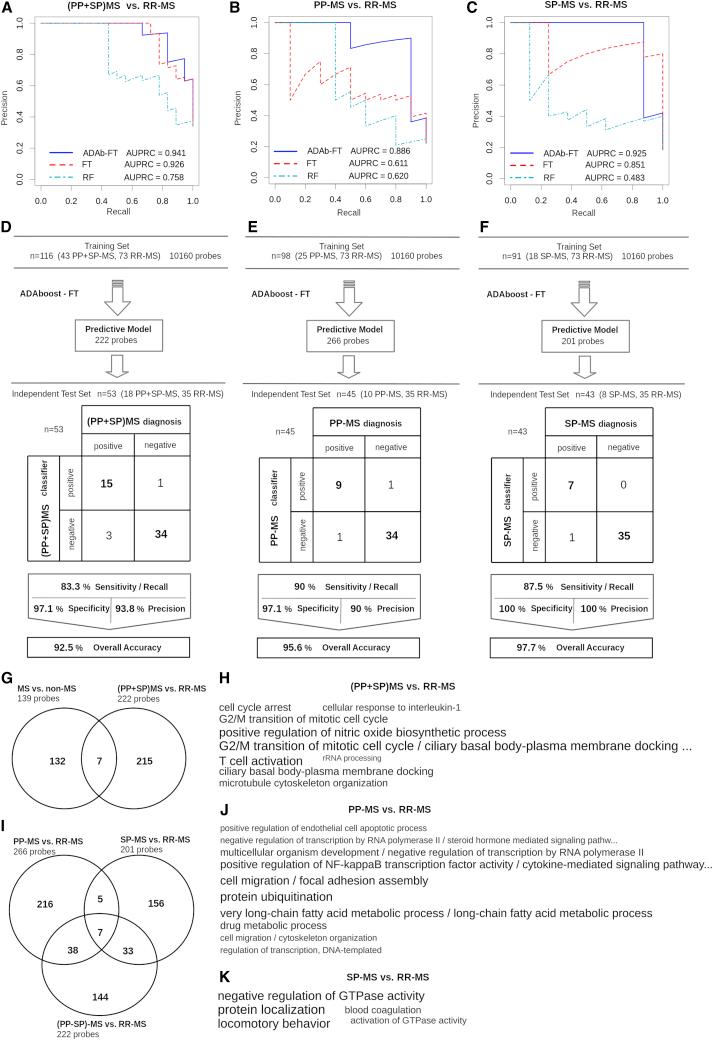
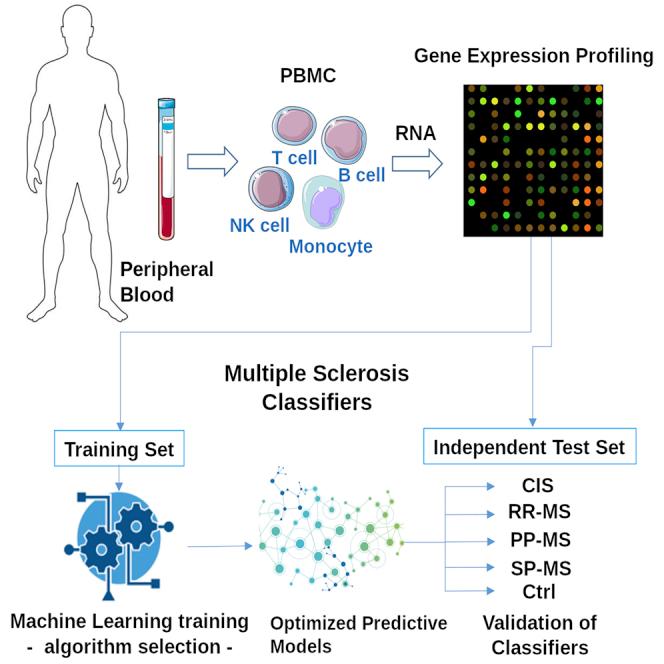
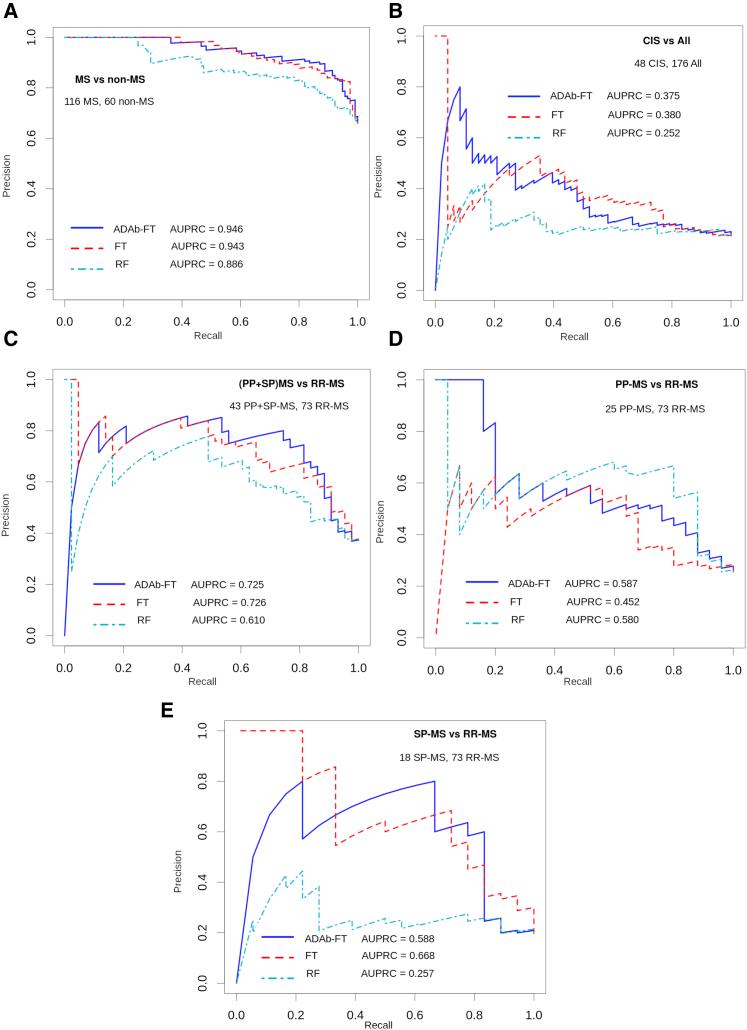
Peripheral blood mononuclear cells (PBMCs) bear specific dysregulations in genes and pathways at distinct stages of multiple sclerosis (MS) that may help with classifying MS and non-MS subjects, specifying the early stage of disease, or discriminating among MS courses. Here we describe an unbiased machine learning workflow to build MS stage-specific classifiers based on PBMC transcriptomics profiles from more than 300 individuals, including healthy subjects and patients with clinically isolated syndromes, relapsing-remitting MS, primary or secondary progressive MS, or other neurological disorders. The pipeline, designed to optimize and compare the performance of distinct machine learning algorithms in the training cohort, generates predictive models not influenced by demographic features, such as age and gender, and displays high accuracy in the independent validation cohort. Proper application of machine learning to transcriptional profiles of circulating blood cells may allow identification of disease state and stage in MS.
外周血单核细胞 (PBMCs) 在多发性硬化症 (MS) 的不同阶段表现出特定的基因和通路失调,这可能有助于对 MS 和非-MS 患者进行分类,确定疾病的早期阶段,或区分 MS 病程。在这里,我们描述了一种无偏机器学习工作流程,该流程基于来自 300 多名个体(包括健康受试者和具有临床孤立综合征、复发缓解型 MS、原发性或继发性进行性 MS 或其他神经障碍的患者)的 PBMC 转录组谱来构建 MS 特定阶段的分类器。该管道旨在优化和比较不同机器学习算法在训练队列中的性能,生成不受年龄和性别等人口统计学特征影响的预测模型,并在独立验证队列中显示出高准确性。适当应用机器学习到循环血细胞的转录谱可能允许识别 MS 中的疾病状态和阶段。



 Zotero 插件