
结直肠癌患者上皮-间质转化的基因组学与预后分析。
Genomics and prognosis analysis of epithelial-mesenchymal transition in colorectal cancer patients.
机构信息
Department of Gastroenterology, the Second Affiliated Hospital of Zhejiang University School of Medicine, Hangzhou, 310020, China.
Institution of Gastroenterology, Zhejiang University, Hangzhou, 310000, China.
出版信息
BMC Cancer. 2020 Nov 23;20(1):1135. doi: 10.1186/s12885-020-07615-5.
BACKGROUND
The epithelial-mesenchymal transition (EMT) plays a pivotal role in various physiological processes, such as embryonic development, tissue morphogenesis, and wound healing. EMT also plays an important role in cancer invasion, metastasis, and chemoresistance. Additionally, EMT is partially responsible for chemoresistance in colorectal cancer (CRC). The aim of this research is to develop an EMT-based prognostic signature in CRC.
METHODS
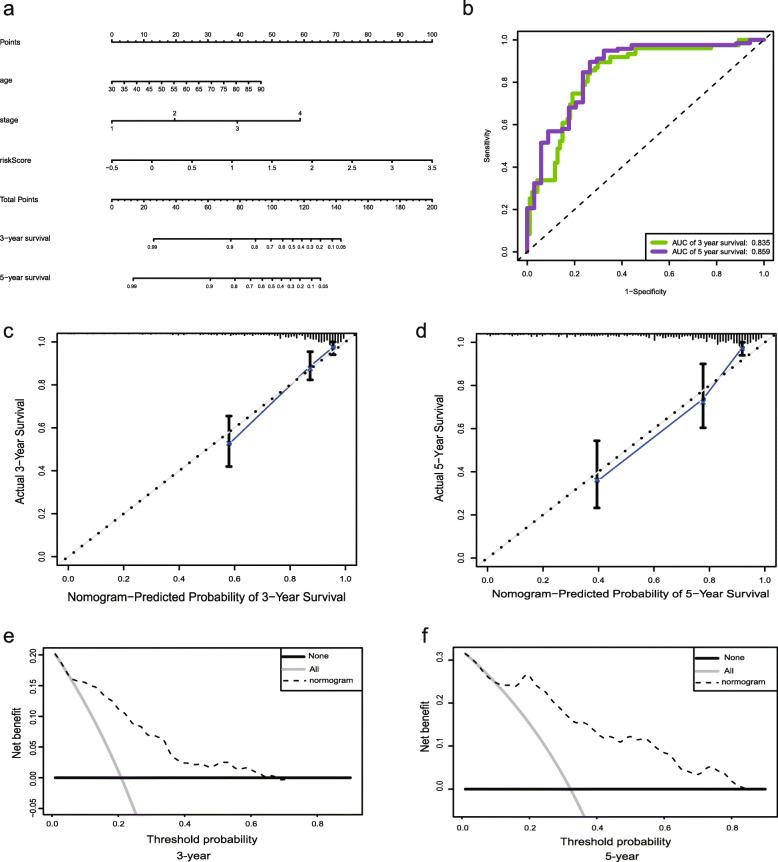
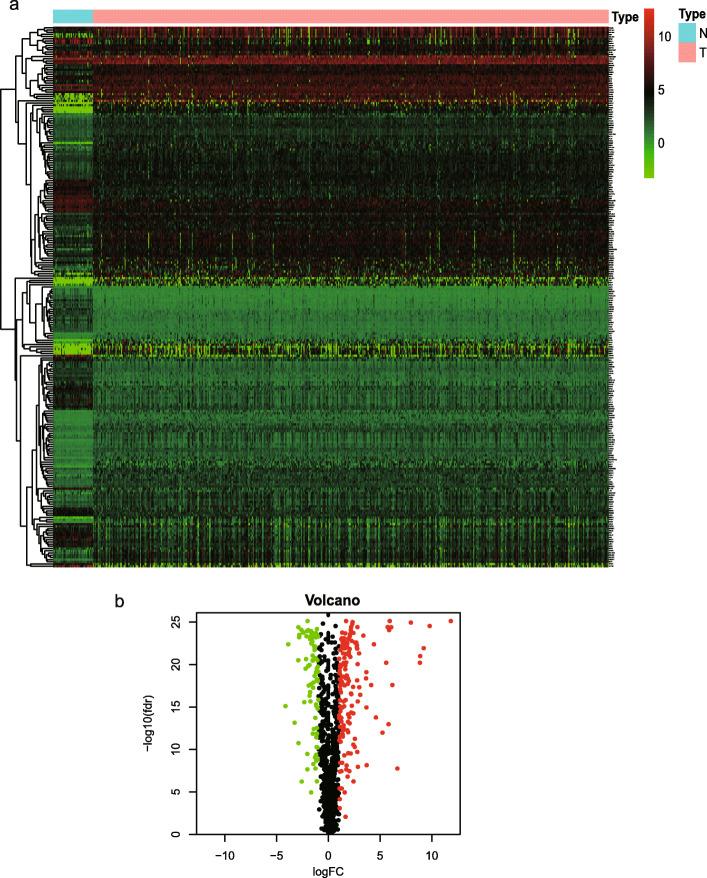
RNA-seq and microarray data, together with clinical information, were downloaded from The Cancer Genome Atlas (TCGA) and the Gene Expression Omnibus (GEO) databases. A total of 244 differentially expressed EMT-related genes (ERGs) were obtained by comparing the expression between normal and tumor tissues. An EMT-related signature of 11 genes was identified as crucially related to the overall survival (OS) of patients through univariate Cox proportional hazard analysis, least absolute shrinkage and selection operator (LASSO), and Cox regression analysis. Finally, we established a clinical nomogram to predict the survival possibility of CRC patients by integrating clinical characteristics and the EMT-related gene signature.
RESULTS
Two hundred and forty-four differentially expressed ERGs and their enriched pathways were confirmed. Significant enrichment analysis revealed that EMT-related signaling pathway genes were highly related to CRC. Kaplan-Meier analysis revealed that the 11-EMT signature could significantly distinguish high- and low-risk patients in both TCGA and GEO CRC cohorts. In addition, the calibration curves verified fine concordance between the nomogram prediction model and actual observation.
CONCLUSION
We developed a novel EMT-related gene signature for the prognosis prediction of CRC patients, which could improve the individualized outcome prediction in CRC.
背景
上皮-间质转化(EMT)在多种生理过程中发挥着关键作用,如胚胎发育、组织形态发生和伤口愈合。EMT 在癌症侵袭、转移和化疗耐药性中也起着重要作用。此外,EMT 部分导致结直肠癌(CRC)的化疗耐药性。本研究旨在开发基于 EMT 的 CRC 预后标志物。
方法
从癌症基因组图谱(TCGA)和基因表达综合数据库(GEO)下载了 RNA-seq 和微阵列数据以及临床信息。通过比较正常组织和肿瘤组织之间的表达,获得了 244 个差异表达的 EMT 相关基因(ERGs)。通过单因素 Cox 比例风险分析、最小绝对收缩和选择算子(LASSO)和 Cox 回归分析,确定了一个与患者总生存期(OS)密切相关的 11 个基因的 EMT 相关特征。最后,我们通过整合临床特征和 EMT 相关基因特征,建立了一个临床列线图来预测 CRC 患者的生存可能性。
结果
确认了 244 个差异表达的 ERGs 及其富集途径。显著富集分析表明,EMT 相关信号通路基因与 CRC 高度相关。Kaplan-Meier 分析表明,11-EMT 特征在 TCGA 和 GEO CRC 队列中均能显著区分高风险和低风险患者。此外,校准曲线验证了列线图预测模型与实际观察之间的良好一致性。
结论
我们开发了一种新的 EMT 相关基因标志物,用于预测 CRC 患者的预后,这可以提高 CRC 患者的个体化预后预测能力。


 Zotero 插件