
S100A10在乳腺肿瘤生长和转移中具有关键调控作用:利用MMTV-PyMT致癌小鼠模型和临床患者样本分析的见解
S100A10 Has a Critical Regulatory Function in Mammary Tumor Growth and Metastasis: Insights Using MMTV-PyMT Oncomice and Clinical Patient Sample Analysis.
作者信息
Bharadwaj Alamelu G, Dahn Margaret L, Liu Rong-Zong, Colp Patricia, Thomas Lynn N, Holloway Ryan W, Marignani Paola A, Too Catherine Kl, Barnes Penelope J, Godbout Rosaline, Marcato Paola, Waisman David M
机构信息
Department of Pathology, Dalhousie University, Halifax, NS B3H 4R2, Canada.
Department of Oncology, University of Alberta, Edmonton, AB T6G 2Z1, Canada.
出版信息
Cancers (Basel). 2020 Dec 7;12(12):3673. doi: 10.3390/cancers12123673.
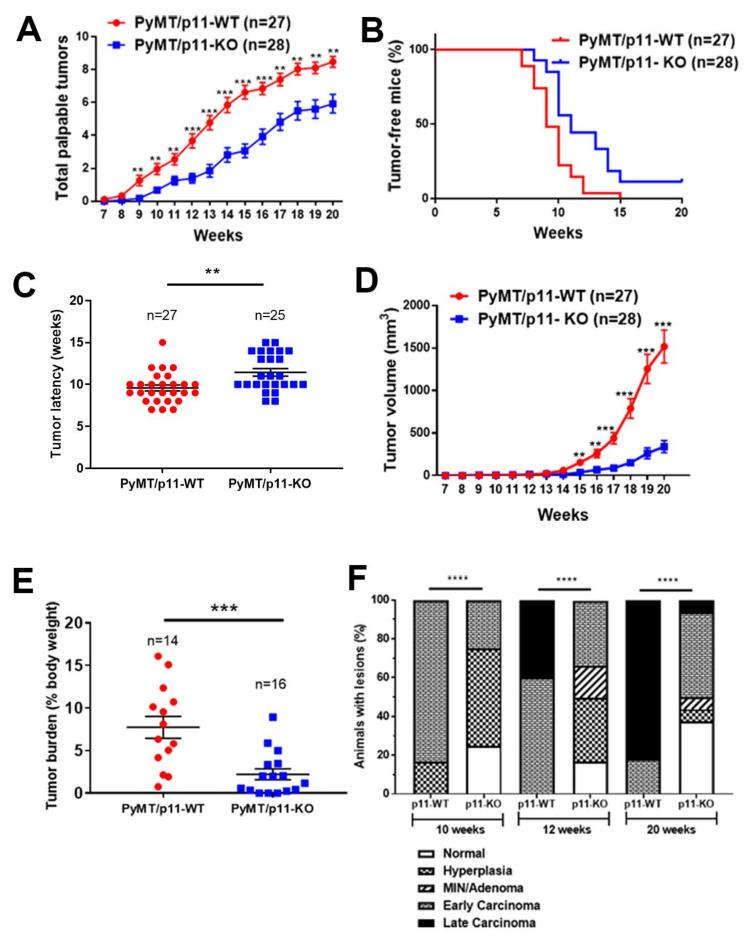
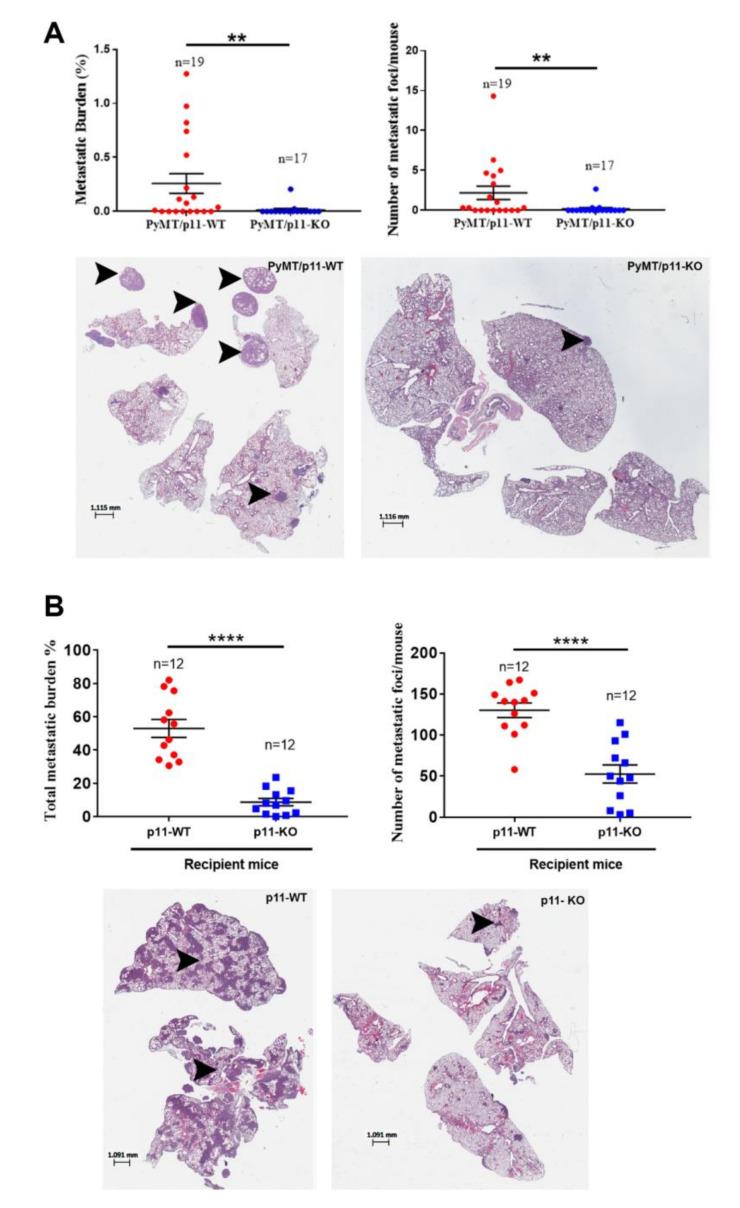
S100A10 (p11) is a plasminogen receptor that regulates cellular plasmin generation by cancer cells. In the current study, we used the MMTV-PyMT mouse breast cancer model, patient tumor microarray, and immunohistochemical (IHC) analysis to investigate the role of p11 in oncogenesis. The genetic deletion of p11 resulted in significantly decreased tumor onset, growth rate, and spontaneous pulmonary metastatic burden in the PyMT/p11-KO (knock-out) mice. This phenotype was accompanied by substantial reduction in Ki67 positivity, macrophage infiltration, decreased vascular density in the primary tumors, and decrease in invasive carcinoma and pulmonary metastasis. Surprisingly, IHC analysis of wild-type MMTV-PyMT mice failed to detect p11 expression in the tumors or metastatic tumor cells and loss of p11 did not decrease plasmin generation in the PyMT tumors and cells. Furthermore, tumor cells expressing p11 displayed dramatically reduced lung metastasis when injected into p11-depleted mice, further strengthening the stromal role of p11 in tumor growth and metastasis. Transcriptome analysis of the PyMT tumors from p11-KO mice showed marked reduction in genes such as , , and involved in breast cancer development, progression, and inflammation. The PyMT/p11-KO tumors displayed a remarkable increase in inflammatory cytokines such as interleukin (, , and interferon ()-. Gene expression profiling and IHC of primary breast cancer samples showed that p11 mRNA and protein levels were significantly higher in tumor tissues compared to normal mammary tissue. P11 mRNA expression was significantly associated with poor patient prognosis and significantly elevated in high grade, triple negative (TN) tumors, and tumors with high proliferative index. This is the first study examining the crucial role of p11 in breast tumor development and metastasis, thus emphasizing its potential as a diagnostic and prognostic biomarker in breast cancer.
S100A10(p11)是一种纤溶酶原受体,可调节癌细胞的细胞纤溶酶生成。在本研究中,我们使用MMTV-PyMT小鼠乳腺癌模型、患者肿瘤微阵列和免疫组织化学(IHC)分析来研究p11在肿瘤发生中的作用。p11的基因缺失导致PyMT/p11-KO(敲除)小鼠的肿瘤发生、生长速率和自发性肺转移负担显著降低。该表型伴随着Ki67阳性率大幅降低、巨噬细胞浸润减少、原发性肿瘤血管密度降低以及浸润性癌和肺转移减少。令人惊讶的是,对野生型MMTV-PyMT小鼠的IHC分析未能检测到肿瘤或转移肿瘤细胞中的p11表达,并且p11的缺失并未降低PyMT肿瘤和细胞中的纤溶酶生成。此外,将表达p11的肿瘤细胞注射到p11缺失的小鼠中时,肺转移显著减少,进一步强化了p11在肿瘤生长和转移中的基质作用。对来自p11-KO小鼠的PyMT肿瘤进行转录组分析显示,参与乳腺癌发展、进展和炎症的基因如 、 和 显著减少。PyMT/p11-KO肿瘤中白细胞介素( 、 )和干扰素()-等炎性细胞因子显著增加。原发性乳腺癌样本的基因表达谱分析和IHC显示,与正常乳腺组织相比,肿瘤组织中p11 mRNA和蛋白水平显著更高。P11 mRNA表达与患者预后不良显著相关,在高级别、三阴性(TN)肿瘤以及增殖指数高的肿瘤中显著升高。这是第一项研究p11在乳腺肿瘤发展和转移中的关键作用的研究,从而强调了其作为乳腺癌诊断和预后生物标志物的潜力。





 Zotero 插件