
由突变导致的听力障碍表明存在功能丧失和功能获得两种效应。
Hearing impairment due to mutations suggests both loss and gain of function effects.
作者信息
Lewis Morag A, Di Domenico Francesca, Ingham Neil J, Prosser Haydn M, Steel Karen P
机构信息
Wolfson Centre for Age-Related Diseases, King's College London, London, SE1 1UL, UK
Wellcome Trust Sanger Institute, Hinxton, Cambridge, CB10 1SA, UK.
出版信息
Dis Model Mech. 2020 Dec 14;14(2). doi: 10.1242/dmm.047225.
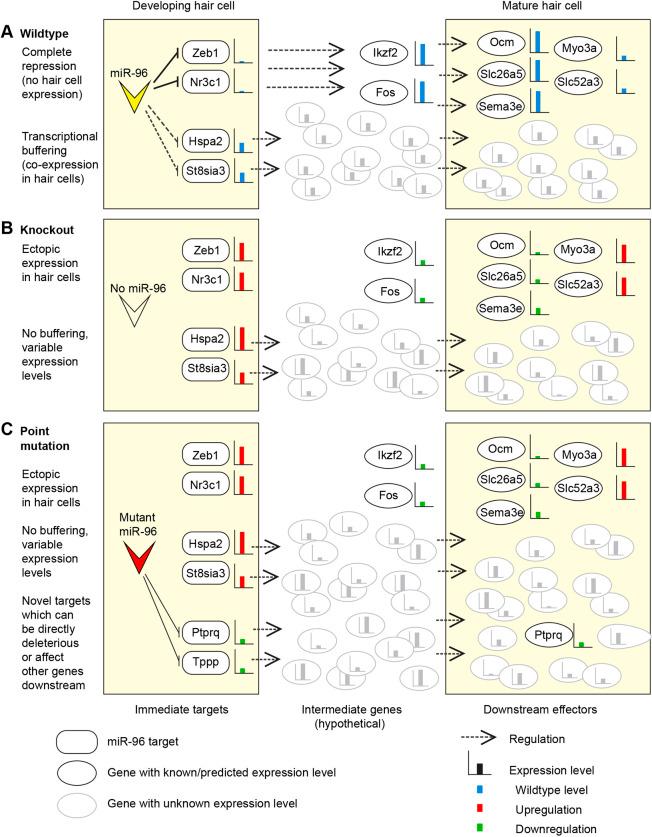
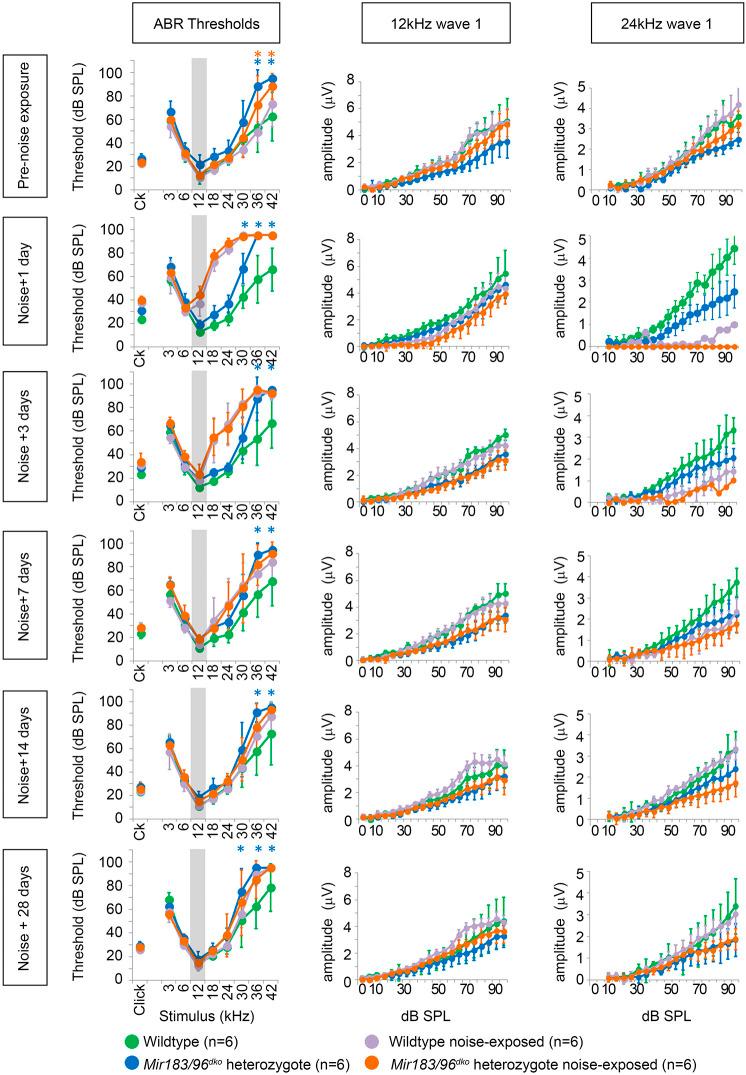
The microRNA miR-96 is important for hearing, as point mutations in humans and mice result in dominant progressive hearing loss. is expressed in sensory cells along with and , but the roles of these closely-linked microRNAs are as yet unknown. Here we analyse mice carrying null alleles of , and of and together to investigate their roles in hearing. We found that / heterozygous mice had normal hearing and homozygotes were completely deaf with abnormal hair cell stereocilia bundles and reduced numbers of inner hair cell synapses at four weeks old. knockout mice developed normal hearing then exhibited progressive hearing loss. Our transcriptional analyses revealed significant changes in a range of other genes, but surprisingly there were fewer genes with altered expression in the organ of Corti of null mice compared with our previous findings in mutants, which have a point mutation in the miR-96 seed region. This suggests the more severe phenotype of mutants compared with / mutants, including progressive hearing loss in heterozygotes, is likely to be mediated by the gain of novel target genes in addition to the loss of its normal targets. We propose three mechanisms of action of mutant miRNAs; loss of targets that are normally completely repressed, loss of targets whose transcription is normally buffered by the miRNA, and gain of novel targets. Any of these mechanisms could lead to a partial loss of a robust cellular identity and consequent dysfunction.
微小RNA miR-96对听力很重要,因为人类和小鼠中的点突变会导致显性进行性听力丧失。它与 和 一起在感觉细胞中表达,但这些紧密相连的微小RNA的作用尚不清楚。在这里,我们分析了携带 、 以及 双敲除等位基因的小鼠,以研究它们在听力中的作用。我们发现, / 杂合小鼠听力正常,纯合子在四周龄时完全失聪,毛细胞静纤毛束异常,内毛细胞突触数量减少。 基因敲除小鼠听力发育正常,随后出现进行性听力丧失。我们的转录分析揭示了一系列其他基因的显著变化,但令人惊讶的是,与我们之前在 miR-96种子区域存在点突变的 突变体中的发现相比, 基因敲除小鼠的柯蒂氏器中表达改变的基因较少。这表明,与 / 突变体相比, 突变体更严重的表型,包括 杂合子中的进行性听力丧失,可能是由新靶基因的获得以及正常靶标的丧失介导的。我们提出了突变微小RNA的三种作用机制:正常完全被抑制的靶标的丧失、转录通常由微小RNA缓冲的靶标的丧失以及新靶标的获得。这些机制中的任何一种都可能导致强大细胞特性的部分丧失,从而导致功能障碍。



 Zotero 插件