
地铁使用与纽约市 COVID-19 结局的社会经济差异。
Socioeconomic Disparities in Subway Use and COVID-19 Outcomes in New York City.
出版信息
Am J Epidemiol. 2021 Jul 1;190(7):1234-1242. doi: 10.1093/aje/kwaa277.
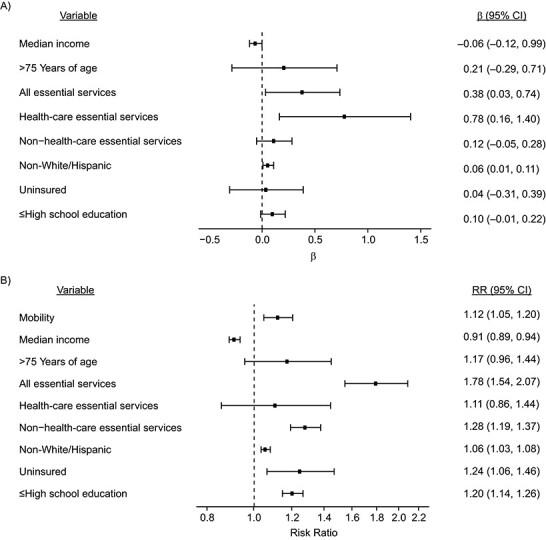
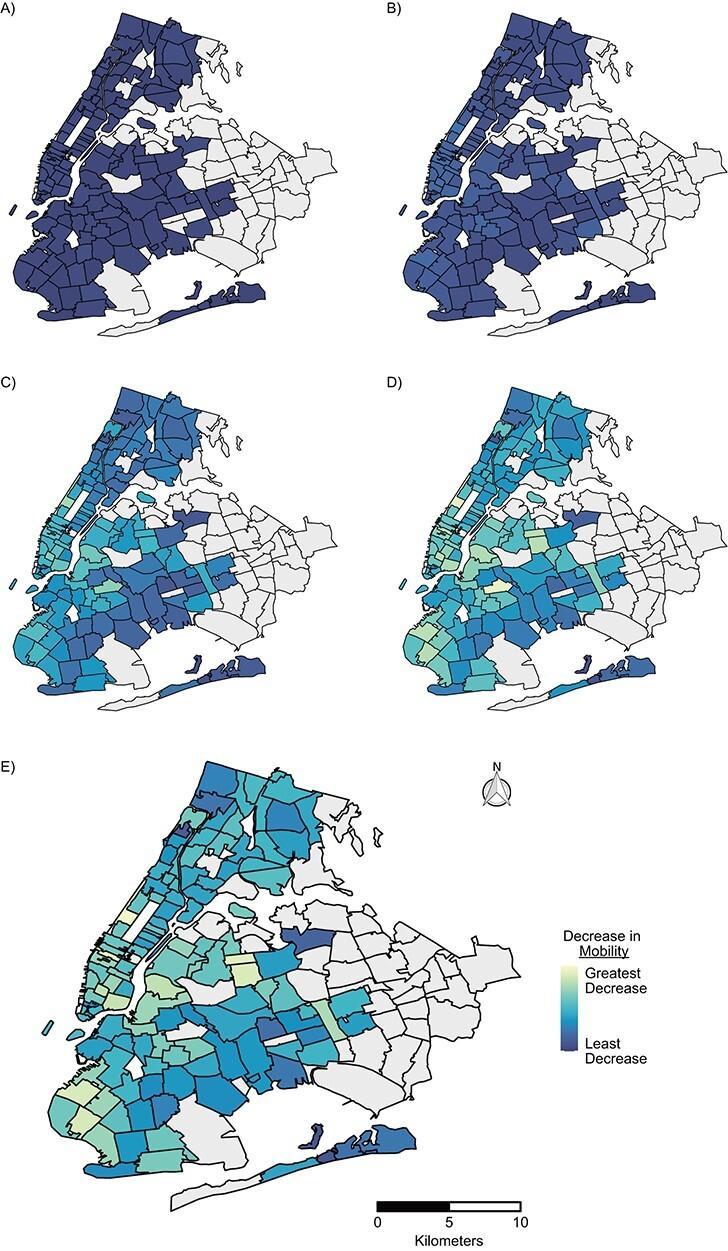
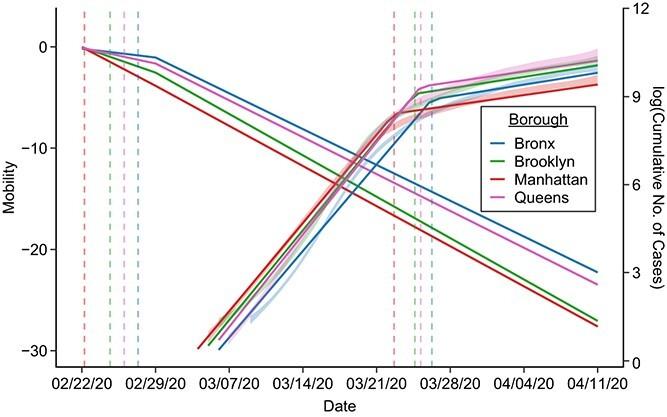
Using data from New York City from January 2020 to April 2020, we found an estimated 28-day lag between the onset of reduced subway use and the end of the exponential growth period of severe acute respiratory syndrome coronavirus 2 within New York City boroughs. We also conducted a cross-sectional analysis of the associations between human mobility (i.e., subway ridership) on the week of April 11, 2020, sociodemographic factors, and coronavirus disease 2019 (COVID-19) incidence as of April 26, 2020. Areas with lower median income, a greater percentage of individuals who identify as non-White and/or Hispanic/Latino, a greater percentage of essential workers, and a greater percentage of health-care essential workers had more mobility during the pandemic. When adjusted for the percentage of essential workers, these associations did not remain, suggesting essential work drives human movement in these areas. Increased mobility and all sociodemographic variables (except percentage of people older than 75 years old and percentage of health-care essential workers) were associated with a higher rate of COVID-19 cases per 100,000 people, when adjusted for testing effort. Our study demonstrates that the most socially disadvantaged not only are at an increased risk for COVID-19 infection, they lack the privilege to fully engage in social distancing interventions.
利用 2020 年 1 月至 4 月期间纽约市的数据,我们发现,纽约市各行政区的地铁使用率下降与 2 型严重急性呼吸综合征冠状病毒指数增长期结束之间存在大约 28 天的滞后。我们还对 2020 年 4 月 11 日这一周的人类流动性(即地铁客流量)与社会人口因素以及截至 2020 年 4 月 26 日的 2019 年冠状病毒病(COVID-19)发病率之间的关系进行了横断面分析。收入中位数较低、非白人和/或西班牙裔/拉丁裔人口比例较高、从事基本工作的人口比例较高、医疗保健必需工作者比例较高的地区在大流行期间流动性较大。在调整了基本工作人员的比例后,这些关联不再存在,这表明在这些地区,基本工作推动了人类的流动。在调整了检测力度后,增加的流动性和所有社会人口变量(75 岁以上人口比例和医疗保健必需工作者比例除外)与每 10 万人 COVID-19 病例的更高发生率相关。我们的研究表明,最弱势群体不仅感染 COVID-19 的风险增加,而且他们缺乏充分参与社会隔离干预的特权。

 Zotero 插件