
利用循环游离 DNA 分析指导晚期肺鳞癌一线化疗。
Utilization of circulating cell-free DNA profiling to guide first-line chemotherapy in advanced lung squamous cell carcinoma.
机构信息
Department of Medical Oncology, Shanghai Pulmonary Hospital, Thoracic Cancer Institute, Tongji University School of Medicine, Shanghai, China.
Department of Respiration, Shanghai Chest Hospital, Shanghai, China.
出版信息
Theranostics. 2021 Jan 1;11(1):257-267. doi: 10.7150/thno.51243. eCollection 2021.
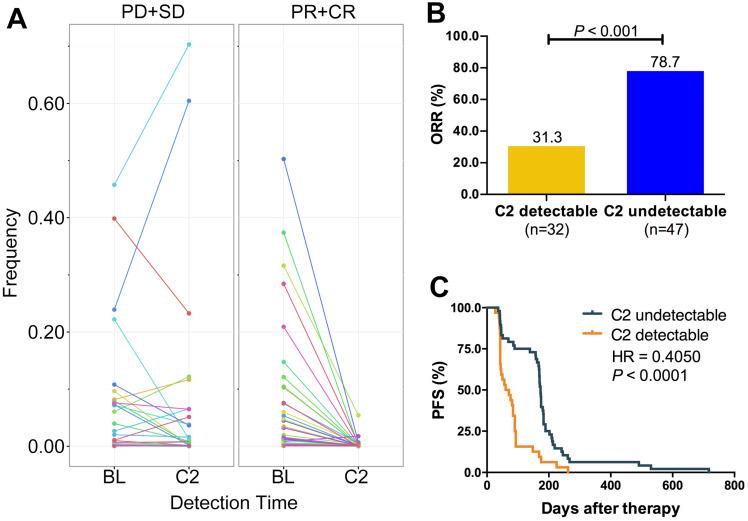
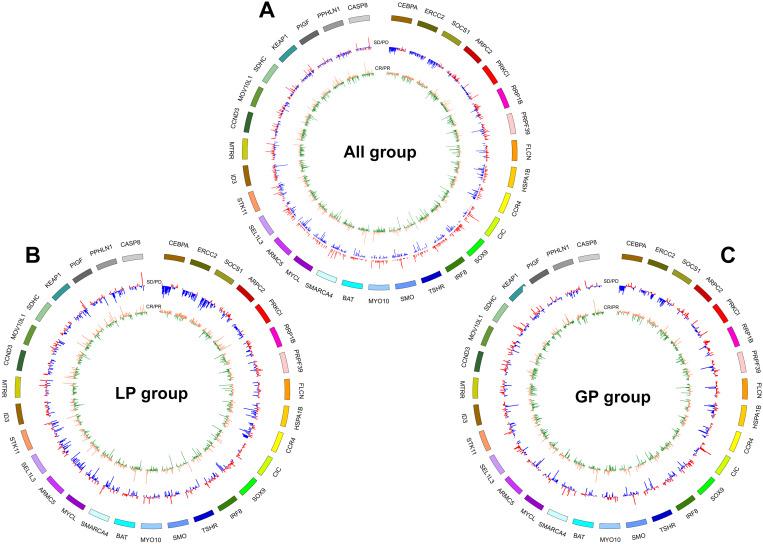
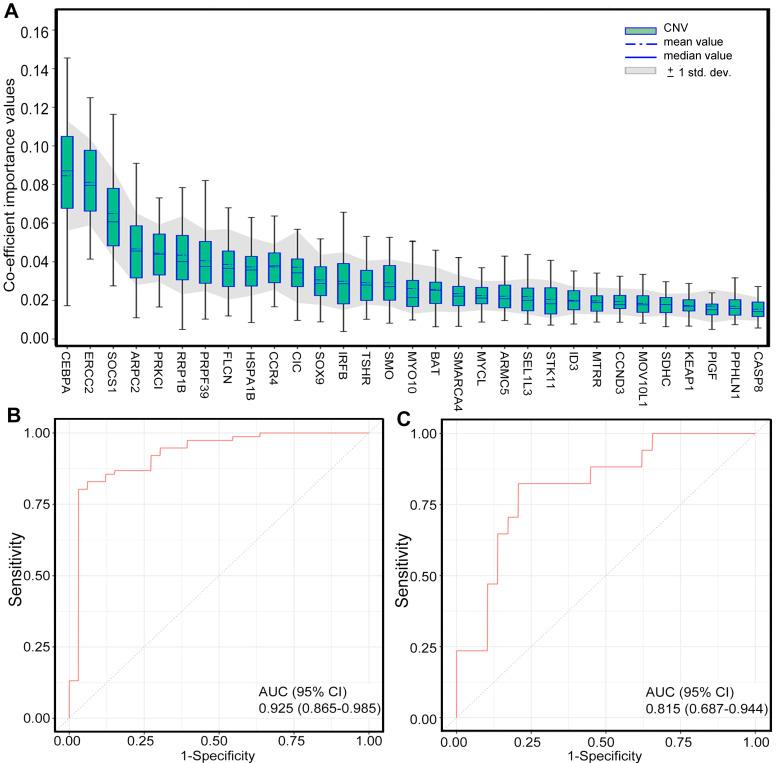
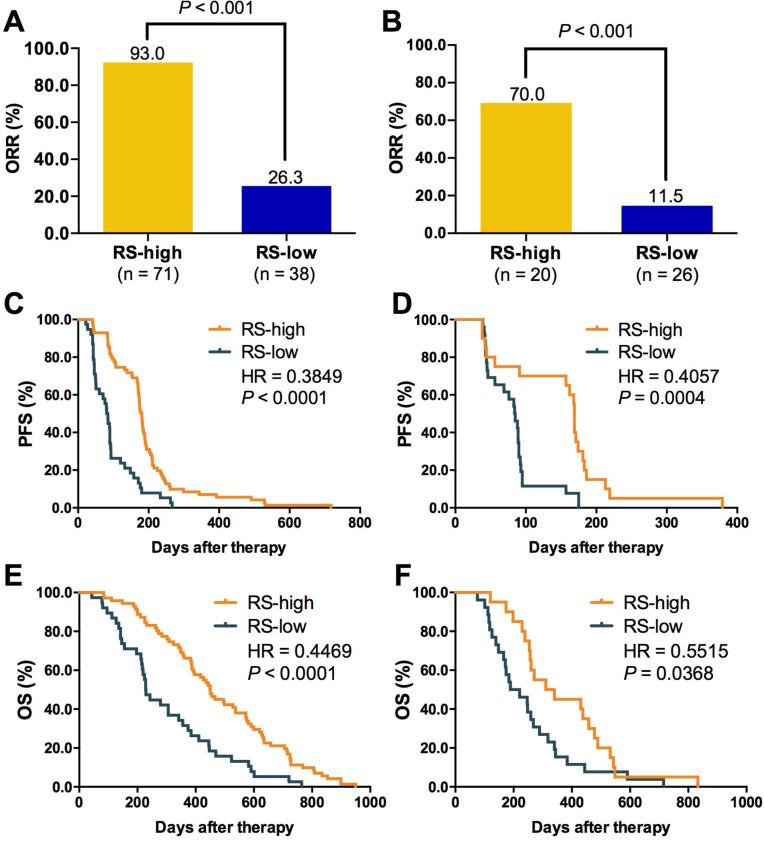
Platinum-based chemotherapy is one of treatment mainstay for patients with advanced lung squamous cell carcinoma (LUSC) but it is still a "one-size fits all" approach. Here, we aimed to investigate the predictive and monitoring role of circulating cell-free DNA (cfDNA) profiling for the outcome of first-line chemotherapy in patients with advanced LUSC. Peripheral blood samples of 155 patients from a phase IV trial and 42 cases from an external real-world cohort were prospectively collected. We generated a copy number variations-based classifier via machine learning algorithm to integrate molecular profiling of cfDNA, named RESPONSE SCORE (RS) to predict the treatment outcome. To monitor the treatment efficacy, cfDNA samples collected at different time points were subjected to an ultra-deep sequencing platform. The results showed that patients with high RS showed substantially higher objective response rate than those with low RS in training set ( < 0.001), validation set ( < 0.001) and real-world cohort ( = 0.019). Furthermore, a significant difference was observed in both progression-free survival (training set, < 0.001; validation set: < 0.001; real-world cohort: = 0.019) and overall survival (training set, < 0.001; validation set: = 0.037) between high and low RS group. Notably, variant allele frequency (VAF) calculated from an ultra-deep sequencing platform significantly reduced in patients experienced a complete or partial response after 2 cycles of chemotherapy ( < 0.001), while it significantly increased in these of non-responder ( < 0.001). Moreover, VAF undetectable after 2 cycles of chemotherapy was correlated with markedly better objective response rate ( < 0.001) and progression-free survival ( < 0.001) than those with detectable VAF. These findings indicated that the RS, a circulating cfDNA sequencing-based stratification index, could help to guide first-line chemotherapy in advanced LUSC. The change of VAF is valuable to monitor the treatment response.
铂类化疗是晚期肺鳞状细胞癌(LUSC)患者的主要治疗方法之一,但仍然是一种“一刀切”的方法。在这里,我们旨在研究循环游离 DNA(cfDNA)分析在晚期 LUSC 一线化疗患者结局中的预测和监测作用。
从一项四期试验中前瞻性收集了 155 例患者和 42 例外部真实世界队列的外周血样本。我们通过机器学习算法生成了一种基于拷贝数变异的分类器,用于整合 cfDNA 的分子分析,命名为反应评分(RS)以预测治疗结果。为了监测治疗效果,在不同时间点采集 cfDNA 样本,并进行超深度测序平台分析。
结果显示,在训练集(<0.001)、验证集(<0.001)和真实世界队列(=0.019)中,RS 较高的患者的客观缓解率明显高于 RS 较低的患者。此外,在无进展生存期(训练集,<0.001;验证集:<0.001;真实世界队列:=0.019)和总生存期(训练集,<0.001;验证集:=0.037)方面,高 RS 组和低 RS 组之间也存在显著差异。值得注意的是,在接受 2 个周期化疗后完全或部分缓解的患者中,来自超深度测序平台的变异等位基因频率(VAF)显著降低(<0.001),而在无反应者中则显著增加(<0.001)。此外,在 2 个周期化疗后无法检测到 VAF 与显著更高的客观缓解率(<0.001)和无进展生存期(<0.001)相关,而 VAF 可检测到的患者则较差。
这些发现表明,RS 是一种基于循环 cfDNA 测序的分层指数,可帮助指导晚期 LUSC 的一线化疗。VAF 的变化可用于监测治疗反应。


 Zotero 插件