
GATA2 通过促进超级增强子处的染色质重塑来调节肥大细胞的身份和对抗原刺激的反应性。
GATA2 regulates mast cell identity and responsiveness to antigenic stimulation by promoting chromatin remodeling at super-enhancers.
机构信息
Department of Immunology and Genomic Medicine, National Jewish Health, Denver, CO, 80206, USA.
Center for Genes, Environment and Health, National Jewish Health, Denver, CO, 80206, USA.
出版信息
Nat Commun. 2021 Jan 21;12(1):494. doi: 10.1038/s41467-020-20766-0.
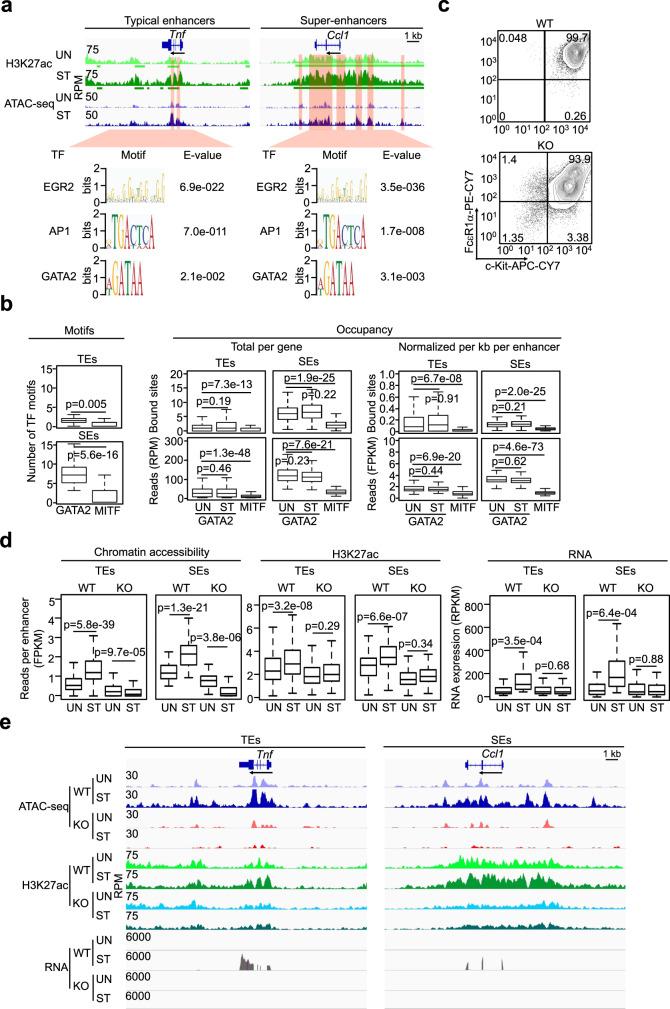
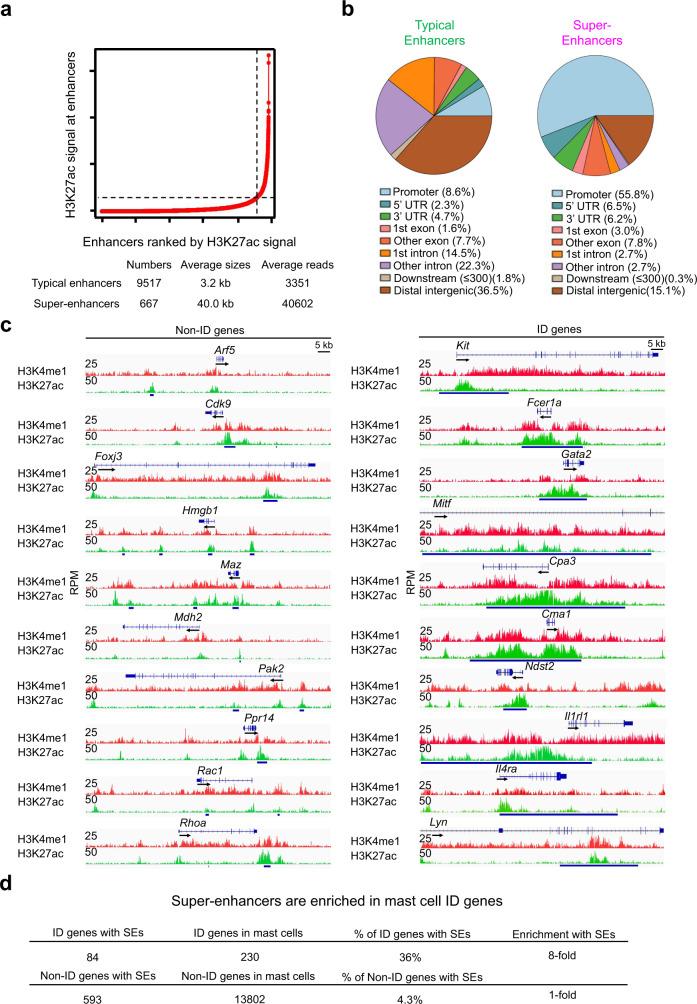
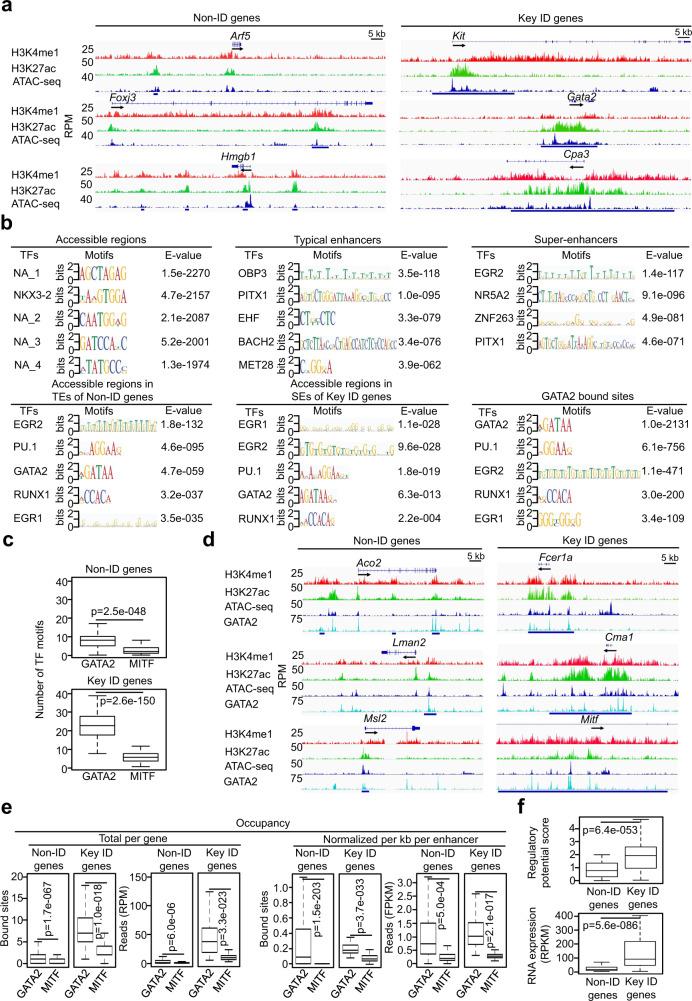
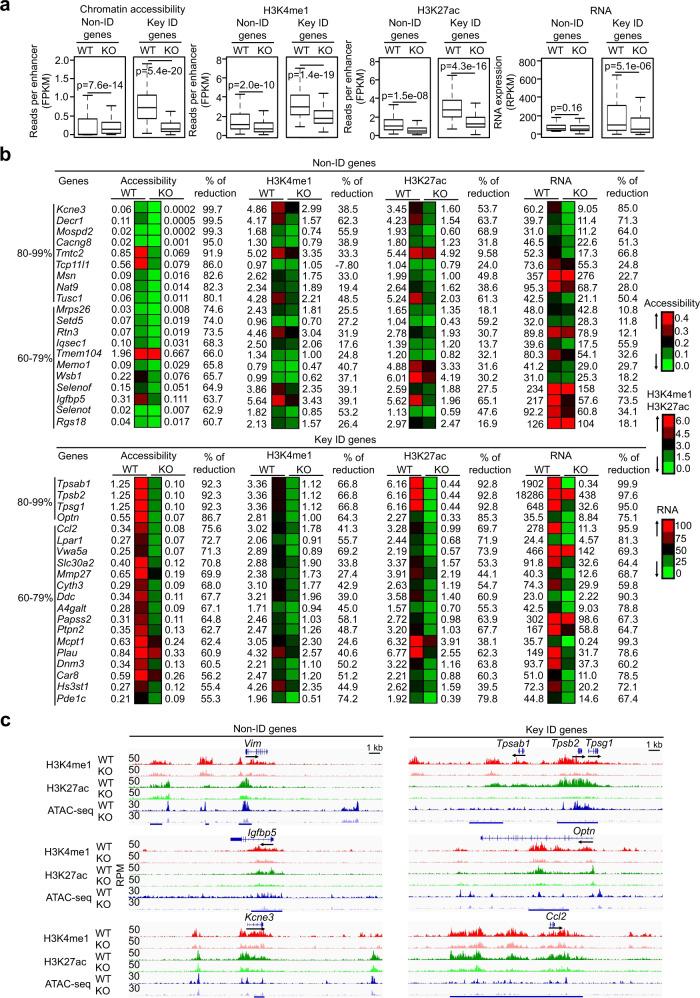
Mast cells are critical effectors of allergic inflammation and protection against parasitic infections. We previously demonstrated that transcription factors GATA2 and MITF are the mast cell lineage-determining factors. However, it is unclear whether these lineage-determining factors regulate chromatin accessibility at mast cell enhancer regions. In this study, we demonstrate that GATA2 promotes chromatin accessibility at the super-enhancers of mast cell identity genes and primes both typical and super-enhancers at genes that respond to antigenic stimulation. We find that the number and densities of GATA2- but not MITF-bound sites at the super-enhancers are several folds higher than that at the typical enhancers. Our studies reveal that GATA2 promotes robust gene transcription to maintain mast cell identity and respond to antigenic stimulation by binding to super-enhancer regions with dense GATA2 binding sites available at key mast cell genes.
肥大细胞是过敏炎症和抵御寄生虫感染的关键效应细胞。我们之前的研究表明,转录因子 GATA2 和 MITF 是肥大细胞谱系决定因素。然而,这些谱系决定因素是否调节肥大细胞增强子区域的染色质可及性尚不清楚。在这项研究中,我们证明 GATA2 促进了肥大细胞身份基因的超级增强子的染色质可及性,并在对抗原刺激有反应的基因中启动了典型增强子和超级增强子。我们发现,超级增强子上 GATA2 结合位点的数量和密度比典型增强子上的要高出几个数量级,但 MITF 结合位点的数量和密度则没有差异。我们的研究揭示了 GATA2 通过结合具有丰富 GATA2 结合位点的超级增强子区域,促进了强大的基因转录,以维持肥大细胞的身份,并对抗原刺激做出反应,而这些超级增强子区域在关键的肥大细胞基因上是可用的。

 Zotero 插件