
在黑色素瘤小鼠模型中,通过免疫检查点阻断和激酶靶向治疗提高未修饰抗肿瘤抗体的治疗效果。
Improved therapeutic efficacy of unmodified anti-tumor antibodies by immune checkpoint blockade and kinase targeted therapy in mouse models of melanoma.
作者信息
Pérez-Lorenzo Rolando, Erjavec Stephanie O, Christiano Angela M, Clynes Raphael
机构信息
Department of Dermatology, Columbia University, New York, NY 10032, USA.
Department of Genetics and Development, Columbia University, New York, NY 10032, USA.
出版信息
Oncotarget. 2021 Jan 19;12(2):66-80. doi: 10.18632/oncotarget.27868.
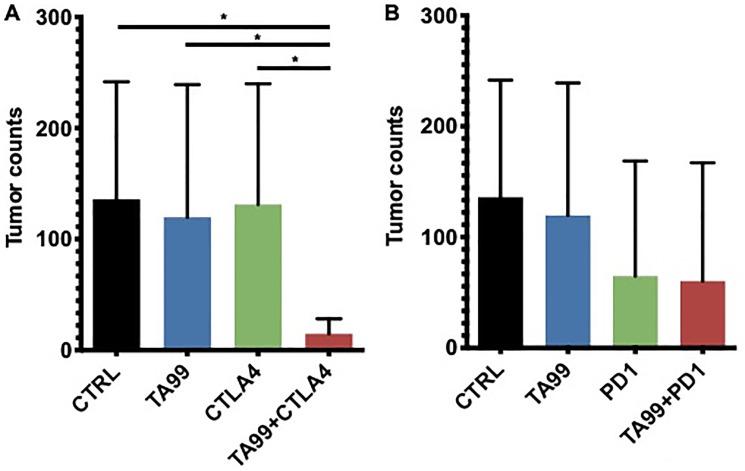
The use of specific anti-tumor antibodies has transformed the solid cancer therapeutics landscape with the relative successes of therapies such as anti-HER2 in breast cancer, and anti-EGFR in HNSCC and colorectal cancer. However, these therapies result in toxicity and the emergence of resistant tumors. Here, we showed that removing immune suppression and enhancing stimulatory signals increased the anti-tumor activity of unmodified TA99 antibodies (anti-TYRP1) with a significant reduction of growth of solid tumors and lung metastases in mouse models of melanoma. Immune checkpoint blockade enhanced the efficacy of TA99, which was associated with greater CD8/Foxp3, NK1.1 and dendritic cell infiltrates, suggestive of an increased anti-tumor innate and adaptive immune responses. Further, MEK inhibition in melanoma cell lines increased the expression of melanosomal antigens , and combining TA99 and MEKi resulted in enhanced tumor control. Moreover, we found an improved therapeutic effect when YUMM tumor-bearing mice were treated with TA99 combined with MEKi and immune checkpoint blockade (anti-PD1 and anti-CTLA4). Our findings suggest that MEKi induced an increased expression of tumor-associated antigens, which in combination with anti-tumor antibodies, generated a robust adaptive anti-tumor response that was sustained by immune checkpoint inhibition therapy. We postulate that combining anti-tumor antibodies with standard-of-care strategies such as immune checkpoint blockade or targeted therapy, will improve therapeutic outcomes in cancer.
特异性抗肿瘤抗体的应用已经改变了实体癌治疗的格局,诸如乳腺癌中的抗HER2疗法、头颈部鳞状细胞癌和结直肠癌中的抗EGFR疗法都取得了相对成功。然而,这些疗法会导致毒性反应以及耐药肿瘤的出现。在此,我们表明,消除免疫抑制并增强刺激信号可增强未修饰的TA99抗体(抗TYRP1)的抗肿瘤活性,在黑色素瘤小鼠模型中可显著减少实体瘤生长和肺转移。免疫检查点阻断增强了TA99的疗效,这与更多的CD8/Foxp3、NK1.1和树突状细胞浸润有关,提示抗肿瘤先天性和适应性免疫反应增强。此外,黑色素瘤细胞系中的MEK抑制增加了黑素小体抗原的表达,联合使用TA99和MEK抑制剂可增强肿瘤控制。此外,我们发现,用TA99联合MEK抑制剂和免疫检查点阻断剂(抗PD1和抗CTLA4)治疗YUMM荷瘤小鼠时,治疗效果得到改善。我们的研究结果表明,MEK抑制剂诱导肿瘤相关抗原表达增加,其与抗肿瘤抗体联合使用时,可产生强大的适应性抗肿瘤反应,并由免疫检查点抑制疗法维持。我们推测,将抗肿瘤抗体与免疫检查点阻断或靶向治疗等标准治疗策略相结合,将改善癌症的治疗效果。



 Zotero 插件