
通过蒸汽诱导相分离制备的聚偏氟乙烯膜用于油/水乳液过滤
Polyvinylidene Fluoride Membrane Via Vapour Induced Phase Separation for Oil/Water Emulsion Filtration.
作者信息
Nawi Normi Izati Mat, Sait Nur Rifqah, Bilad Muhammad Roil, Shamsuddin Norazanita, Jaafar Juhana, Nordin Nik Abdul Hadi, Narkkun Thanitporn, Faungnawakij Kajornsak, Mohshim Dzeti Farhah
机构信息
Chemical Engineering Department, Universiti Teknologi PETRONAS, Seri Iskandar 32610, Perak, Malaysia.
HICoE-Centre for Biofuel and Biochemical Research, Institute of Self-Sustainable Building, Universiti Teknologi PETRONAS, Seri Iskandar 32610, Perak, Malaysia.
出版信息
Polymers (Basel). 2021 Jan 29;13(3):427. doi: 10.3390/polym13030427.
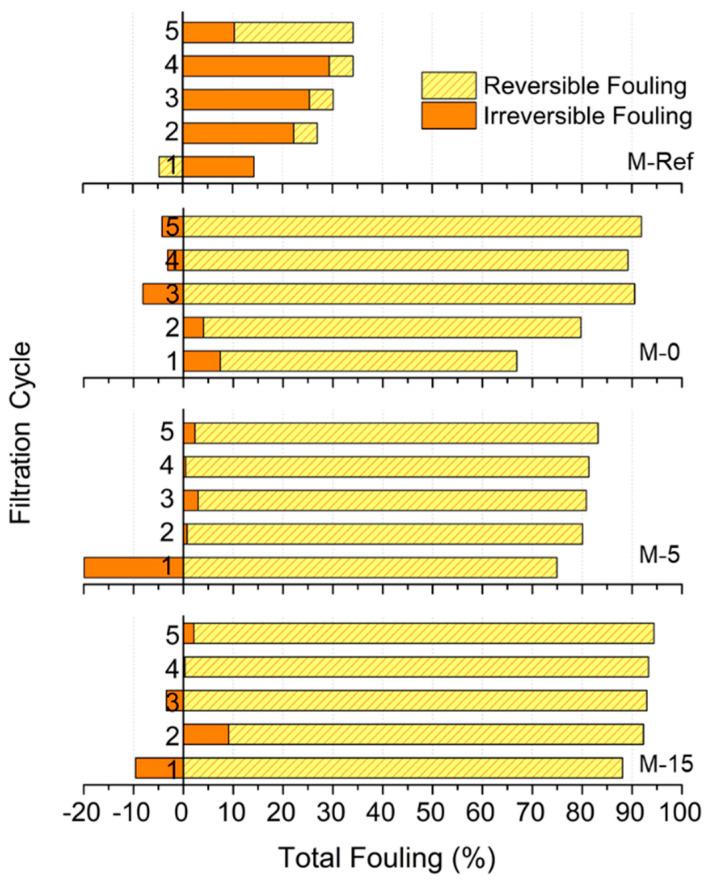
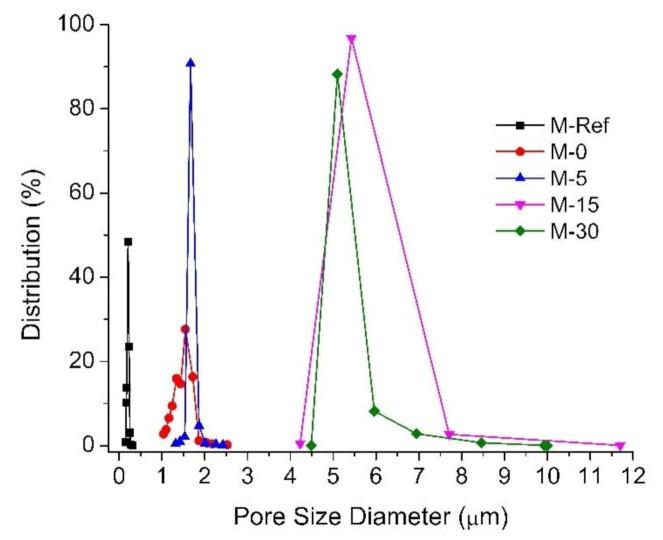
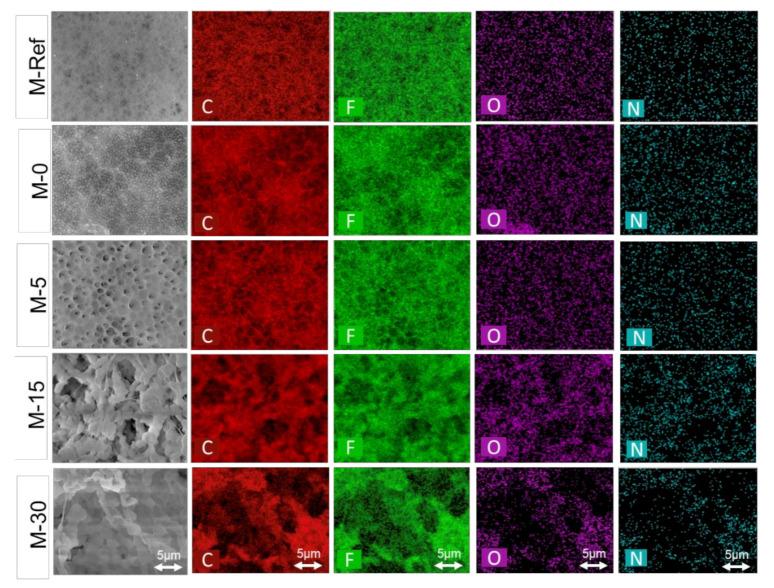
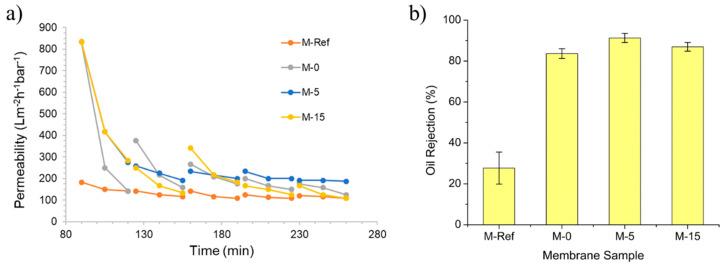
Membrane-based technology is an attractive option for the treatment of oily wastewater because of its high oil removal efficiency, small footprint and operational simplicity. However, filtration performance is highly restricted by membrane fouling, especially when treating oil/water emulsion as a result of strong interaction between oil droplets and the hydrophobic property of the membrane. This study explores the fabrication of polyvinylidene fluoride (PVDF)-based membrane via the vapour induced phase separation (VIPS) method while incorporating polyvinyl pyrrolidone (PVP) as a hydrophilic additive to encounter membrane fouling issues and improve membrane filterability. The resulting membranes were characterized and tested for oil/water emulsion filtration to evaluate their hydraulic, rejection and anti-fouling properties. Results show that the changes in membrane morphology and structure from typical macrovoids with finger-like substructure to cellular structure and larger membrane pore size were observed by the prolonged exposure time from 0 to 30 min through the VIPS method. The enhanced clean water permeability is attributed to the addition of PVP-LiCl in the dope solution that enlarges the mean flow pore size from 0.210 ± 0.1 to 7.709 ± 3.5 µm. The best performing membrane was the VIPS membrane with an exposure time of 5 min (M-5), showing oil/water emulsion permeability of 187 Lm h bar and oil rejection of 91.3% as well as an elevation of 84% of clean water permeability compared to pristine PVDF developed using a typical non-solvent induced phase separation (NIPS) method. Despite the relatively high total fouling, M-5 was able to maintain its high permeability by water flushing as a simple operation for membrane fouling control. The performance was achieved thanks to combination of the large mean flow pore size and hydrophilic property from residual PVP in the membarne matrix. Overall, the results demonstrate the potential of the optimum VIPS method in the presence of PVP and LiCl additives for oil/water emulsion treatment.
基于膜的技术因其高除油效率、占地面积小和操作简单,是处理含油废水的一个有吸引力的选择。然而,过滤性能受到膜污染的严重限制,特别是在处理油/水乳液时,由于油滴与膜的疏水性之间的强烈相互作用。本研究探索了通过蒸汽诱导相分离(VIPS)方法制备聚偏氟乙烯(PVDF)基膜,同时加入聚乙烯吡咯烷酮(PVP)作为亲水性添加剂,以解决膜污染问题并提高膜的过滤性能。对所得膜进行了表征,并对油/水乳液过滤进行了测试,以评估其水力、截留和抗污染性能。结果表明,通过VIPS方法将暴露时间从0延长至30分钟,观察到膜形态和结构从具有指状子结构的典型大孔转变为蜂窝状结构和更大的膜孔径。清水渗透率的提高归因于在铸膜液中添加了PVP-LiCl,使平均流动孔径从0.210±0.1扩大到7.709±3.5 µm。性能最佳的膜是暴露时间为5分钟的VIPS膜(M-5),其油/水乳液渗透率为187 Lm h bar,油截留率为91.3%,与使用典型非溶剂诱导相分离(NIPS)方法制备的原始PVDF相比,清水渗透率提高了84%。尽管总污染相对较高,但M-5能够通过水冲洗保持其高渗透率,这是一种控制膜污染的简单操作。该性能的实现得益于膜基质中残留PVP的大平均流动孔径和亲水性的结合。总体而言,结果证明了在PVP和LiCl添加剂存在下,最佳VIPS方法用于油/水乳液处理的潜力。




 Zotero 插件