
三维制造环境中增强间充质干细胞功能化以促进治疗应用
Increased Mesenchymal Stem Cell Functionalization in Three-Dimensional Manufacturing Settings for Enhanced Therapeutic Applications.
作者信息
Kouroupis Dimitrios, Correa Diego
机构信息
Department of Orthopedics, UHealth Sports Medicine Institute, University of Miami, Miller School of Medicine, Miami, FL, United States.
Diabetes Research Institute & Cell Transplantation Center, University of Miami, Miller School of Medicine, Miami, FL, United States.
出版信息
Front Bioeng Biotechnol. 2021 Feb 12;9:621748. doi: 10.3389/fbioe.2021.621748. eCollection 2021.
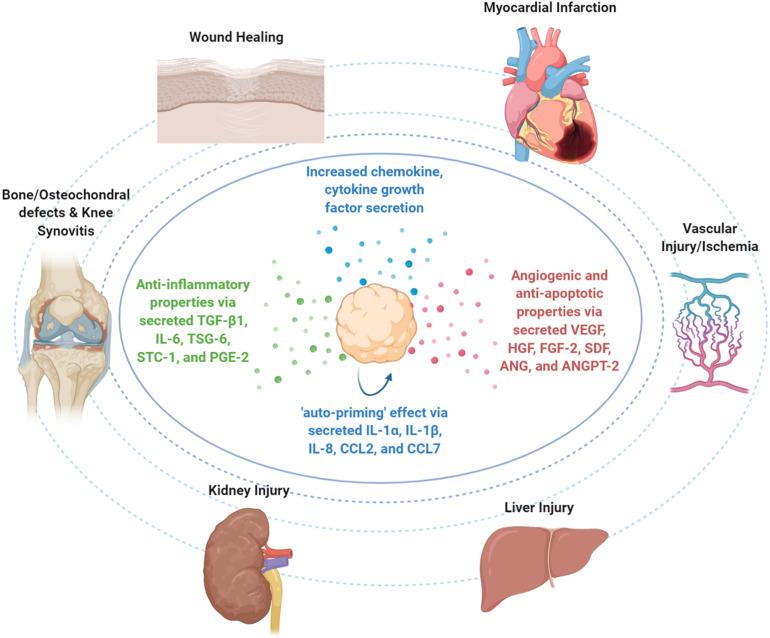
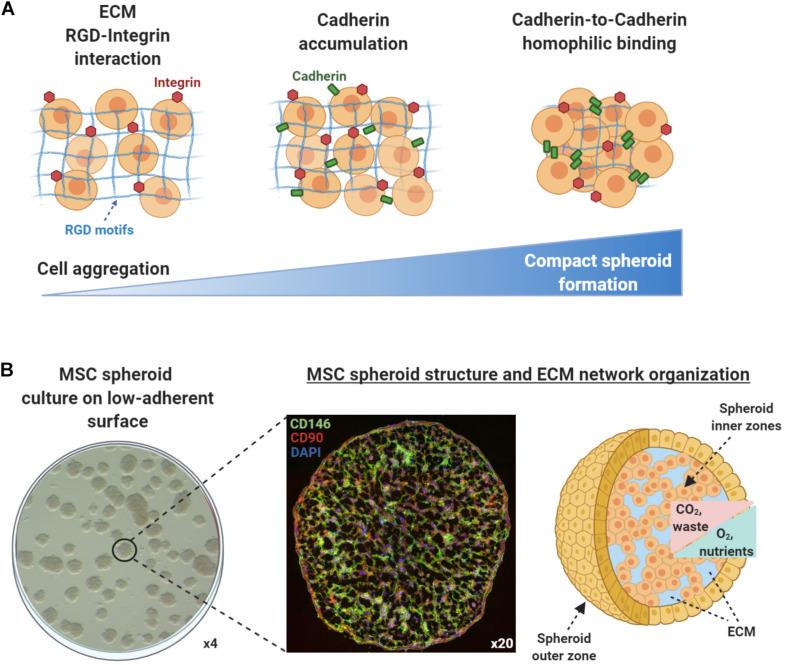
Mesenchymal stem/stromal cell (MSC) exist within their niches as part of heterogeneous cell populations, exhibiting variable stemness potential and supportive functionalities. Conventional extensive 2D MSC expansion, aimed at obtaining clinically relevant therapeutic cell numbers, results in detrimental effects on both cellular characteristics (e.g., phenotypic changes and senescence) and functions (e.g., differentiation capacity and immunomodulatory effects). These deleterious effects, added to the inherent inter-donor variability, negatively affect the standardization and reproducibility of MSC therapeutic potential. The resulting manufacturing challenges that drive the qualitative variability of MSC-based products is evident in various clinical trials where MSC therapeutic efficacy is moderate or, in some cases, totally insufficient. To circumvent these limitations, various techniques have been applied to manufacturing protocols to induce specific features, attributes, and functions in expanding cells. Exposure to inflammatory cues (cell priming) is one of them, however, with untoward effects such as transient expression of HLA-DR preventing allogeneic therapeutic schemes. MSC functionalization can be also achieved by 3D culturing techniques, in an effort to more closely recapitulate the MSC niche. The resulting spheroid structures provide spatial cell organization with increased cell-cell interactions, stable, or even enhanced phenotypic profiles, and increased trophic and immunomodulatory functionalities. In that context, MSC 3D spheroids have shown enhanced "medicinal signaling" activities and increased homing and survival capacities upon transplantation . Importantly, MSC spheroids have been applied in various preclinical animal models including wound healing, bone and osteochondral defects, and cardiovascular diseases showing safety and efficacy . Therefore, the incorporation of 3D MSC culturing approach into cell-based therapy would significantly impact the field, as more reproducible clinical outcomes may be achieved without requiring stimulatory regimes. In the present review, we discuss the MSC functionalization in 3D settings and how this strategy can contribute to an improved MSC-based product for safer and more effective therapeutic applications.
间充质干/基质细胞(MSC)作为异质性细胞群体的一部分存在于其生态位中,表现出可变的干性潜能和支持性功能。旨在获得临床相关治疗细胞数量的传统二维MSC大规模扩增,会对细胞特性(如表型变化和衰老)和功能(如分化能力和免疫调节作用)产生有害影响。这些有害影响加上供体间固有的变异性,会对MSC治疗潜力的标准化和可重复性产生负面影响。在各种临床试验中,导致基于MSC的产品质量变异性的生产挑战显而易见,其中MSC治疗效果中等,在某些情况下甚至完全不足。为了规避这些限制,各种技术已应用于生产方案,以在扩增细胞中诱导特定特征、属性和功能。暴露于炎症信号(细胞预刺激)就是其中之一,然而,它会产生不良影响,如HLA-DR的瞬时表达会阻碍同种异体治疗方案。MSC功能化也可以通过三维培养技术实现,以更紧密地模拟MSC生态位。由此产生的球体结构提供了空间细胞组织,增加了细胞间相互作用、稳定甚至增强的表型特征,以及增强的营养和免疫调节功能。在这种情况下,MSC三维球体在移植后显示出增强的“药物信号”活性以及增加的归巢和存活能力。重要的是,MSC球体已应用于各种临床前动物模型,包括伤口愈合、骨和骨软骨缺损以及心血管疾病,显示出安全性和有效性。因此,将三维MSC培养方法纳入基于细胞的治疗将对该领域产生重大影响,因为无需刺激方案即可实现更可重复的临床结果。在本综述中,我们讨论了三维环境下的MSC功能化,以及该策略如何有助于改进基于MSC的产品,以实现更安全、更有效的治疗应用。

 Zotero 插件