
使用条件生成对抗神经网络对睑板腺功能障碍进行基于图像的分析。
Image based analysis of meibomian gland dysfunction using conditional generative adversarial neural network.
作者信息
Khan Zakir Khan, Umar Arif Iqbal, Shirazi Syed Hamad, Rasheed Asad, Qadir Abdul, Gul Sarah
机构信息
Information Technology, Hazara University, Mansehra, Pakistan.
Biological Sciences, International Islamic University, Islamabad, Pakistan.
出版信息
BMJ Open Ophthalmol. 2021 Feb 12;6(1):e000436. doi: 10.1136/bmjophth-2020-000436. eCollection 2021.
OBJECTIVE
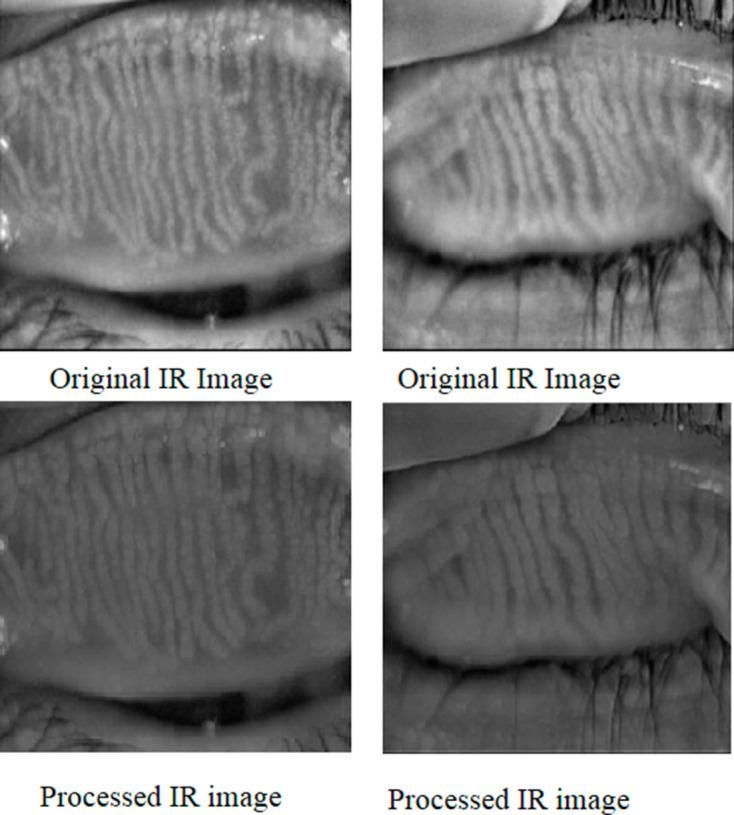
Meibomian gland dysfunction (MGD) is a primary cause of dry eye disease. Analysis of MGD, its severity, shapes and variation in the acini of the meibomian glands (MGs) is receiving much attention in ophthalmology clinics. Existing methods for diagnosing, detection and analysing meibomianitis are not capable to quantify the irregularities to IR (infrared) images of MG area such as light reflection, interglands and intraglands boundaries, the improper focus of the light and positioning, and eyelid eversion.
METHODS AND ANALYSIS
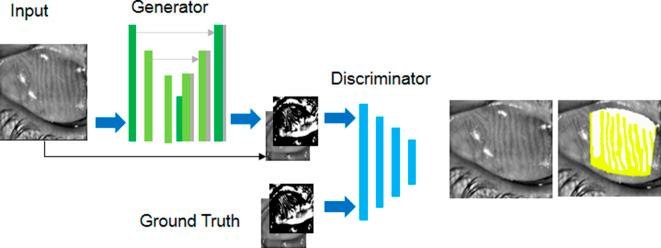
We proposed a model that is based on adversarial learning that is, conditional generative adversarial network that can overcome these blatant challenges. The generator of the model learns the mapping from the IR images of the MG to a confidence map specifying the probabilities of being a pixel of MG. The discriminative part of the model is responsible to penalise the mismatch between the IR images of the MG and confidence map. Furthermore, the adversarial learning assists the generator to produce a qualitative confidence map which is transformed into binary images with the help of fixed thresholding to fulfil the segmentation of MG. We identified MGs and interglands boundaries from IR images.
RESULTS
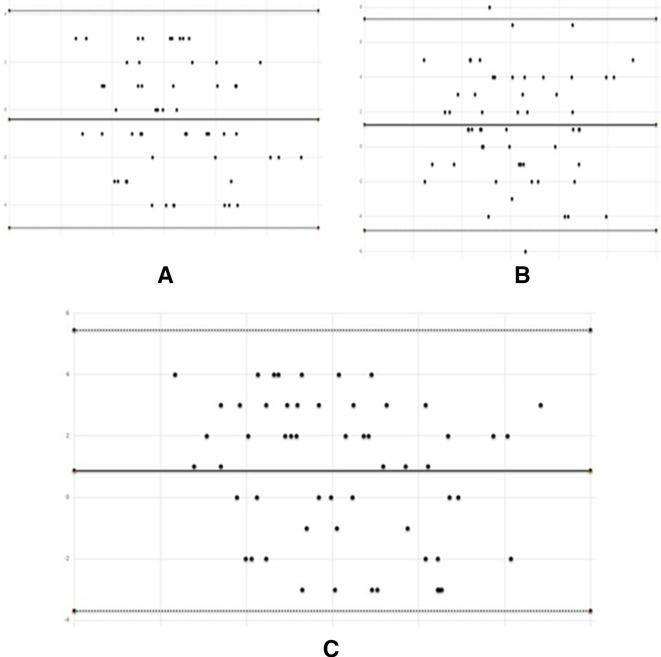
This method is evaluated by meiboscoring, grading, Pearson correlation and Bland-Altman analysis. We also judged the quality of our method through average Pompeiu-Hausdorff distance, and Aggregated Jaccard Index.
CONCLUSIONS
This technique provides a significant improvement in the quantification of the irregularities to IR. This technique has outperformed the state-of-art results for the detection and analysis of the dropout area of MGD.
目的
睑板腺功能障碍(MGD)是干眼疾病的主要病因。睑板腺(MG)腺泡中MGD及其严重程度、形态和变化的分析在眼科诊所备受关注。现有的睑板腺炎诊断、检测和分析方法无法对MG区域红外(IR)图像的不规则性进行量化,如光反射、腺间和腺内边界、光聚焦和定位不当以及眼睑外翻。
方法与分析
我们提出了一种基于对抗学习的模型,即条件生成对抗网络,该模型可以克服这些明显的挑战。该模型的生成器学习从MG的IR图像到指定为MG像素概率的置信图的映射。模型的判别部分负责惩罚MG的IR图像与置信图之间的不匹配。此外,对抗学习有助于生成器生成定性置信图,该置信图在固定阈值的帮助下转换为二值图像,以完成MG的分割。我们从IR图像中识别出MG和腺间边界。
结果
该方法通过睑板腺评分、分级、Pearson相关性和Bland-Altman分析进行评估。我们还通过平均Pompeiu-Hausdorff距离和聚合Jaccard指数来判断我们方法的质量。
结论
该技术在对IR图像不规则性的量化方面有显著改进。该技术在MGD缺失区域的检测和分析方面优于现有技术成果。


 Zotero 插件