
基于代理的模拟对 COVID-19 期间教育机构重新开放策略的评估。
Evaluation of reopening strategies for educational institutions during COVID-19 through agent based simulation.
机构信息
Department of Business Administration, Gies College of Business, University of Illinois at Urbana Champaign, Urbana, IL, 61801, USA.
Department of Electrical and Computer Engineering, Grainger College of Engineering, University of Illinois at Urbana Champaign, Urbana, IL, 61801, USA.
出版信息
Sci Rep. 2021 Mar 17;11(1):6264. doi: 10.1038/s41598-021-84192-y.
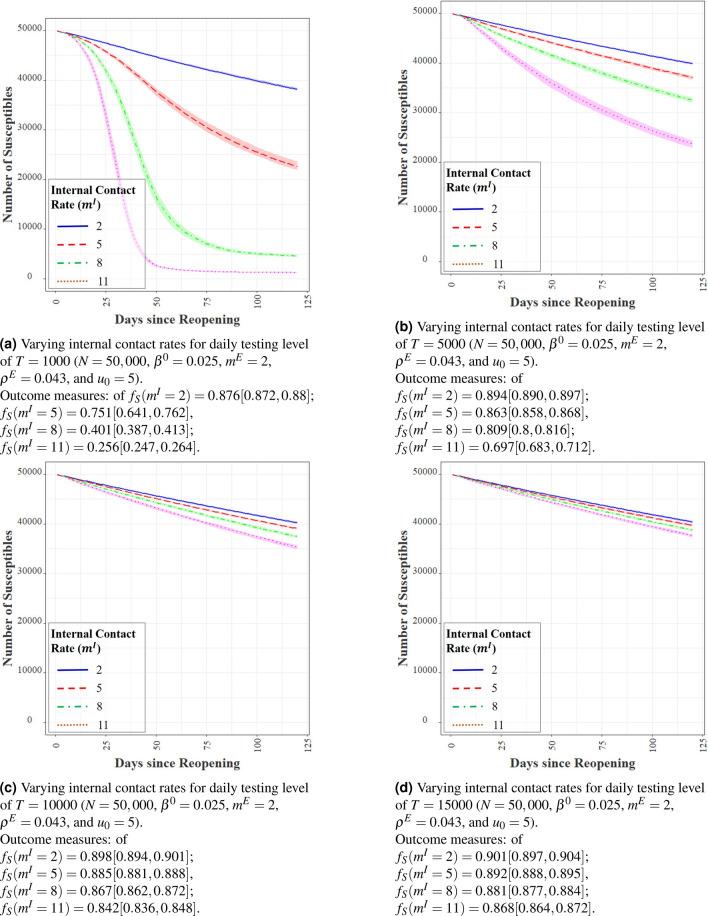
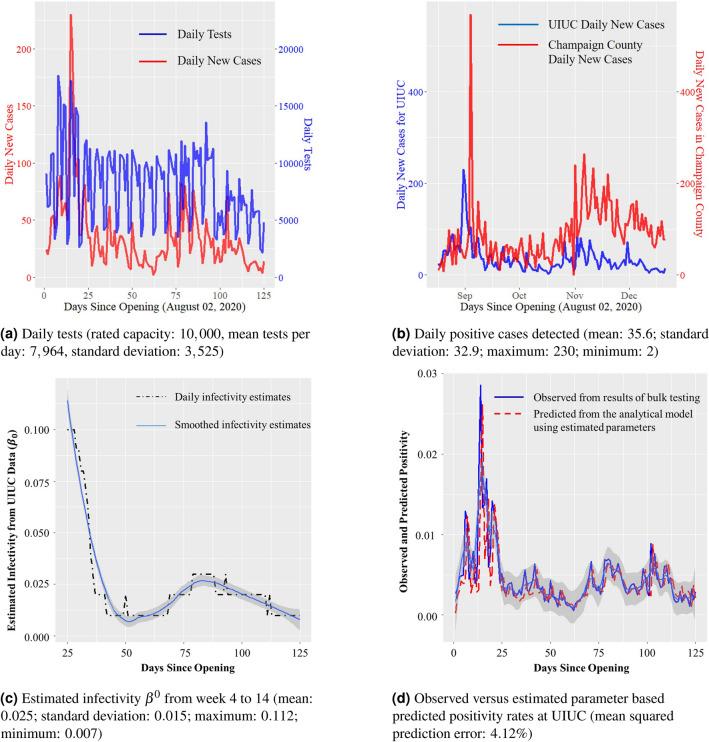
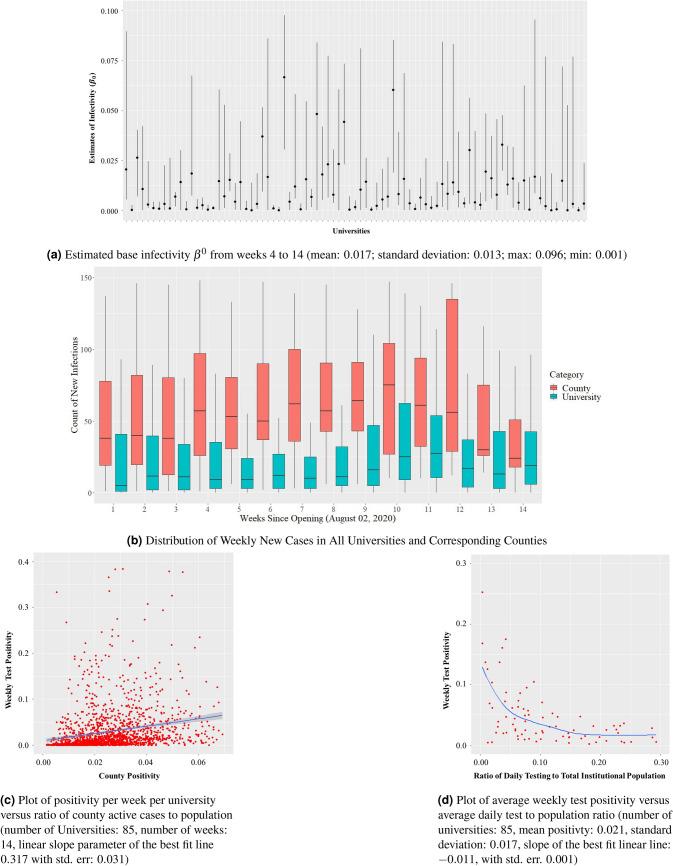
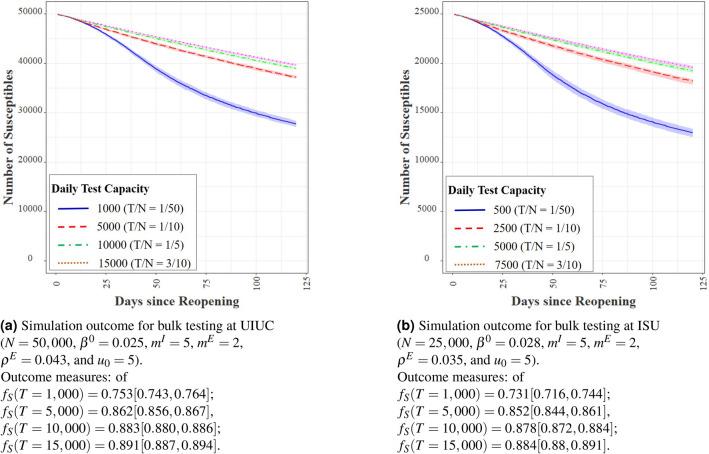
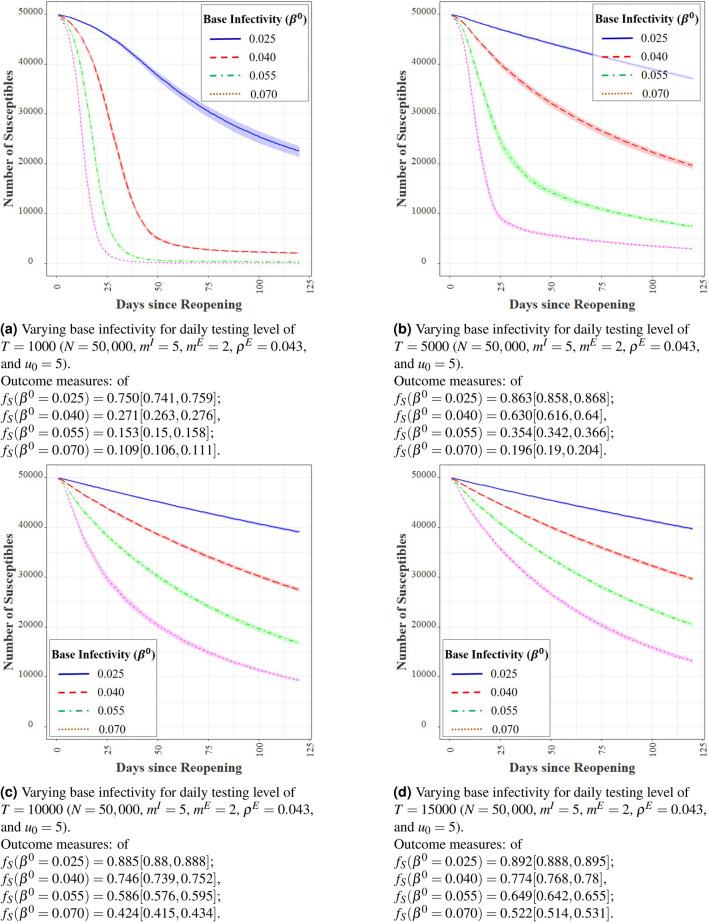
Many educational institutions have partially or fully closed all operations to cope with the challenges of the ongoing COVID-19 pandemic. In this paper, we explore strategies that such institutions can adopt to conduct safe reopening and resume operations during the pandemic. The research is motivated by the University of Illinois at Urbana-Champaign's (UIUC's) SHIELD program, which is a set of policies and strategies, including rapid saliva-based COVID-19 screening, for ensuring safety of students, faculty and staff to conduct in-person operations, at least partially. Specifically, we study how rapid bulk testing, contact tracing and preventative measures such as mask wearing, sanitization, and enforcement of social distancing can allow institutions to manage the epidemic spread. This work combines the power of analytical epidemic modeling, data analysis and agent-based simulations to derive policy insights. We develop an analytical model that takes into account the asymptomatic transmission of COVID-19, the effect of isolation via testing (both in bulk and through contact tracing) and the rate of contacts among people within and outside the institution. Next, we use data from the UIUC SHIELD program and 85 other universities to estimate parameters that describe the analytical model. Using the estimated parameters, we finally conduct agent-based simulations with various model parameters to evaluate testing and reopening strategies. The parameter estimates from UIUC and other universities show similar trends. For example, infection rates at various institutions grow rapidly in certain months and this growth correlates positively with infection rates in counties where the universities are located. Infection rates are also shown to be negatively correlated with testing rates at the institutions. Through agent-based simulations, we demonstrate that the key to designing an effective reopening strategy is a combination of rapid bulk testing and effective preventative measures such as mask wearing and social distancing. Multiple other factors help to reduce infection load, such as efficient contact tracing, reduced delay between testing and result revelation, tests with less false negatives and targeted testing of high-risk class among others. This paper contributes to the nascent literature on combating the COVID-19 pandemic and is especially relevant for educational institutions and similarly large organizations. We contribute by providing an analytical model that can be used to estimate key parameters from data, which in turn can be used to simulate the effect of different strategies for reopening. We quantify the relative effect of different strategies such as bulk testing, contact tracing, reduced infectivity and contact rates in the context of educational institutions. Specifically, we show that for the estimated average base infectivity of 0.025 ([Formula: see text]), a daily number of tests to population ratio T/N of 0.2, i.e., once a week testing for all individuals, is a good indicative threshold. However, this test to population ratio is sensitive to external infectivities, internal and external mobilities, delay in getting results after testing, and measures related to mask wearing and sanitization, which affect the base infection rate.
许多教育机构已经部分或完全关闭了所有业务,以应对持续的 COVID-19 大流行带来的挑战。在本文中,我们探讨了这些机构在大流行期间可以采取哪些策略来进行安全的重新开放和恢复运营。这项研究的动机来自伊利诺伊大学厄巴纳-香槟分校(UIUC)的 SHIELD 计划,该计划是一套政策和策略,包括基于快速唾液的 COVID-19 筛查,以确保学生、教职员工的安全,至少部分地进行面对面的操作。具体来说,我们研究了快速批量测试、接触者追踪以及戴口罩、消毒和执行社交距离等预防措施如何能够管理传染病的传播。这项工作结合了分析性传染病模型、数据分析和基于代理的模拟的力量,以得出政策见解。我们开发了一个分析模型,该模型考虑了 COVID-19 的无症状传播、通过测试进行隔离的效果(包括批量测试和通过接触者追踪进行隔离)以及机构内和机构外人员之间的接触率。接下来,我们使用来自 UIUC SHIELD 计划和其他 85 所大学的数据来估计描述分析模型的参数。使用估计的参数,我们最后使用具有各种模型参数的基于代理的模拟来评估测试和重新开放策略。来自 UIUC 和其他大学的参数估计显示出相似的趋势。例如,各个机构的感染率在某些月份迅速增长,而这种增长与大学所在县的感染率呈正相关。感染率也与机构的检测率呈负相关。通过基于代理的模拟,我们证明了设计有效重新开放策略的关键是快速批量测试和戴口罩、保持社交距离等有效预防措施的结合。其他多个因素有助于减少感染负荷,例如高效的接触者追踪、减少测试和结果揭示之间的延迟、假阴性率较低的测试以及对高风险班级的有针对性的测试等。本文为应对 COVID-19 大流行的新兴文献做出了贡献,尤其适用于教育机构和类似的大型组织。我们的贡献在于提供了一个分析模型,可以从数据中估计关键参数,这些参数反过来又可以用于模拟不同重新开放策略的效果。我们在教育机构的背景下量化了不同策略(如批量测试、接触者追踪、降低传染性和接触率)的相对效果。具体来说,我们表明,对于估计的平均基础感染率为 0.025([公式:见文本]),人口比例 T/N 的每日测试次数为 0.2,即每周对所有人进行一次测试,是一个很好的指示性阈值。然而,这个测试到人口的比例对外部感染率、内部和外部流动性、测试后获得结果的延迟以及与戴口罩和消毒有关的措施很敏感,这些措施会影响基础感染率。

 Zotero 插件