
靶向溶酶体半胱氨酸蛋白酶组织蛋白酶 S 揭示了奥沙利铂诱导的周围神经病变的免疫调节治疗策略。
Targeting lysosomal cysteine protease cathepsin S reveals immunomodulatory therapeutic strategy for oxaliplatin-induced peripheral neuropathy.
机构信息
Department of Internal Medicine, National Cheng Kung University Hospital, College of Medicine, National Cheng Kung University, Tainan, Taiwan.
Department of Neurology, National Cheng Kung University Hospital, College of Medicine, National Cheng Kung University, Tainan, Taiwan.
出版信息
Theranostics. 2021 Mar 4;11(10):4672-4687. doi: 10.7150/thno.54793. eCollection 2021.
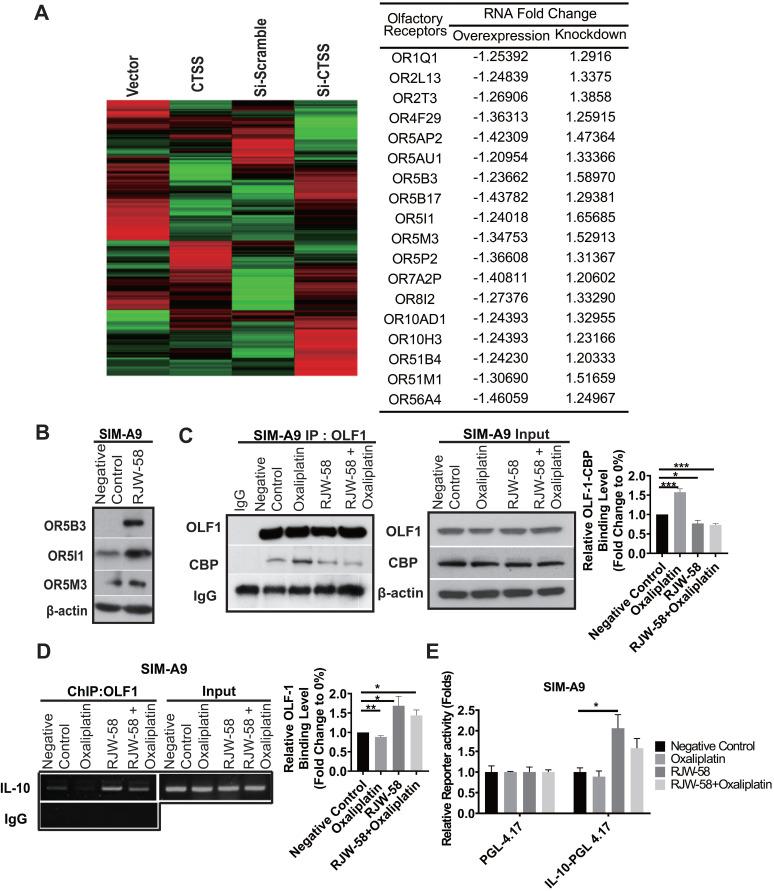
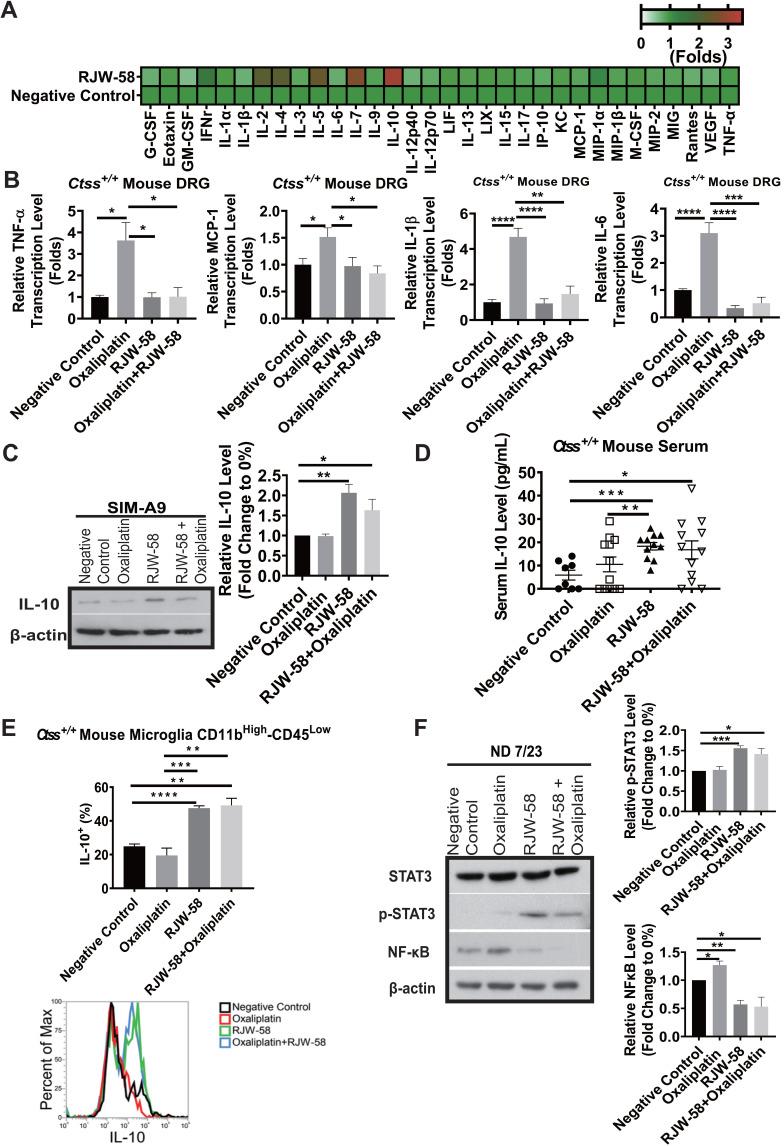
Oxaliplatin-induced peripheral neuropathy (OIPN) is a common adverse effect that causes delayed treatment and poor prognosis among colorectal cancer (CRC) patients. However, its mechanism remains elusive, and no effective treatment is available. We employed a prospective cohort study of adult patients with pathologically confirmed stage III CRC receiving adjuvant chemotherapy with an oxaliplatin-based regimen for investigating OIPN. To further validate the clinical manifestations and identify a potential therapeutic strategy, animal models, and studies on the mechanism of OIPN were applied. Our work found that (1) consistent with clinical findings, OIPN was observed in animal models. Targeting the enzymatic activity of cathepsin S (CTSS) by pharmacological blockade and gene deficiency strategy alleviates the manifestations of OIPN. (2) Oxaliplatin treatment increases CTSS expression by enhancing cytosol translocation of interferon response factor 1 (IRF1), which then facilitates STIM-dependent store-operated Ca entry homeostasis. (3) The cytokine array demonstrated an increase in anti-inflammatory cytokines and suppression of proinflammatory cytokines in mice treated with RJW-58. (4) Mechanistically, inhibiting CTSS facilitated olfactory receptors transcription factor 1 release from P300/CBP binding, which enhanced binding to the interleukin-10 (IL-10) promoter region, driving IL-10 downstream signaling pathway. (5) Serum CTSS expression is increased in CRC patients with oxaliplatin-induced neurotoxicity. We highlighted the critical role of CTSS in OIPN, which provides a therapeutic strategy for the common adverse side effects of oxaliplatin.
奥沙利铂诱导的周围神经病变(OIPN)是一种常见的不良反应,可导致结直肠癌(CRC)患者延迟治疗和预后不良。然而,其发病机制仍不清楚,也没有有效的治疗方法。
我们采用前瞻性队列研究的方法,对接受奥沙利铂为基础的辅助化疗的病理确诊为 III 期 CRC 成年患者进行 OIPN 研究。为了进一步验证临床表现并确定潜在的治疗策略,我们应用了动物模型和 OIPN 机制的研究。
我们的工作发现
(1)与临床发现一致,在动物模型中观察到 OIPN。通过药理学阻断和基因缺陷策略靶向组织蛋白酶 S(CTSS)的酶活性可减轻 OIPN 的表现。(2)奥沙利铂通过增强干扰素反应因子 1(IRF1)的细胞质易位来增加 CTSS 的表达,从而促进 STIM 依赖性储存操作钙内流的平衡。(3)细胞因子阵列显示用 RJW-58 处理的小鼠中抗炎细胞因子增加,促炎细胞因子减少。(4)从 P300/CBP 结合体中释放嗅觉受体转录因子 1是抑制 CTSS 促进白细胞介素-10(IL-10)下游信号通路的机制,增强与白细胞介素-10(IL-10)启动子区域的结合。(5)奥沙利铂诱导神经毒性的 CRC 患者血清 CTSS 表达增加。
我们强调了 CTSS 在 OIPN 中的关键作用,为奥沙利铂常见的不良反应提供了治疗策略。


 Zotero 插件