
蛋白质食欲驱动腹侧被盖区神经活动与宏量营养素相关的差异。
Protein Appetite Drives Macronutrient-Related Differences in Ventral Tegmental Area Neural Activity.
机构信息
Department of Neuroscience, Psychology & Behaviour, University of Leicester, Leicester, LE1 9HN, United Kingdom.
Rowett Institute, University of Aberdeen, Foresterhill, Aberdeen, AB25 2ZD, United Kingdom.
出版信息
J Neurosci. 2021 Jun 9;41(23):5080-5092. doi: 10.1523/JNEUROSCI.3082-20.2021. Epub 2021 Apr 29.
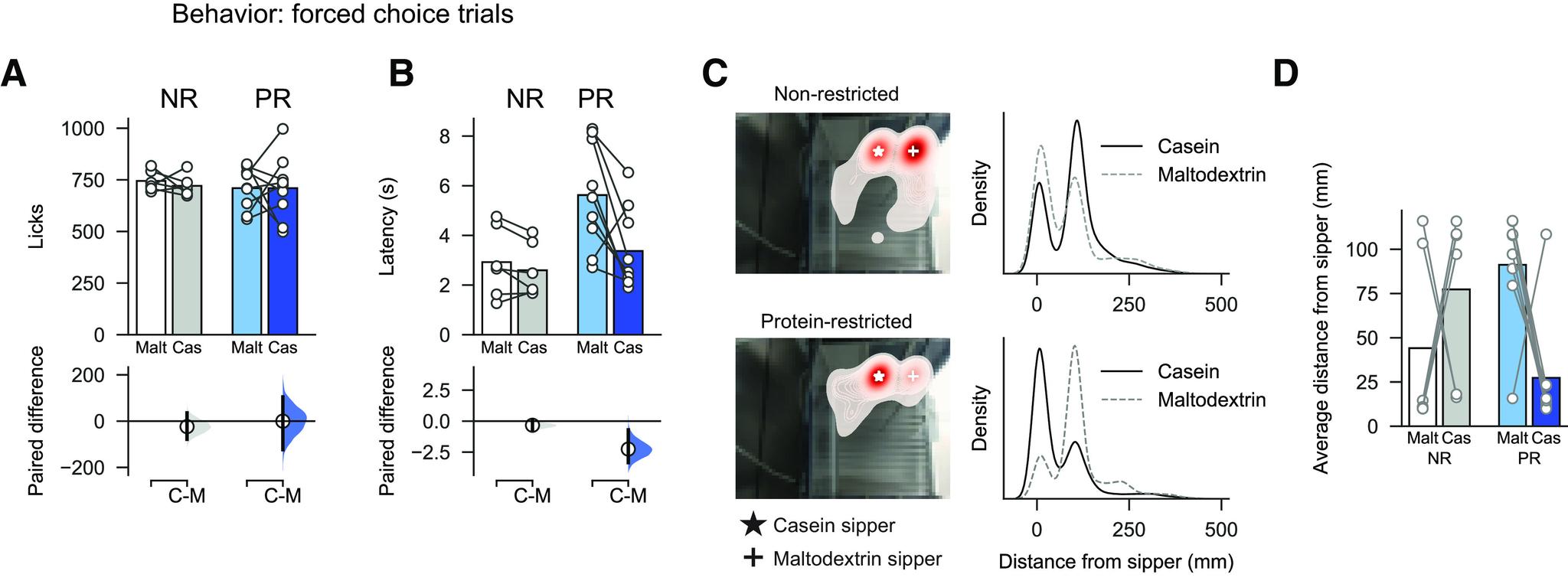
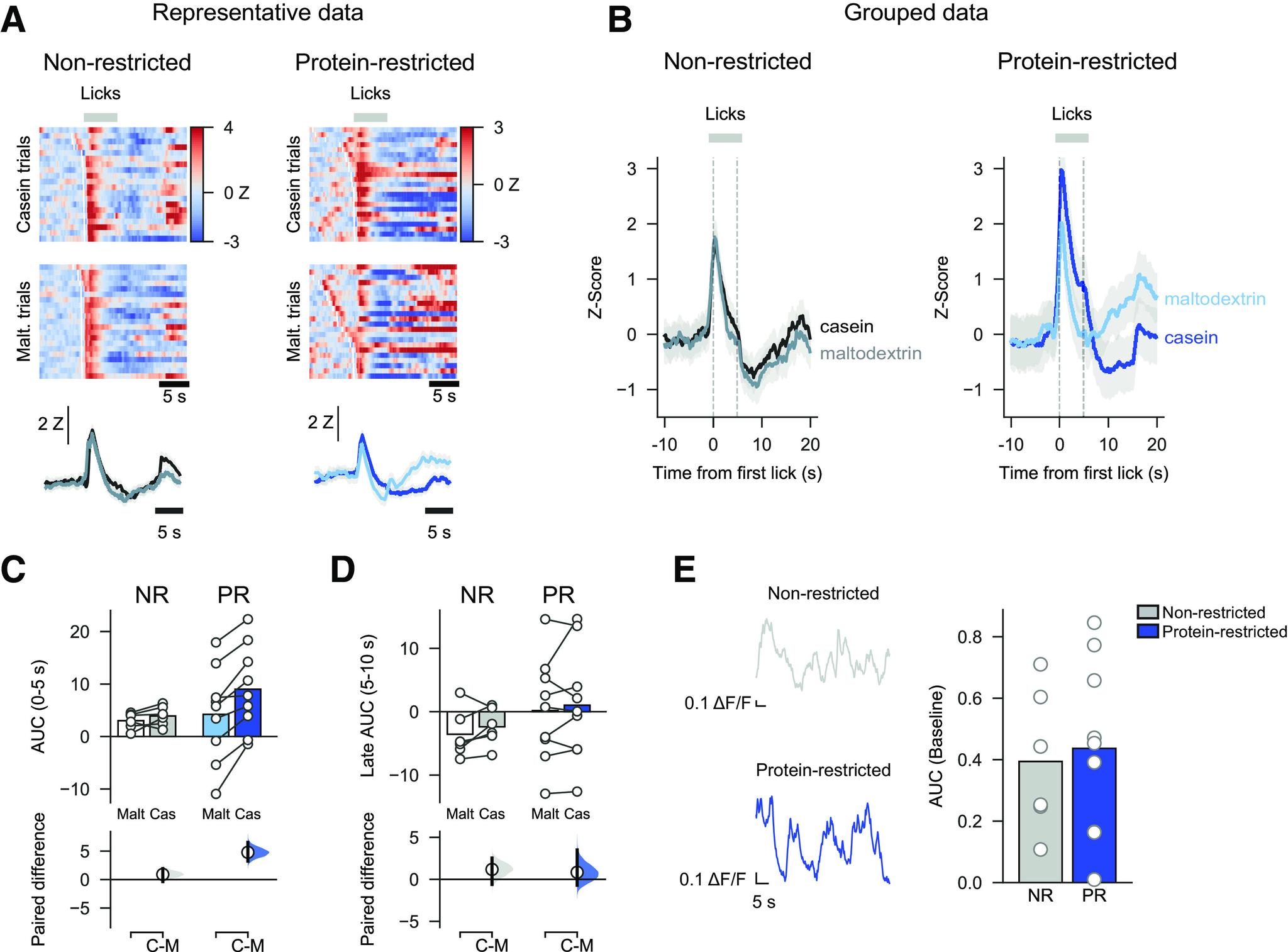
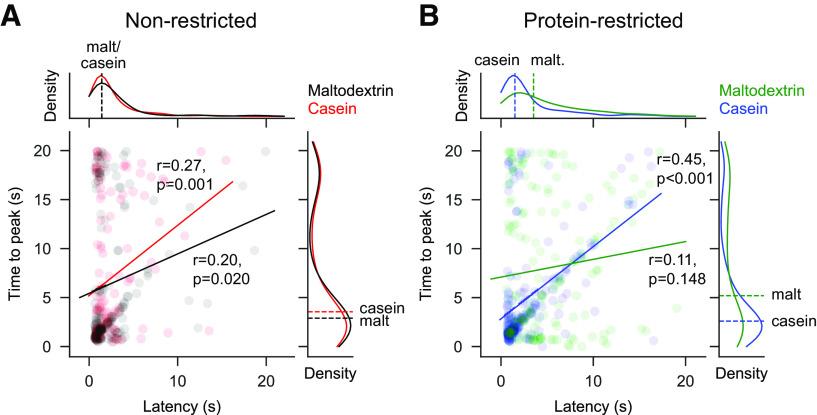
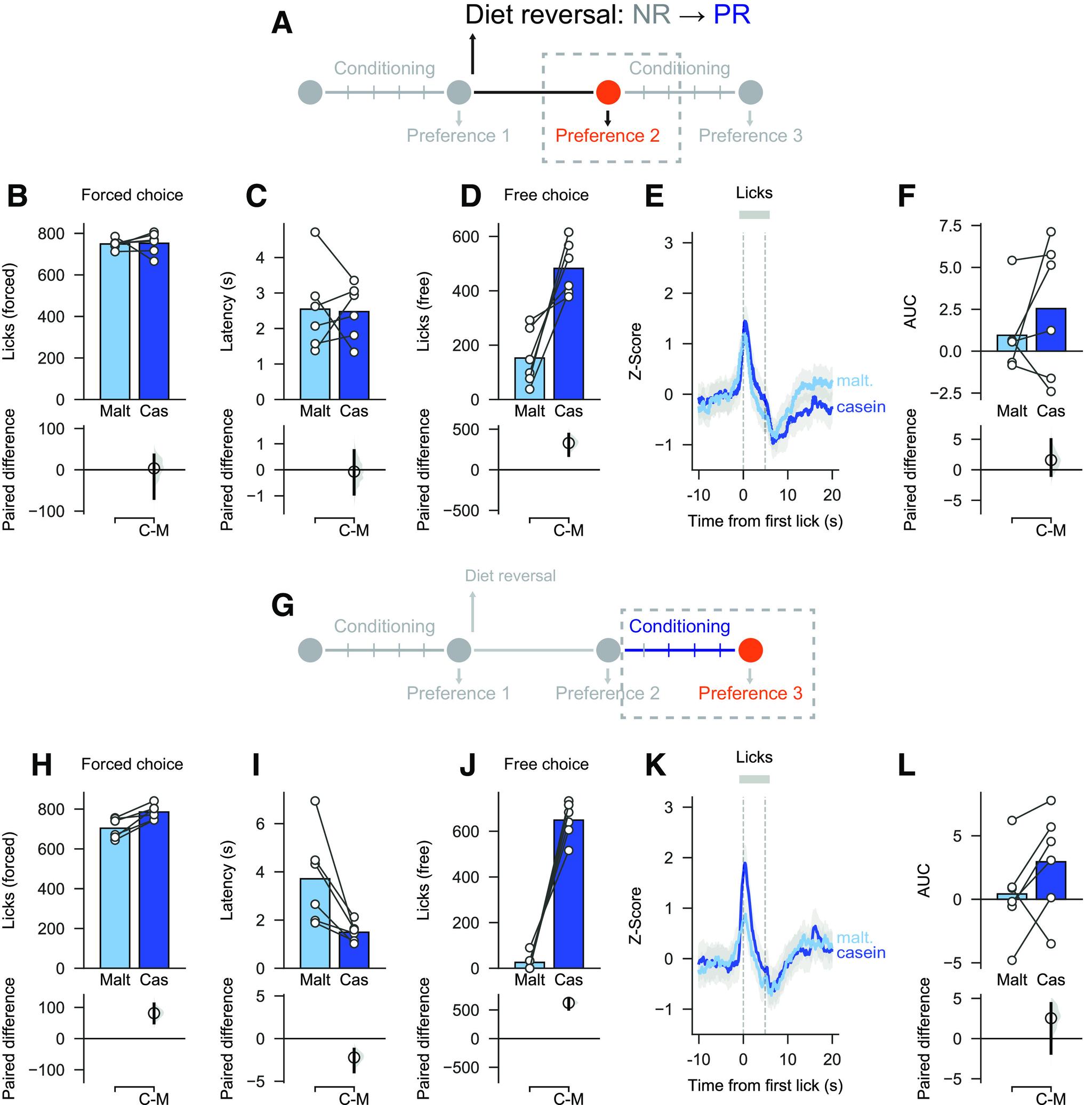
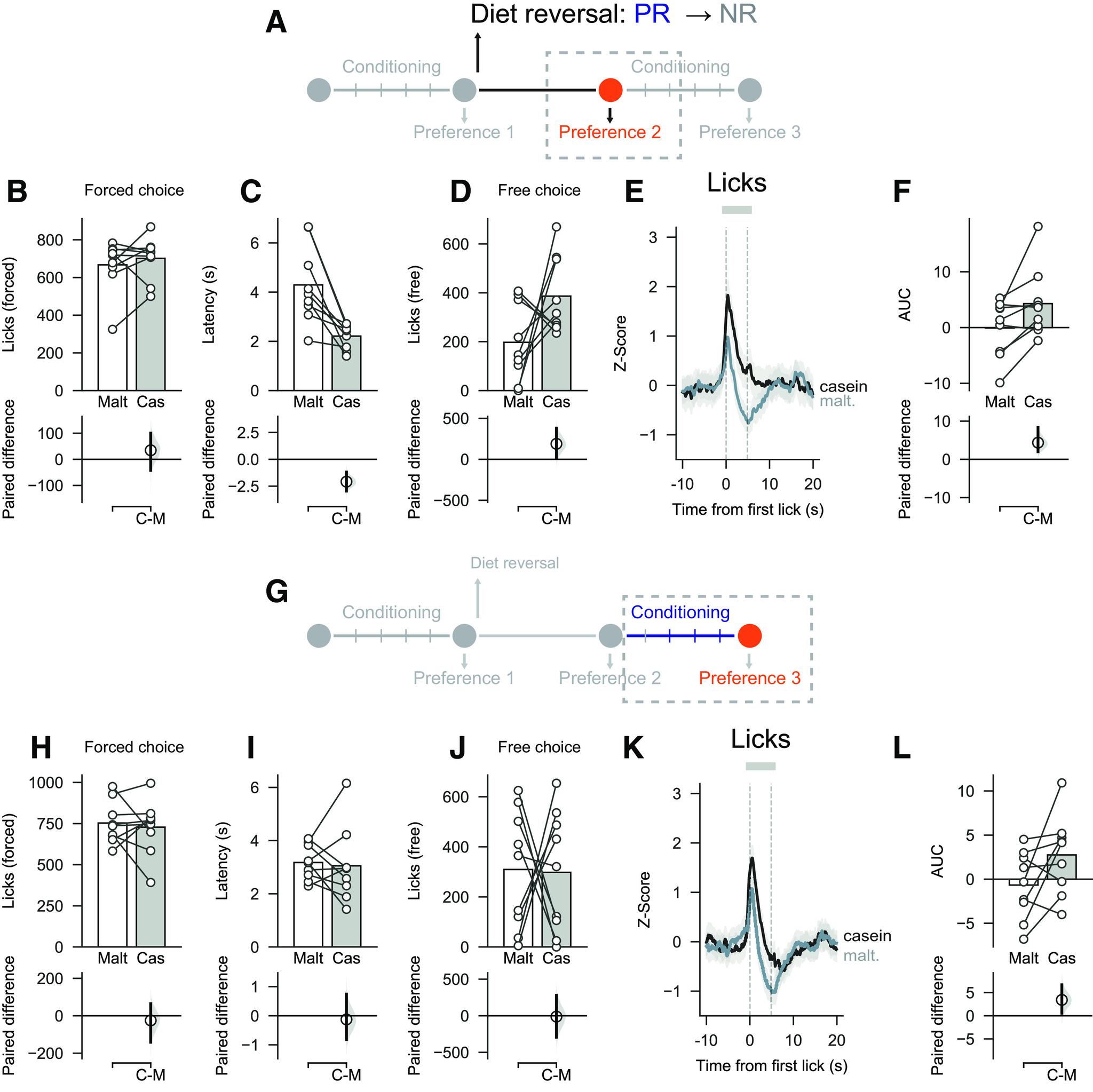
Control of protein intake is essential for numerous biological processes as several amino acids cannot be synthesized de novo, however, its neurobiological substrates are still poorly understood. In the present study, we combined fiber photometry with nutrient-conditioned flavor in a rat model of protein appetite to record neuronal activity in the VTA, a central brain region for the control of food-related processes. In adult male rats, protein restriction increased preference for casein (protein) over maltodextrin (carbohydrate). Moreover, protein consumption was associated with a greater VTA response, relative to carbohydrate. After initial nutrient preference, a switch from a normal balanced diet to protein restriction induced rapid development of protein preference but required extensive exposure to macronutrient solutions to induce elevated VTA responses to casein. Furthermore, prior protein restriction induced long-lasting food preference and VTA responses. This study reveals that VTA circuits are involved in protein appetite in times of need, a crucial process for animals to acquire an adequate amount of protein in their diet. Acquiring insufficient protein in one's diet has severe consequences for health and ultimately will lead to death. In addition, a low level of dietary protein has been proposed as a driver of obesity as it can leverage up intake of fat and carbohydrate. However, much remains unknown about the role of the brain in ensuring adequate intake of protein. Here, we show that in a state of protein restriction a key node in brain reward circuitry, the VTA, is activated more strongly during consumption of protein than carbohydrate. Moreover, although rats' behavior changed to reflect new protein status, patterns of neural activity were more persistent and only loosely linked to protein status.
控制蛋白质的摄入量对于许多生物过程至关重要,因为有几种氨基酸不能从头合成,然而,其神经生物学基础仍知之甚少。在本研究中,我们将光纤光度法与营养条件风味相结合,在蛋白质食欲的大鼠模型中记录 VTA 中的神经元活动,VTA 是控制与食物相关过程的中枢脑区。在成年雄性大鼠中,蛋白质限制增加了对干酪素(蛋白质)的偏好而不是麦芽糊精(碳水化合物)。此外,与碳水化合物相比,蛋白质的消耗与更大的 VTA 反应相关。在初始营养偏好之后,从正常平衡饮食切换到蛋白质限制会迅速诱导蛋白质偏好的发展,但需要大量暴露于大量营养溶液以诱导对干酪素的 VTA 反应升高。此外,先前的蛋白质限制会诱导持久的食物偏好和 VTA 反应。这项研究表明,VTA 回路参与了动物在需要时的蛋白质食欲,这是动物在饮食中获得足够蛋白质的关键过程。在饮食中摄入不足的蛋白质会对健康造成严重后果,最终会导致死亡。此外,低水平的膳食蛋白质被认为是肥胖的驱动因素,因为它可以增加脂肪和碳水化合物的摄入量。然而,大脑在确保足够蛋白质摄入方面的作用仍知之甚少。在这里,我们表明在蛋白质限制状态下,大脑奖励回路中的一个关键节点 VTA 在消耗蛋白质时比碳水化合物时更强烈地被激活。此外,尽管大鼠的行为发生了变化以反映新的蛋白质状态,但神经活动模式更持久,并且与蛋白质状态的联系松散。



 Zotero 插件