
胃肠道脂肪分解及自微乳药物传递系统的跨上皮转运——口服途径
Gastrointestinal lipolysis and trans-epithelial transport of SMEDDS oral route.
作者信息
Xia Fei, Chen Zhongjian, Zhu Quangang, Qi Jianping, Dong Xiaochun, Zhao Weili, Wu Wei, Lu Yi
机构信息
Key Laboratory of Smart Drug Delivery of MOE, School of Pharmacy, Fudan University, Shanghai 201203, China.
Shanghai Skin Disease Hospital, Tongji University School of Medicine, Shanghai 200443, China.
出版信息
Acta Pharm Sin B. 2021 Apr;11(4):1010-1020. doi: 10.1016/j.apsb.2021.03.006. Epub 2021 Mar 10.
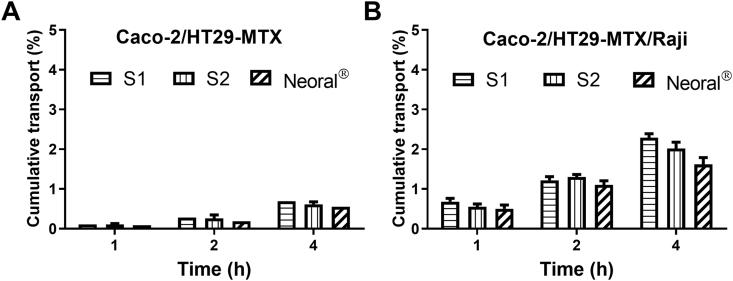
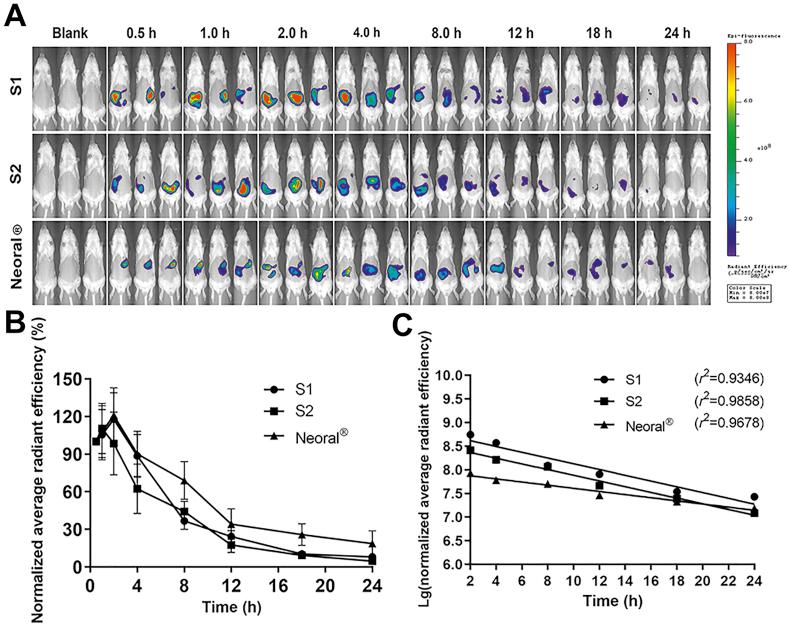
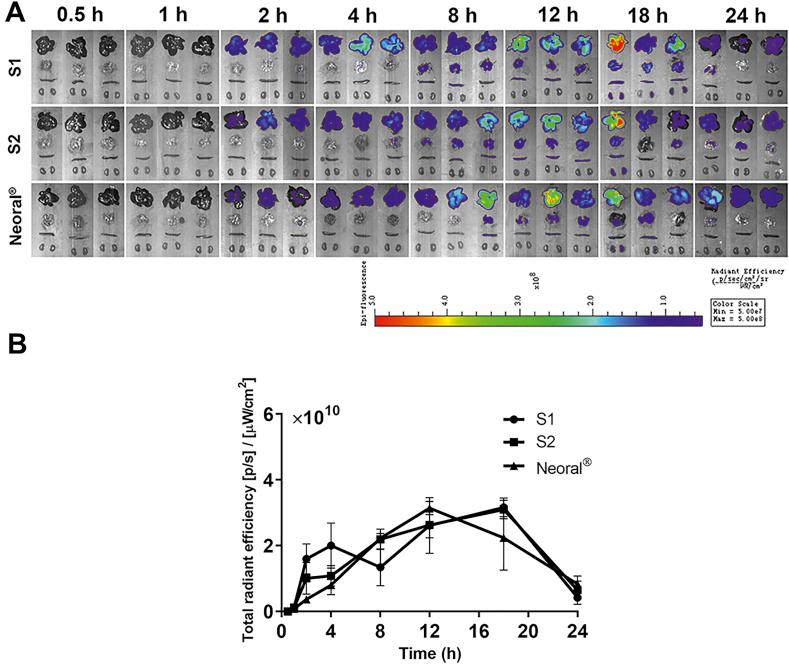
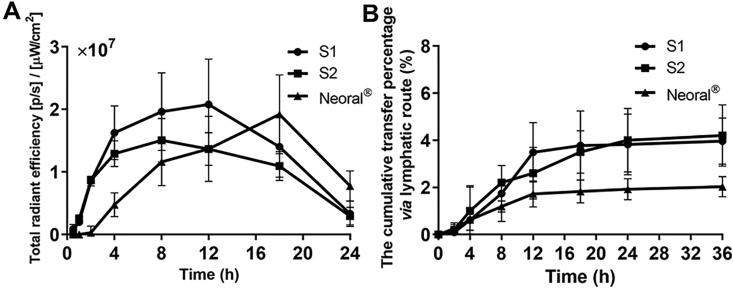
Self-microemulsifying drug delivery systems (SMEDDSs) have recently returned to the limelight of academia and industry due to their enormous potential in oral delivery of biomacromolecules. However, information on gastrointestinal lipolysis and trans-epithelial transport of SMEDDS is rare. Aggregation-caused quenching (ACQ) fluorescent probes are utilized to visualize the behaviors of SMEDDSs, because the released probes during lipolysis are quenched upon contacting water. Two SMEDDSs composed of medium chain triglyceride and different ratios of Tween-80 and PEG-400 are set as models, meanwhile Neoral® was used as a control. The SMEDDS droplets reside in the digestive tract for as long as 24 h and obey first order kinetic law of lipolysis. The increased chain length of the triglyceride decreases the lipolysis of the SMEDDSs. imaging of main tissues and histological examination confirm the trans-epithelial transportation of the SMEDDS droplets. Approximately 2%-4% of the given SMEDDSs are transported the lymph route following epithelial uptake, while liver is the main termination. Caco-2 cell lines confirm the cellular uptake and trans-epithelial transport. In conclusion, a fraction of SMEDDSs can survive the lipolysis in the gastrointestinal tract, permeate across the epithelia, translocate the lymph, and accumulate mainly in the liver.
自微乳化药物递送系统(SMEDDSs)因其在口服递送生物大分子方面的巨大潜力,最近重新成为学术界和工业界关注的焦点。然而,关于SMEDDS在胃肠道中的脂解作用和跨上皮转运的信息却很少。由于脂解过程中释放的探针在接触水时会发生淬灭,因此利用聚集诱导淬灭(ACQ)荧光探针来观察SMEDDS的行为。将由中链甘油三酯以及不同比例的吐温80和聚乙二醇400组成的两种SMEDDS作为模型,同时使用新山地明作为对照。SMEDDS液滴在消化道中停留长达24小时,并遵循脂解的一级动力学规律。甘油三酯链长的增加会降低SMEDDS的脂解作用。主要组织的成像和组织学检查证实了SMEDDS液滴的跨上皮转运。给予的SMEDDS中约2%-4%在上皮细胞摄取后通过淋巴途径转运,而肝脏是主要的终末器官。Caco-2细胞系证实了细胞摄取和跨上皮转运。总之,一部分SMEDDS能够在胃肠道的脂解过程中存活下来,穿过上皮细胞,通过淋巴转运,并主要在肝脏中蓄积。





 Zotero 插件