
Sprouty4 负调控 ERK/MAPK 信号通路,从而抑制原位向浸润性乳腺导管癌的转化。
Sprouty4 negatively regulates ERK/MAPK signaling and the transition from in situ to invasive breast ductal carcinoma.
机构信息
Department of Oncology, Wayne State University School of Medicine, Detroit, MI, United states of America.
Department of Pharmacology, Wayne State University School of Medicine, Detroit, MI, United states of America.
出版信息
PLoS One. 2021 May 28;16(5):e0252314. doi: 10.1371/journal.pone.0252314. eCollection 2021.
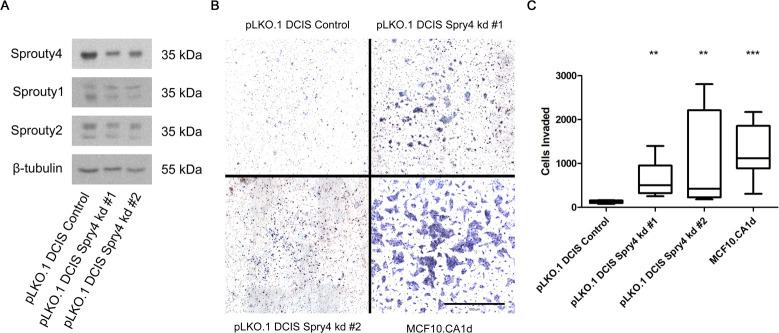
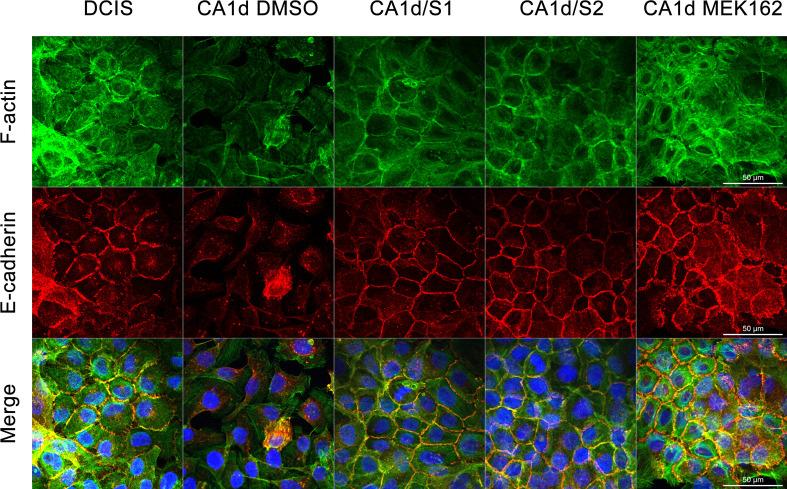
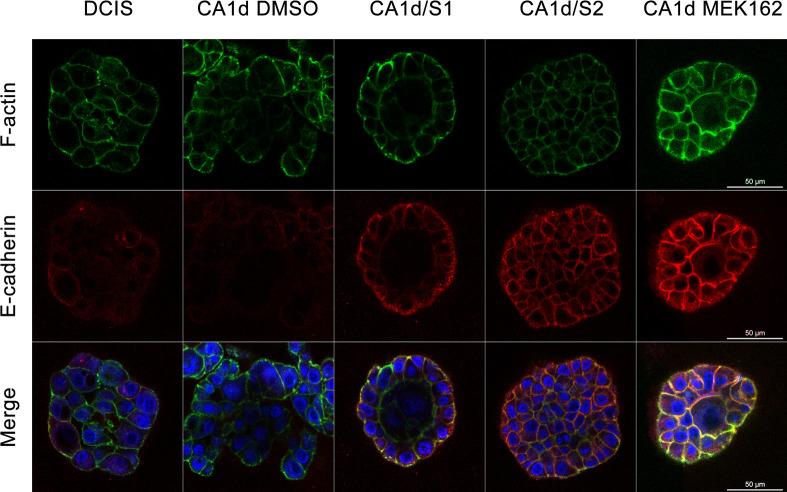
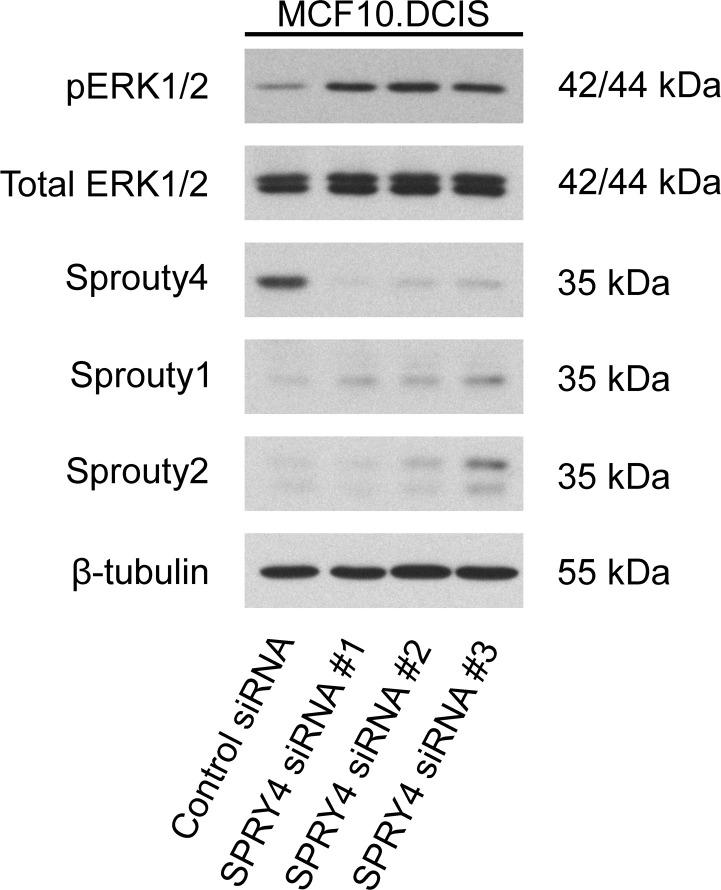
Breast ductal carcinoma in situ (DCIS) is a non-obligate precursor of invasive ductal carcinoma (IDC). It is still unclear which DCIS will become invasive and which will remain indolent. Patients often receive surgery and radiotherapy, but this early intervention has not produced substantial decreases in late-stage disease. Sprouty proteins are important regulators of ERK/MAPK signaling and have been studied in various cancers. We hypothesized that Sprouty4 is an endogenous inhibitor of ERK/MAPK signaling and that its loss/reduced expression is a mechanism by which DCIS lesions progress toward IDC, including triple-negative disease. Using immunohistochemistry, we found reduced Sprouty4 expression in IDC patient samples compared to DCIS, and that ERK/MAPK phosphorylation had an inverse relationship to Sprouty4 expression. These observations were reproduced using a 3D culture model of disease progression. Knockdown of Sprouty4 in MCF10.DCIS cells increased ERK/MAPK phosphorylation as well as their invasive capability, while overexpression of Sprouty4 in MCF10.CA1d IDC cells reduced ERK/MAPK phosphorylation, invasion, and the aggressive phenotype exhibited by these cells. Immunofluorescence experiments revealed reorganization of the actin cytoskeleton and relocation of E-cadherin back to the cell surface, consistent with the restoration of adherens junctions. To determine whether these effects were due to changes in ERK/MAPK signaling, MEK1/2 was pharmacologically inhibited in IDC cells. Nanomolar concentrations of MEK162/binimetinib restored an epithelial-like phenotype and reduced pericellular proteolysis, similar to Sprouty4 overexpression. From these data we conclude that Sprouty4 acts to control ERK/MAPK signaling in DCIS, thus limiting the progression of these premalignant breast lesions.
乳腺导管原位癌(DCIS)是非浸润性导管癌(IDC)的强制性前体。目前尚不清楚哪些 DCIS 会进展为浸润性,哪些会保持惰性。患者通常接受手术和放疗,但这种早期干预并没有显著降低晚期疾病的发生率。Sprouty 蛋白是 ERK/MAPK 信号的重要调节剂,已在各种癌症中进行了研究。我们假设 Sprouty4 是 ERK/MAPK 信号的内源性抑制剂,其丢失/表达降低是 DCIS 病变向 IDC 进展的机制,包括三阴性疾病。使用免疫组织化学,我们发现与 DCIS 相比,IDC 患者样本中的 Sprouty4 表达降低,并且 ERK/MAPK 磷酸化与 Sprouty4 表达呈负相关。这些观察结果在疾病进展的 3D 培养模型中得到了重现。MCF10.DCIS 细胞中 Sprouty4 的敲低增加了 ERK/MAPK 的磷酸化及其侵袭能力,而 MCF10.CA1d IDC 细胞中 Sprouty4 的过表达降低了 ERK/MAPK 的磷酸化、侵袭以及这些细胞表现出的侵袭表型。免疫荧光实验显示肌动蛋白细胞骨架的重排和 E-钙粘蛋白重新定位到细胞膜,与黏附连接的恢复一致。为了确定这些影响是否是由于 ERK/MAPK 信号的变化,我们在 IDC 细胞中用 MEK1/2 药理学抑制剂进行了实验。纳摩尔浓度的 MEK162/binimetinib 恢复了上皮样表型并减少了细胞周围蛋白水解,类似于 Sprouty4 的过表达。从这些数据中,我们得出结论,Sprouty4 可控制 DCIS 中的 ERK/MAPK 信号,从而限制这些癌前乳腺病变的进展。




 Zotero 插件