
中国大陆地区新型冠状病毒肺炎时空特征分析
Analysis on the spatio-temporal characteristics of COVID-19 in mainland China.
作者信息
Jin Biao, Ji Jianwan, Yang Wuheng, Yao Zhiqiang, Huang Dandan, Xu Chao
机构信息
College of Mathematics and Informatics, Fujian Normal University, Fuzhou 350108, China.
Digital Fujian Institute of Big Data Security Technology, Fuzhou 350108, China.
出版信息
Process Saf Environ Prot. 2021 Aug;152:291-303. doi: 10.1016/j.psep.2021.06.004. Epub 2021 Jun 7.
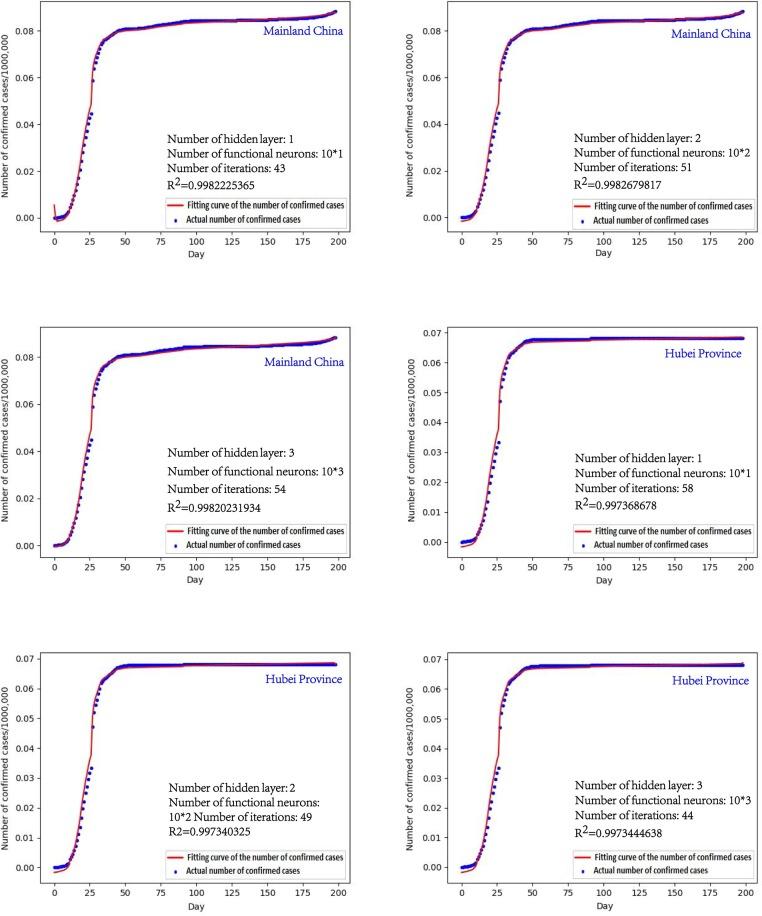
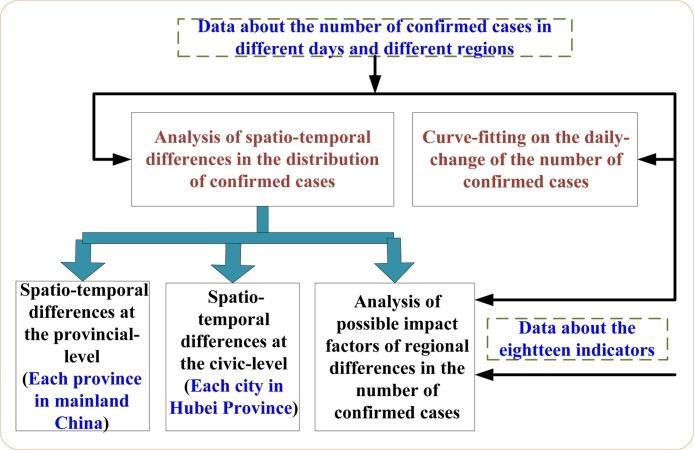
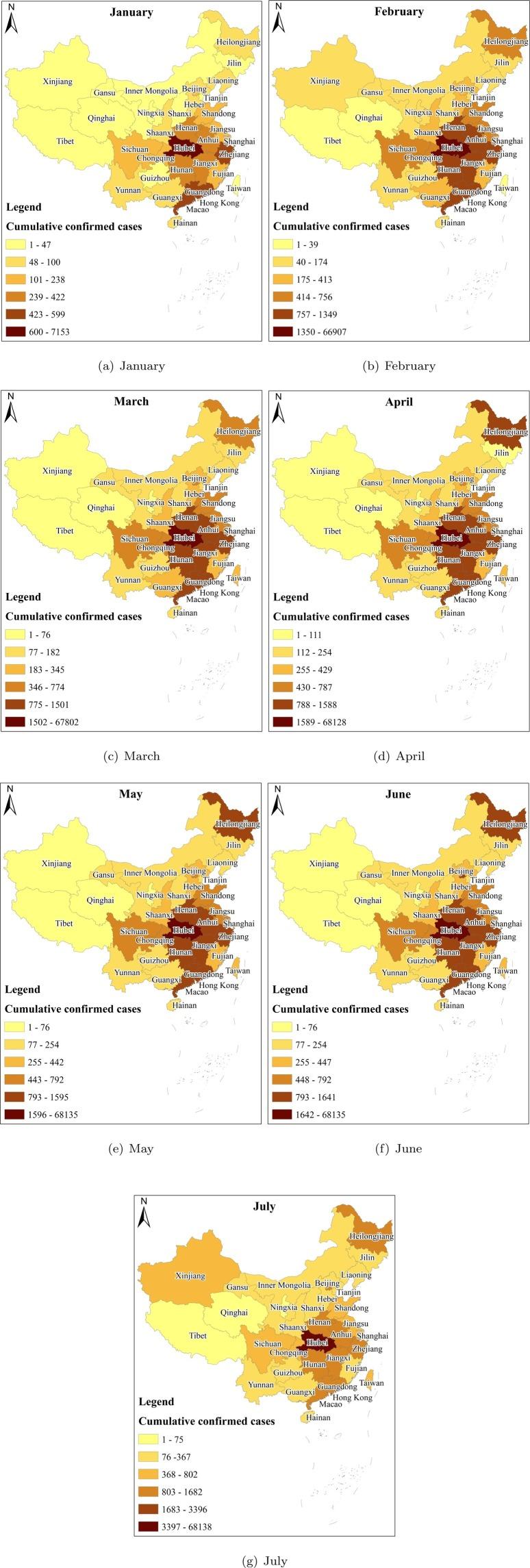
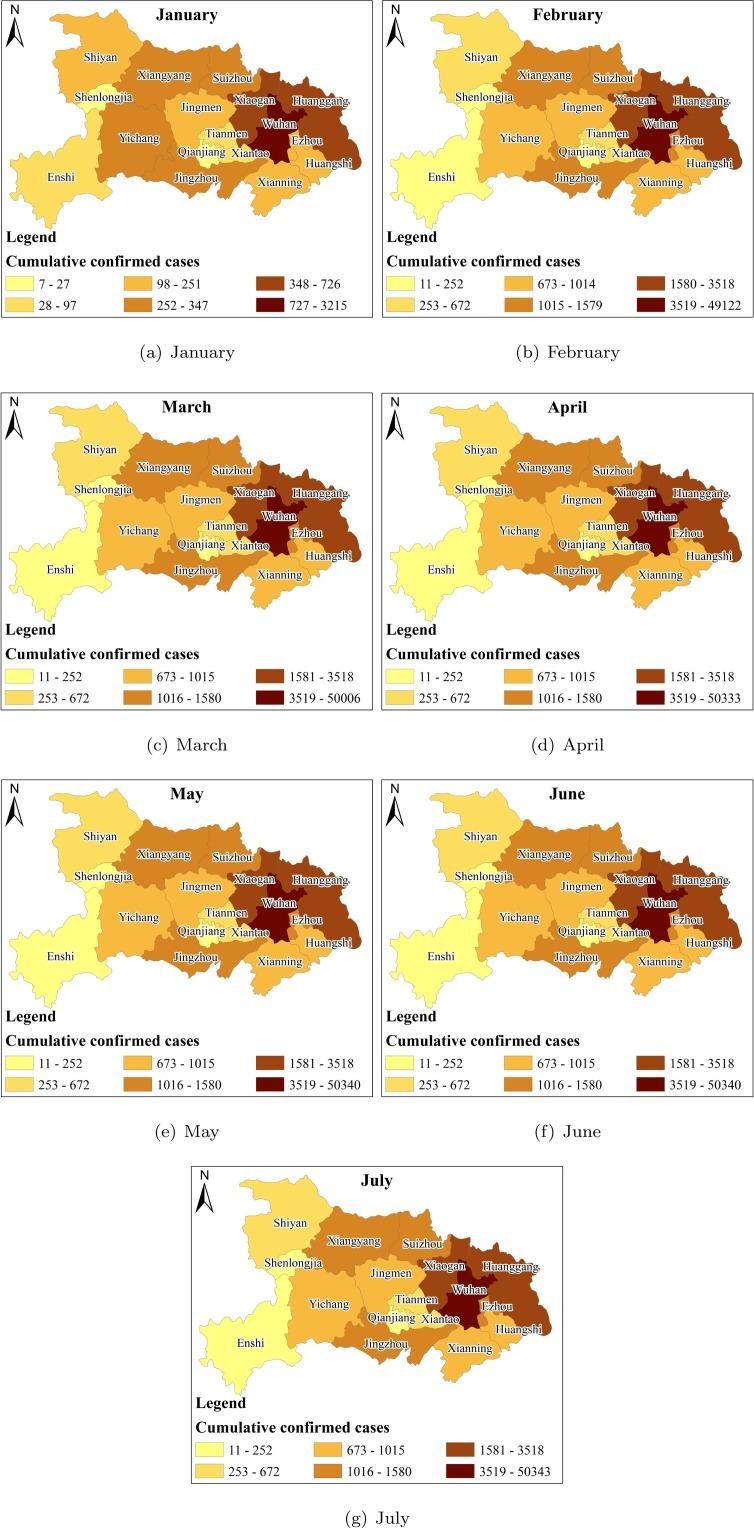
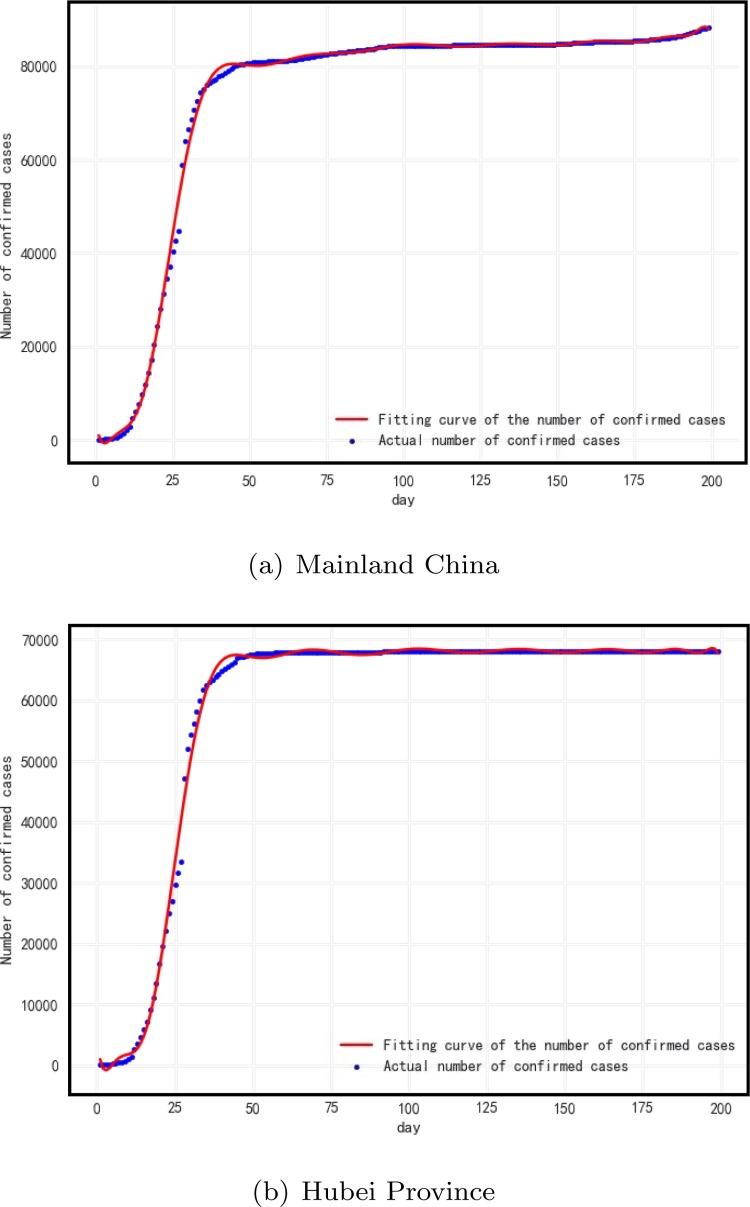
COVID-19 has brought many unfavorable effects on humankind and taken away many lives. Only by understanding it more profoundly and comprehensively can it be soundly defeated. This paper is dedicated to studying the spatial-temporal characteristics of the epidemic development at the provincial-level in mainland China and the civic-level in Hubei Province. Moreover, a correlation analysis on the possible factors that cause the spatial differences in the epidemic's degree is conducted. After completing these works, three different methods are adopted to fit the daily-change tendencies of the number of confirmed cases in mainland China and Hubei Province. The three methods are the Logical Growth Model (LGM), Polynomial fitting, and Fully Connected Neural Network (FCNN). The analysis results on the spatial-temporal differences and their influencing factors show that: (1) The Chinese government has contained the domestic epidemic in early March 2020, indicating that the number of newly diagnosed cases has almost zero increase since then. (2) Throughout the entire mainland of China, effective manual intervention measures such as community isolation and urban isolation have significantly weakened the influence of the subconscious factors that may impact the spatial differences of the epidemic. (3) The classification results based on the number of confirmed cases also prove the effectiveness of the isolation measures adopted by the governments at all levels in China from another aspect. It is reflected in the small monthly grade changes (even no change) in the provinces of mainland China and the cities in Hubei Province during the study period. Based on the experimental results of curve-fitting and considering the time cost and goodness of fit comprehensively, the Polynomial( = 18) model is recommended in this paper for fitting the daily-change tendency of the number of confirmed cases.
新冠疫情给人类带来诸多不利影响,夺走了许多生命。只有更深刻、全面地了解它,才能将其彻底战胜。本文致力于研究中国大陆省级层面和湖北省市级层面疫情发展的时空特征。此外,还对导致疫情程度空间差异的可能因素进行了相关性分析。完成这些工作后,采用三种不同方法对中国大陆和湖北省确诊病例数的每日变化趋势进行拟合。这三种方法分别是逻辑增长模型(LGM)、多项式拟合和全连接神经网络(FCNN)。关于时空差异及其影响因素的分析结果表明:(1)中国政府于2020年3月初控制住了国内疫情,即自那时起新增确诊病例数几乎不再增加。(2)在中国大陆全境,社区隔离和城市封控等有效的人工干预措施显著削弱了可能影响疫情空间差异的潜在因素的影响。(3)基于确诊病例数的分类结果也从另一个方面证明了中国各级政府所采取隔离措施的有效性。这体现在研究期间中国大陆各省份和湖北省各城市每月的等级变化较小(甚至没有变化)。基于曲线拟合的实验结果,并综合考虑时间成本和拟合优度,本文推荐多项式( = 18)模型来拟合确诊病例数的每日变化趋势。




 Zotero 插件