
预测并减轻新冠病毒疫苗和抗体疗法面临的突变威胁。
Prediction and mitigation of mutation threats to COVID-19 vaccines and antibody therapies.
作者信息
Chen Jiahui, Gao Kaifu, Wang Rui, Wei Guo-Wei
机构信息
Department of Mathematics, Michigan State University MI 48824 USA
Department of Electrical and Computer Engineering, Michigan State University MI 48824 USA.
出版信息
Chem Sci. 2021 Apr 13;12(20):6929-6948. doi: 10.1039/d1sc01203g.
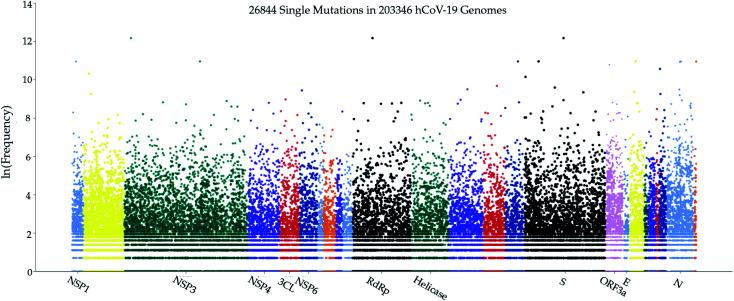
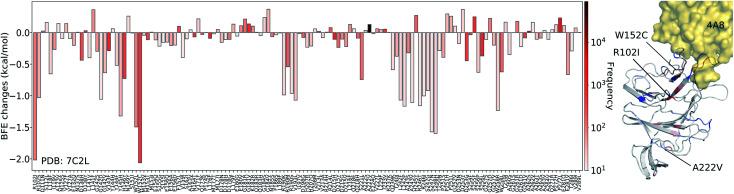
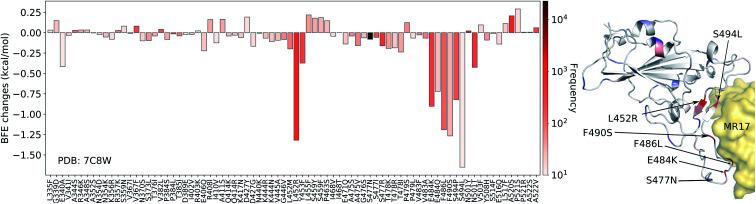
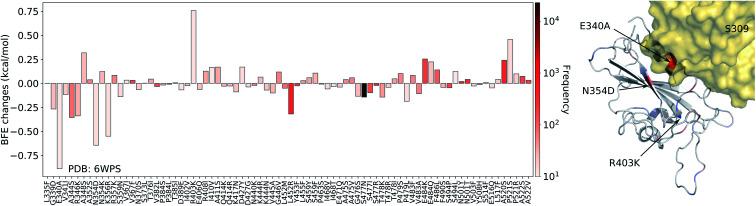
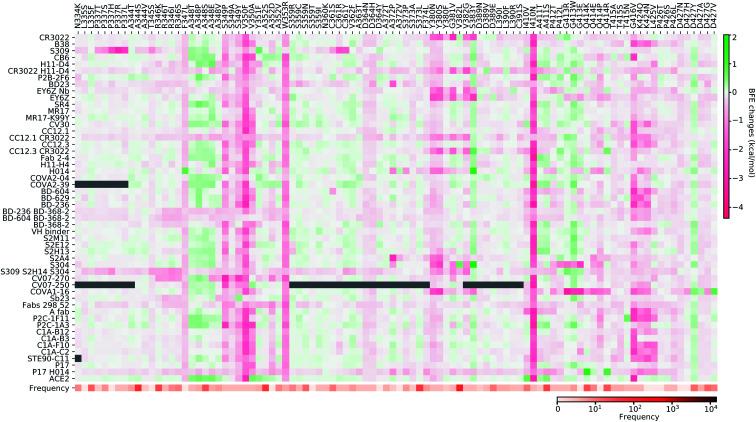
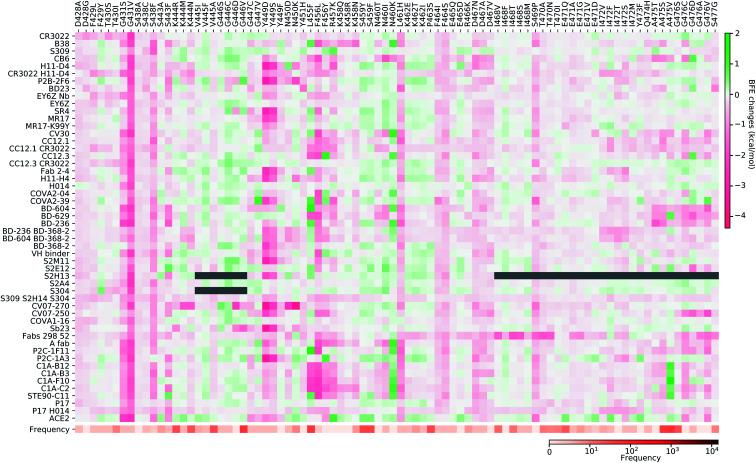
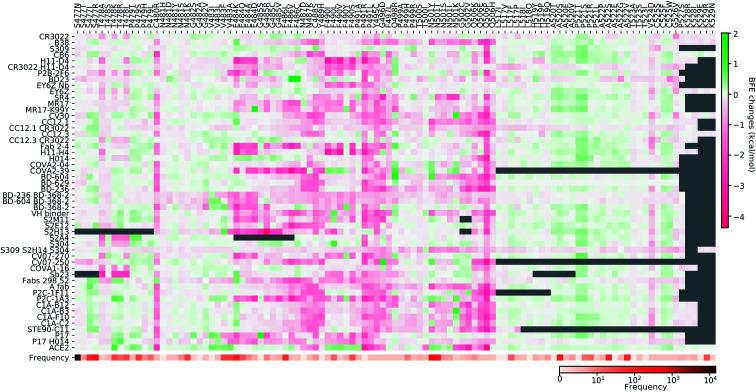
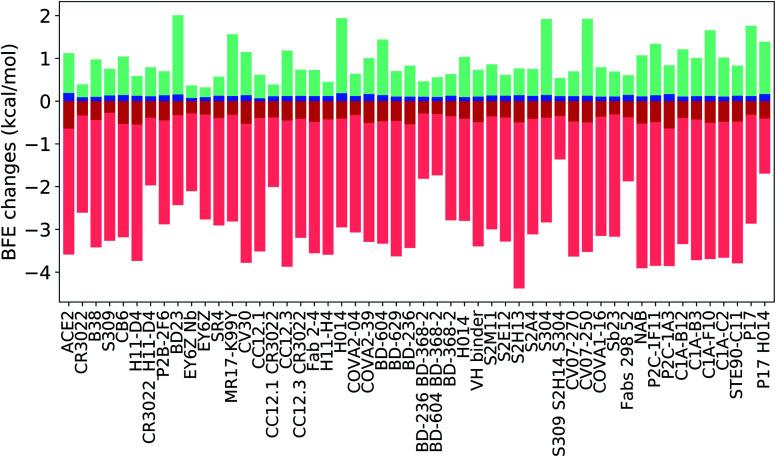
Antibody therapeutics and vaccines are among our last resort to end the raging COVID-19 pandemic. They, however, are prone to over 5000 mutations on the spike (S) protein uncovered by a Mutation Tracker based on over 200 000 genome isolates. It is imperative to understand how mutations will impact vaccines and antibodies in development. In this work, we first study the mechanism, frequency, and ratio of mutations on the S protein which is the common target of most COVID-19 vaccines and antibody therapies. Additionally, we build a library of 56 antibody structures and analyze their 2D and 3D characteristics. Moreover, we predict the mutation-induced binding free energy (BFE) changes for the complexes of S protein and antibodies or ACE2. By integrating genetics, biophysics, deep learning, and algebraic topology, we reveal that most of the 462 mutations on the receptor-binding domain (RBD) will weaken the binding of S protein and antibodies and disrupt the efficacy and reliability of antibody therapies and vaccines. A list of 31 antibody disrupting mutants is identified, while many other disruptive mutations are detailed as well. We also unveil that about 65% of the existing RBD mutations, including those variants recently found in the United Kingdom (UK) and South Africa, will strengthen the binding between the S protein and human angiotensin-converting enzyme 2 (ACE2), resulting in more infectious COVID-19 variants. We discover the disparity between the extreme values of RBD mutation-induced BFE strengthening and weakening of the bindings with antibodies and angiotensin-converting enzyme 2 (ACE2), suggesting that SARS-CoV-2 is at an advanced stage of evolution for human infection, while the human immune system is able to produce optimized antibodies. This discovery, unfortunately, implies the vulnerability of current vaccines and antibody drugs to new mutations. Our predictions were validated by comparison with more than 1400 deep mutations on the S protein RBD. Our results show the urgent need to develop new mutation-resistant vaccines and antibodies and to prepare for seasonal vaccinations.
抗体疗法和疫苗是我们终结肆虐的新冠疫情的最后手段之一。然而,基于超过20万份基因组分离株的突变追踪器发现,新冠病毒刺突(S)蛋白上存在超过5000种突变。了解这些突变将如何影响正在研发的疫苗和抗体至关重要。在这项工作中,我们首先研究了S蛋白上突变的机制、频率和比例,S蛋白是大多数新冠疫苗和抗体疗法的共同靶点。此外,我们构建了一个包含56种抗体结构的文库,并分析了它们的二维和三维特征。此外,我们预测了S蛋白与抗体或血管紧张素转换酶2(ACE2)复合物的突变诱导结合自由能(BFE)变化。通过整合遗传学、生物物理学、深度学习和代数拓扑学,我们发现受体结合域(RBD)上的462种突变中的大多数将削弱S蛋白与抗体的结合,并破坏抗体疗法和疫苗的效力和可靠性。我们确定了31种抗体破坏突变体的列表,同时也详细列出了许多其他破坏性突变。我们还揭示,现有的RBD突变中约65%,包括最近在英国和南非发现的那些变体,将增强S蛋白与人类血管紧张素转换酶2(ACE2)之间的结合,从而产生更具传染性的新冠病毒变体。我们发现RBD突变诱导的BFE增强与抗体和血管紧张素转换酶2(ACE2)结合减弱的极值之间存在差异,这表明新冠病毒在人类感染的进化过程中处于晚期阶段,而人类免疫系统能够产生优化的抗体。不幸的是,这一发现意味着当前的疫苗和抗体药物容易受到新突变的影响。通过与S蛋白RBD上的1400多个深度突变进行比较,我们的预测得到了验证。我们的结果表明迫切需要开发新的抗突变疫苗和抗体,并为季节性疫苗接种做好准备。







 Zotero 插件