
源自老年转移性结直肠癌患者的血清代谢组学分类器可预测辅助治疗中的复发情况。
A Serum Metabolomics Classifier Derived from Elderly Patients with Metastatic Colorectal Cancer Predicts Relapse in the Adjuvant Setting.
作者信息
Di Donato Samantha, Vignoli Alessia, Biagioni Chiara, Malorni Luca, Mori Elena, Tenori Leonardo, Calamai Vanessa, Parnofiello Annamaria, Di Pierro Giulia, Migliaccio Ilenia, Cantafio Stefano, Baraghini Maddalena, Mottino Giuseppe, Becheri Dimitri, Del Monte Francesca, Miceli Elisangela, McCartney Amelia, Di Leo Angelo, Luchinat Claudio, Biganzoli Laura
机构信息
Department of Medical Oncology, New Hospital of Prato S. Stefano, 59100 Prato, Italy.
Magnetic Resonance Center, University of Florence, 50019 Sesto Fiorentino, Italy.
出版信息
Cancers (Basel). 2021 Jun 2;13(11):2762. doi: 10.3390/cancers13112762.
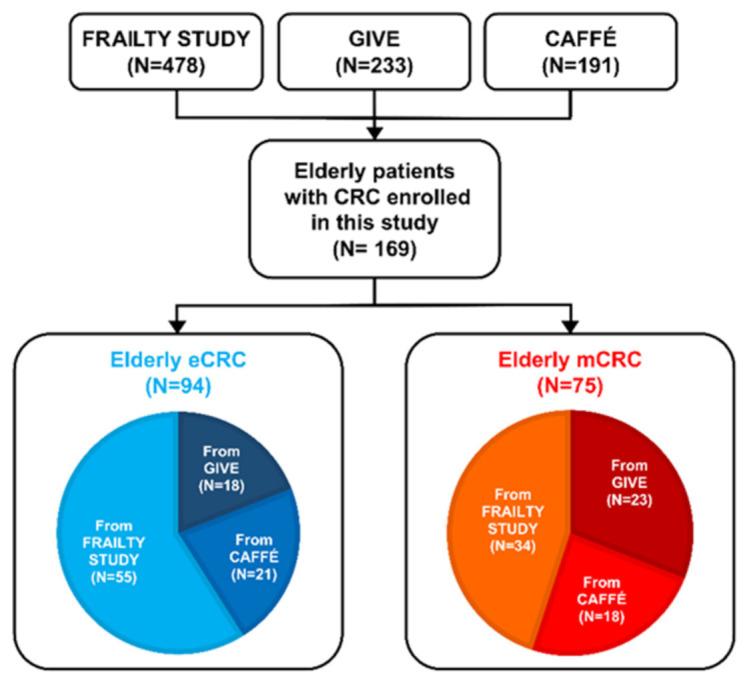
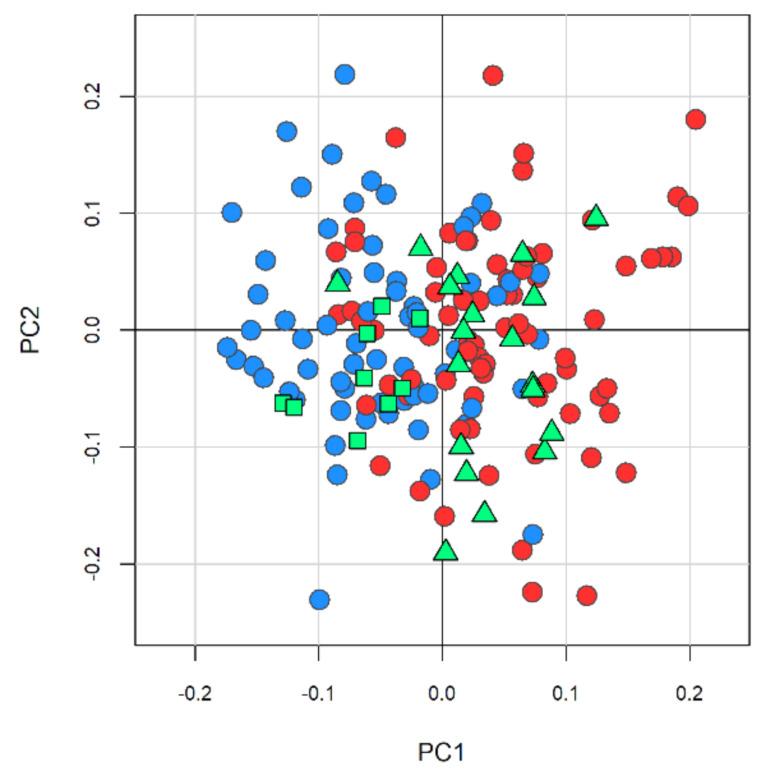
Adjuvant treatment for patients with early stage colorectal cancer (eCRC) is currently based on suboptimal risk stratification, especially for elderly patients. Metabolomics may improve the identification of patients with residual micrometastases after surgery. In this retrospective study, we hypothesized that metabolomic fingerprinting could improve risk stratification in patients with eCRC. Serum samples obtained after surgery from 94 elderly patients with eCRC (65 relapse free and 29 relapsed, after 5-years median follow up), and from 75 elderly patients with metastatic colorectal cancer (mCRC) obtained before a new line of chemotherapy, were retrospectively analyzed via proton nuclear magnetic resonance spectroscopy. The prognostic role of metabolomics in patients with eCRC was assessed using Kaplan-Meier curves. PCA-CA-kNN could discriminate the metabolomic fingerprint of patients with relapse-free eCRC and mCRC (70.0% accuracy using NOESY spectra). This model was used to classify the samples of patients with relapsed eCRC: 69% of eCRC patients with relapse were predicted as metastatic. The metabolomic classification was strongly associated with prognosis (-value 0.0005, HR 3.64), independently of tumor stage. In conclusion, metabolomics could be an innovative tool to refine risk stratification in elderly patients with eCRC. Based on these results, a prospective trial aimed at improving risk stratification by metabolomic fingerprinting (LIBIMET) is ongoing.
早期结直肠癌(eCRC)患者的辅助治疗目前基于欠佳的风险分层,尤其是对老年患者而言。代谢组学可能会改善对术后有残留微转移患者的识别。在这项回顾性研究中,我们假设代谢组学指纹图谱可改善eCRC患者的风险分层。对94例eCRC老年患者(中位随访5年后,65例无复发,29例复发)术后获得的血清样本,以及75例转移性结直肠癌(mCRC)老年患者在新的化疗方案前获得的血清样本,通过质子核磁共振波谱进行回顾性分析。使用Kaplan-Meier曲线评估代谢组学在eCRC患者中的预后作用。PCA-CA-kNN能够区分无复发eCRC患者和mCRC患者的代谢组学指纹图谱(使用NOESY谱时准确率为70.0%)。该模型用于对复发eCRC患者的样本进行分类:69%的复发eCRC患者被预测为转移性。代谢组学分类与预后密切相关(P值0.0005,HR 3.64),与肿瘤分期无关。总之,代谢组学可能是一种创新工具,用于优化老年eCRC患者的风险分层。基于这些结果,一项旨在通过代谢组学指纹图谱改善风险分层的前瞻性试验(LIBIMET)正在进行。




 Zotero 插件